Training • 10 min read
Researchers Found Nearly 40% Of The Weight Lost On GLP-1s Isn't Fat. The Fix Weighs 20 Pounds.
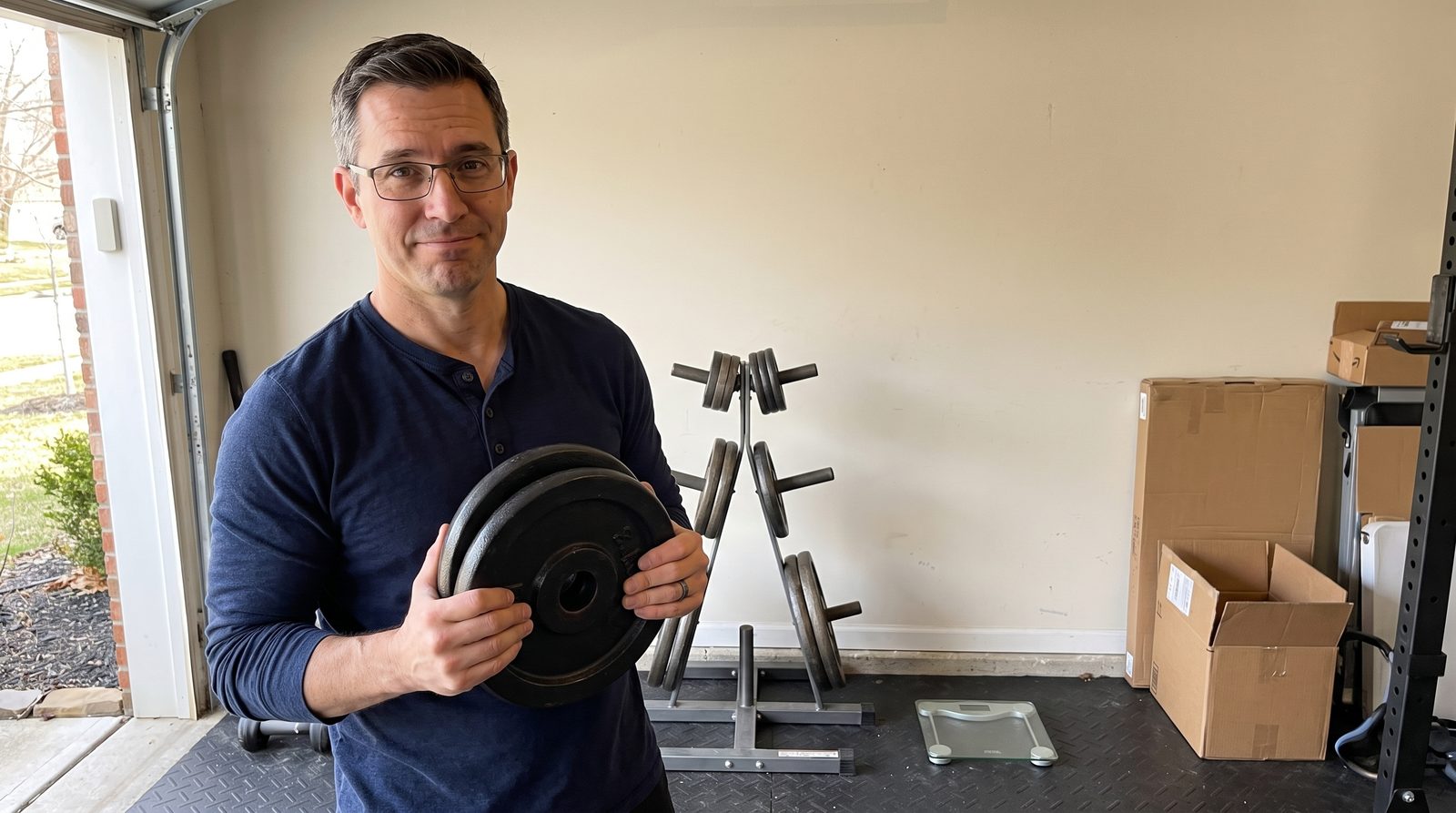
The 68-week trial of semaglutide, the drug sold as Wegovy, scanned 140 of its patients before and after. The people on the drug lost 30 pounds by the scan, and 11.6 of those pounds were lean mass, not fat. A second trial then spent a year testing two ways to stop that. Only one worked, and it is not the one people are buying.

What The Scan Showed
In 2021 the New England Journal of Medicine published STEP 1, a 68-week trial of semaglutide 2.4 mg, the dose sold as Wegovy. It enrolled 1,961 adults with obesity or overweight, all given the same diet advice and the same target of 150 minutes of activity a week. The drug group lost 14.9% of their body weight. The placebo group lost 2.4%. That is the number that made the news: 15%, or about 34 pounds on the average person in the trial.
Inside the same paper is a substudy that did not make the news. 140 participants had a DXA scan, the X-ray that splits a body into fat and lean tissue, at the start and at week 68. Here is what the 95 people on the drug lost.
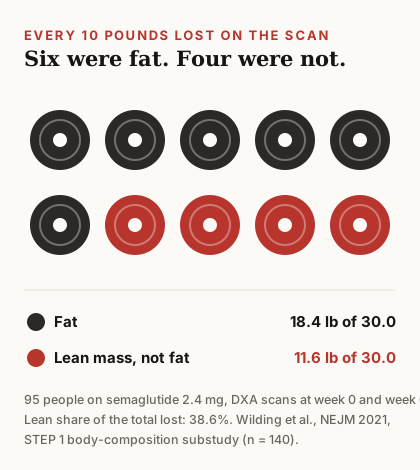
Nearly four of every ten pounds were not fat. Lean mass is not all muscle. It counts water, organs and connective tissue too, and a 2024 review in Diabetes, Obesity and Metabolism is careful to say so. The same review puts the lean share across the drug trials anywhere from 15% to 60%. And when researchers have put actual thigh muscle under a CT scanner during a year of dieting, it shrinks. I will get to that trial. It changed what I do.
One more line from the substudy, because it matters for what comes next. The placebo group, dieting without the drug, lost 3 pounds of fat and 4 pounds of lean mass. More than half of what they lost was not fat either. The drug did not eat anyone's muscle. The deficit did. The drug just makes the deficit enormous.
Your Body Was The Barbell
Here is the part that took me embarrassingly long to see. If you have never lifted a weight in your life, you have still been lifting one every day: you. Every stair, every squat down to a chair, every time you get up off the floor, your legs and trunk move your whole body weight. That is resistance training whether anyone calls it that or not. It is why a heavy person usually has strong legs under the fat.
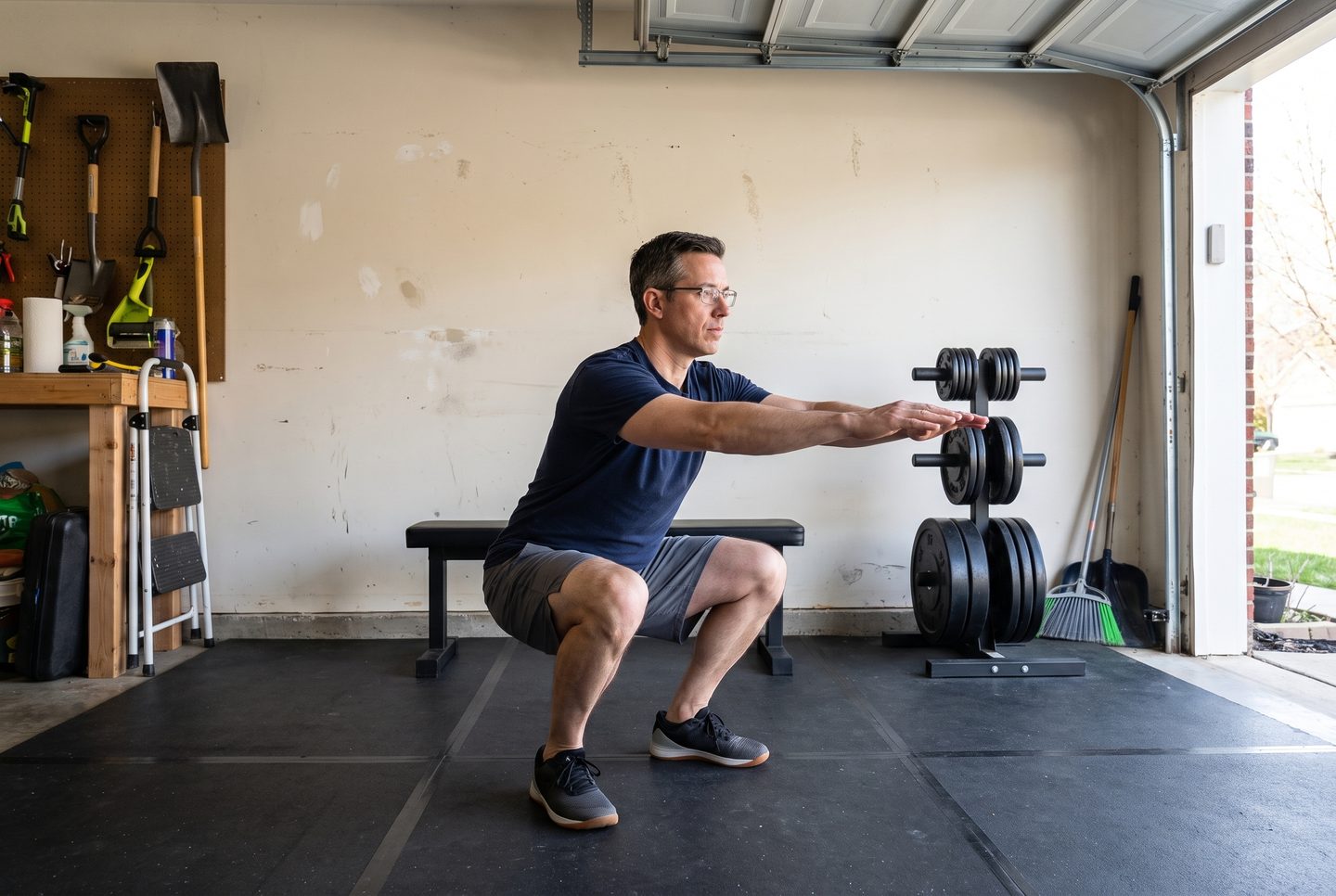
Now take 34 pounds away. Every one of those movements just got 34 pounds lighter. A push-up puts about 64% of your body weight through your hands, measured on a force plate by Ebben and colleagues in 2011, so the push-up gets about 22 pounds easier. Nothing in your week asks the muscle for what it gave in January. Muscle that is not asked shrinks. It is the same rule that empties a leg inside a cast.
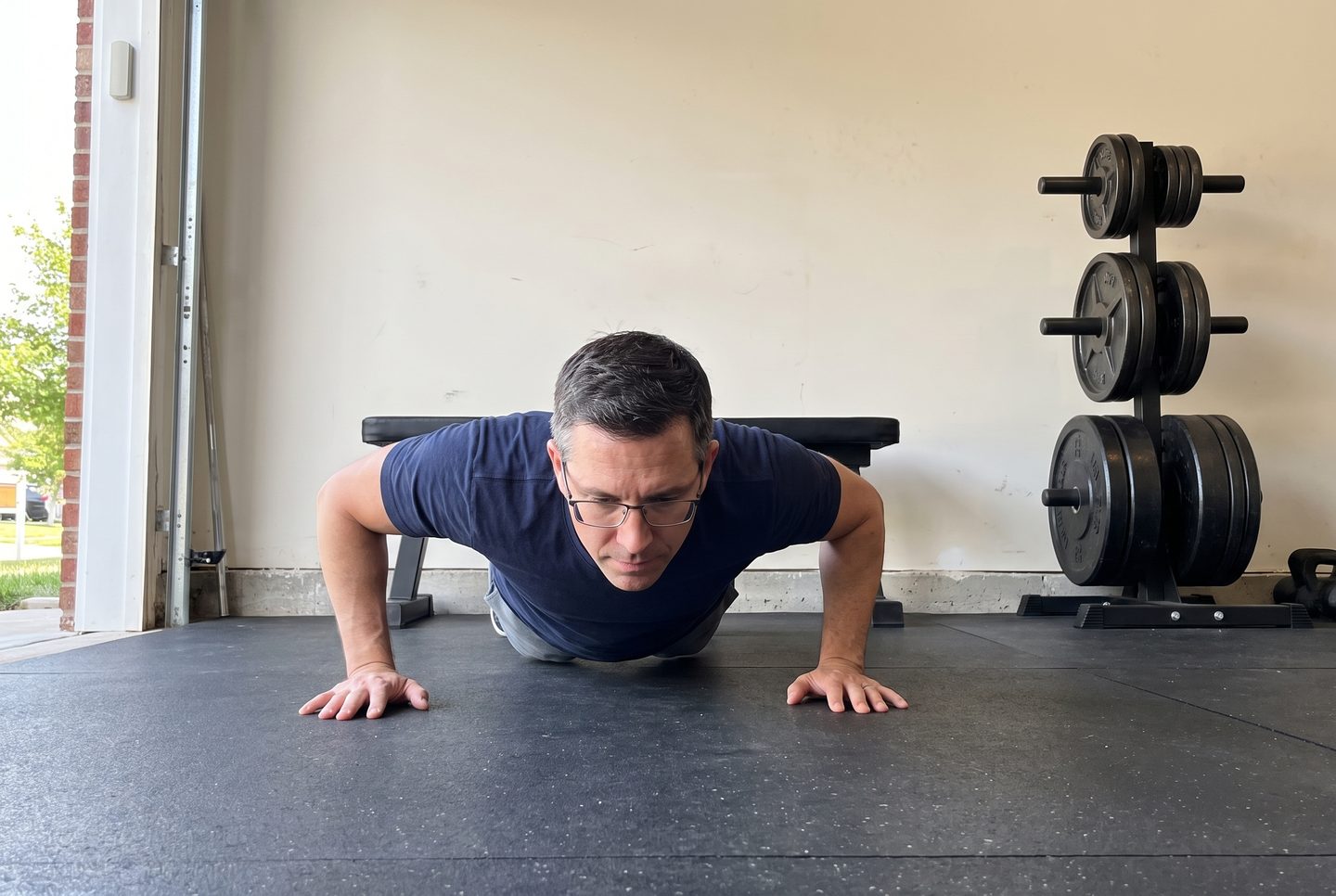
That is why the standard advice, the 150 minutes of activity that STEP 1 itself prescribed, did not stop it. Walking under a lighter body is lighter walking. The signal that keeps muscle during a deficit is load, and a 2018 meta-analysis in Nutrients put a number on how much of the loss load can prevent: across six trials of dieting adults, resistance training three times a week cut the lean mass lost by 93.5%. Villareal's trial in the New England Journal found the same thing a year earlier. Dieters who lifted lost 2% of their lean mass, dieters in the aerobic group lost 5%, and the lifters got 19% stronger while the aerobic group got 4% stronger.
What I Tried First, And What Each One Costs
When the muscle-loss headlines started, I bought the obvious answers before I trusted any of them. Every price below is from the maker's own site this week.
Wins outright on comfort under a shirt. It is thin enough to wear to the store, which is the whole pitch.
The pitch is the problem. Wake Forest tested exactly this idea for a year, wearing the lost weight back on, and the numbers are below. It is also 10 pounds forever. You cannot add back the pound a week you keep losing.
Wins outright on equipment. Nothing at home matches a room full of machines, and $229 for the year is cheap.
What it does not win is attendance. In the Wake Forest trial the lifting group had supervised sessions and a research team keeping tabs on them, and they still made 71% of their workouts. Three trips a week is where most plans die.
Wins outright for arms, shoulders and rows. I would not train an upper body without a pair.
But the muscle that goes first in a diet is legs and trunk, the Wake Forest scans show it, and the four moves that load those with no machine, the squat, the step-up, the push-up and the pull-up, need your hands free. Dumbbells fill your hands. They cannot load a push-up or a pull-up at any price.
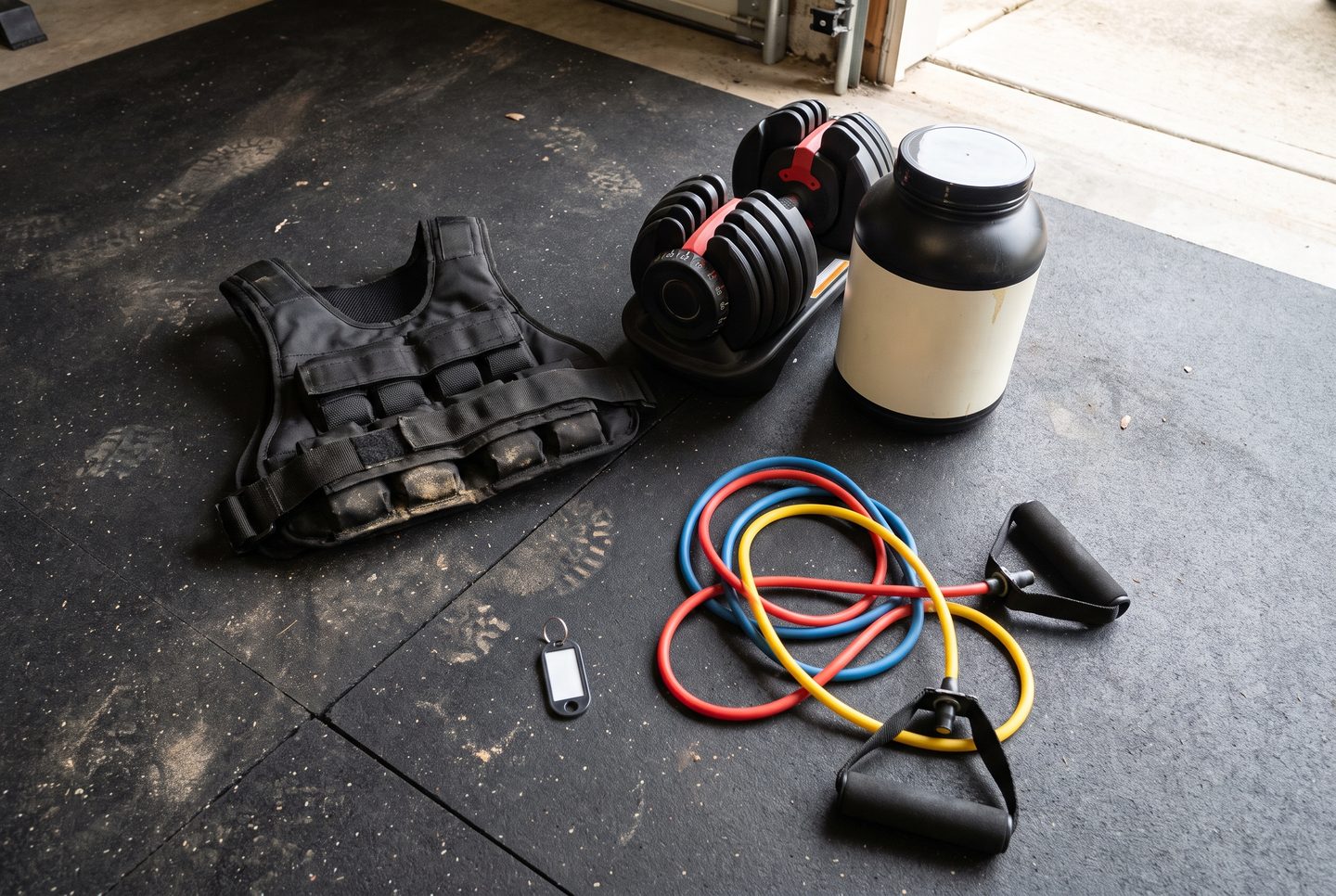
Protein is the other half of every expert answer to this question, and it is the easy half. It needs no equipment and most people on a plan already do it. The tub in the photo stays. It just never lifted anything.
The Four Things The Fix Has To Do
Here is the Wake Forest trial, because it wrote the rubric for me. INVEST in Bone Health: 150 adults, average age 66, all losing weight for a year on the same program. One group just dieted. One group dieted and wore a weighted vest about seven hours a day, loaded to put back roughly 80% of the weight they lost, the wear-it-all-day idea taken as far as it goes. One group dieted and lifted three days a week, three sets of 10 to 12 on eight exercises.
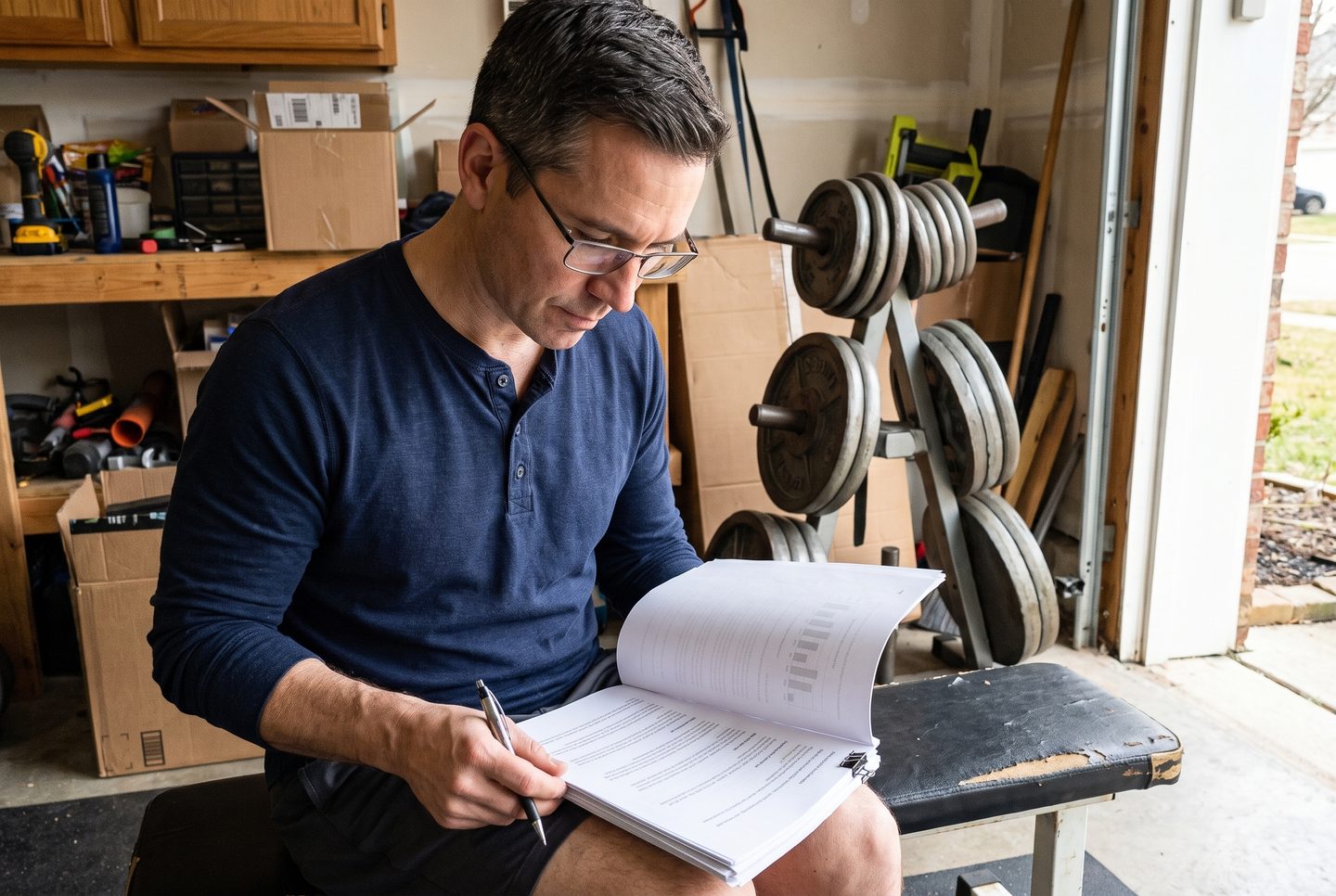
Twelve months later they put everyone's thighs under a CT scanner. Diet alone: thigh muscle down 3.7%. Diet plus the vest worn all day: down 2.0%. Diet plus lifting: up 0.5%, in the group that had lost the most weight of the three. The DXA leg numbers were muddier, the vest group held more leg lean mass than the lifters on that measure, and the authors still called lifting the most effective, with the vest a modest help for the trunk at best. Wearing the weight back on did not keep the muscle. Lifting it did.
So the fix, whatever it turned out to be, had to do four things.
- It has to be lifted, not worn. Sets and reps, three days a week. Seven hours a day of wearing did less for the thighs than three sessions of lifting.
- It has to give back what the scale takes, in small steps. Lose 5 pounds, add 5 pounds, so your squat lifts the same on the day you weigh 200 as it did at 234. A fixed vest cannot do it. A vest that takes 2.5-pound plates can.
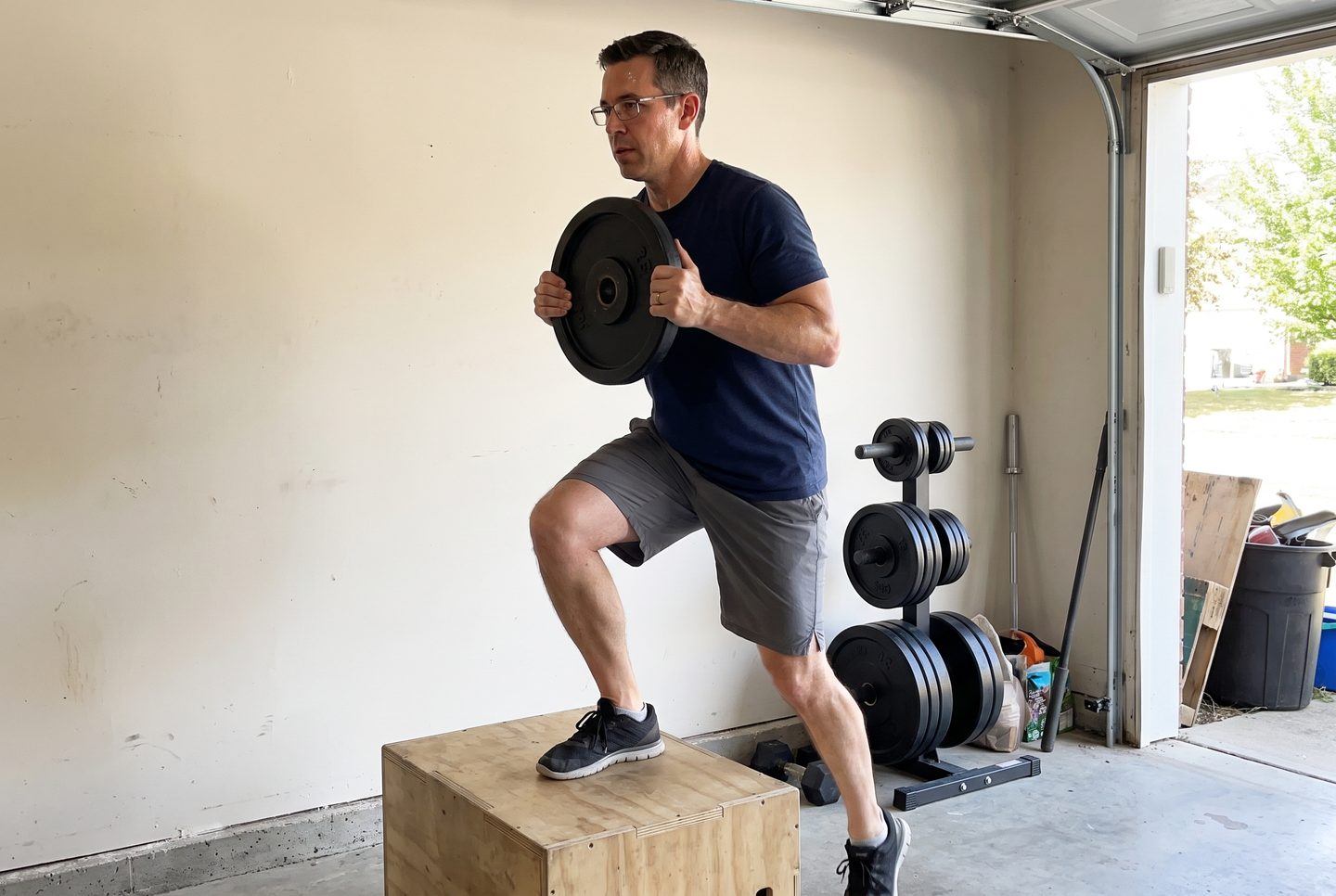
- It has to load the legs and trunk with your hands free. Those are the muscles the scans say go first, and the squat, step-up, push-up and pull-up are how you load them at home. Anything held in the hands rules out two of the four.
- It has to have room to keep going. The average STEP 1 patient lost 34 pounds. A 20-pound vest is a fine place to start. It is a bad place to be stuck in month six.
And it had to cost less than one month of the drug, which is $349 a month at the self-pay price on the maker's own site today.
The One That Passed All Four
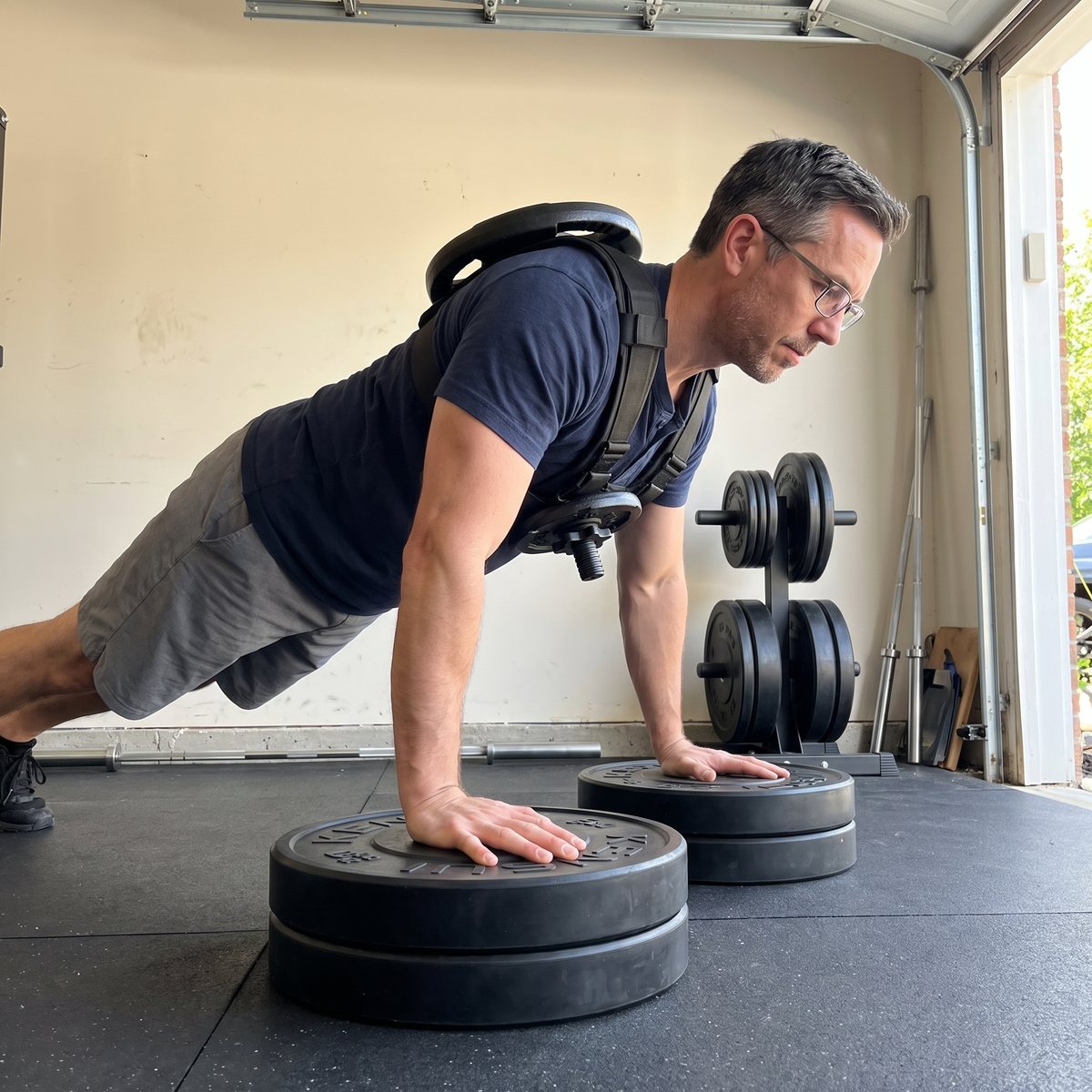
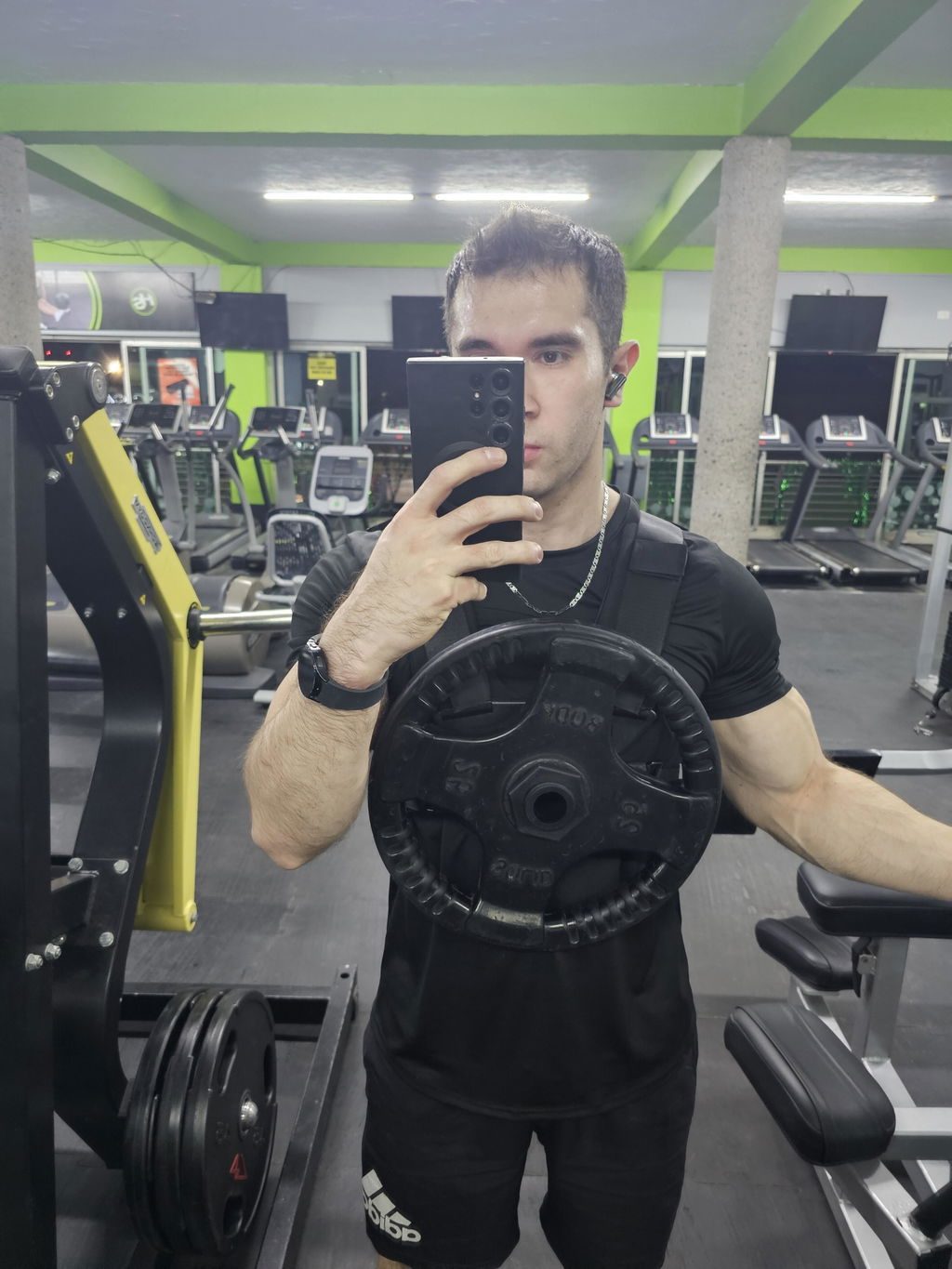
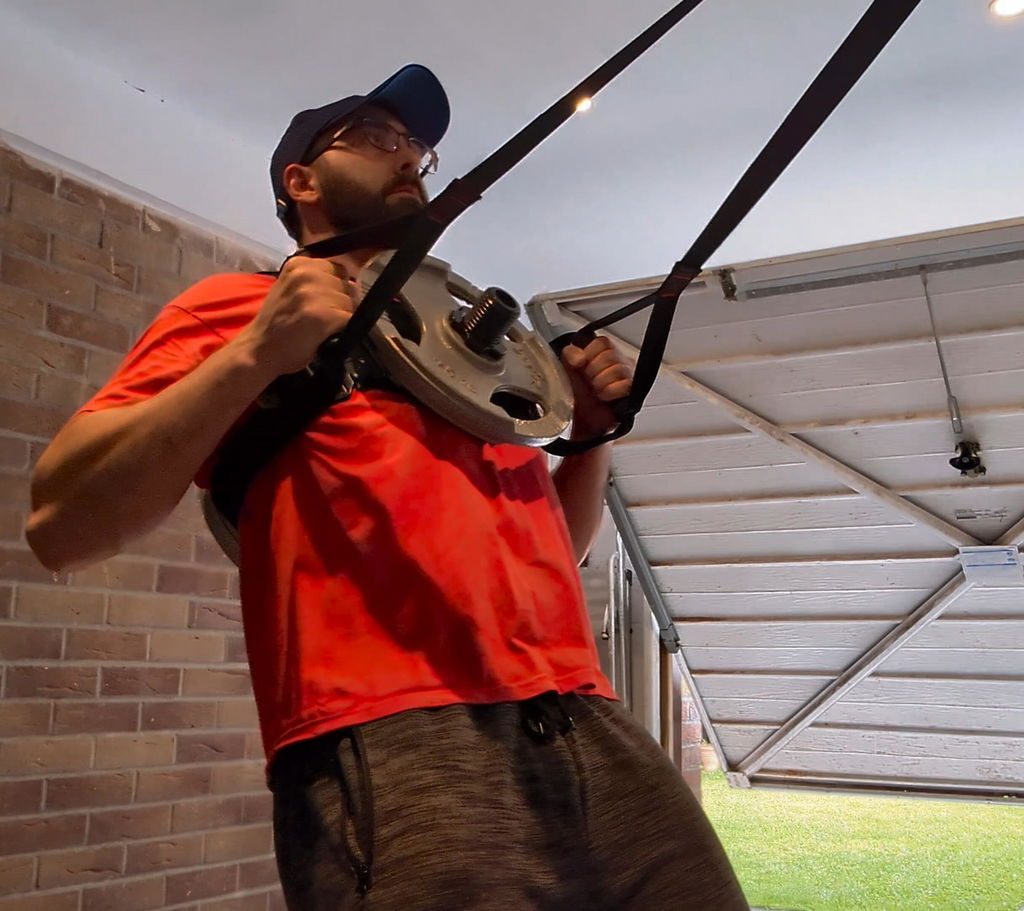
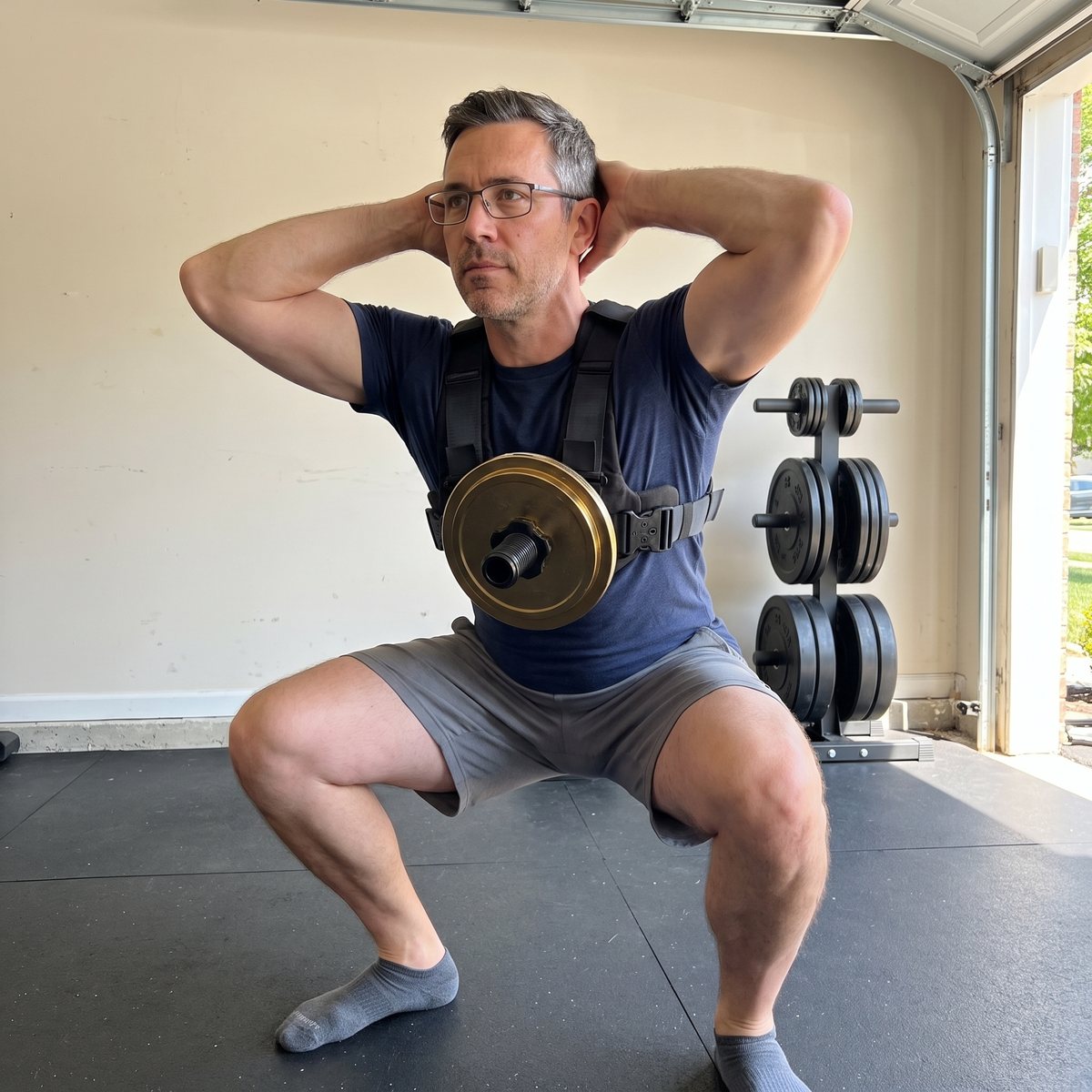
The Kensui EZ-VEST V2 is a weight vest with no weight in it. It is a set of straps with a short threaded post on the chest and another on the upper back, and you load it with the same 2-inch Olympic plates that go on a barbell. Slide a 10 onto each post and you are wearing 20 pounds. Slide a 2.5 on when the scale drops, and you are wearing back what you lost.
Three versions, and the difference is what they carry. The Lite takes 80 pounds and costs $99. The Pro takes 150 pounds, adds 6 mm of padding and an air-mesh lining, and costs $179. The Max takes 300 pounds for $299 and is built for people who do weighted pull-ups with a small child's worth of iron on their chest. For this job the Lite is the one. Eighty pounds is more than double the average loss in the trial, and $99 is 28% of one month of the drug.
Here is how it did on the four tests.
- Lifted, not worn. It goes on for the session and comes off after. Squats, step-ups, push-ups and pull-ups all work with it on, and the load stays put through every one.
- Gives back what the scale takes. A 2.5-pound Olympic plate fits the post, so the total moves in 2.5-pound steps. Nothing else I tried changes by less than a whole vest.
- Hands free, legs and trunk loaded. The weight sits on your chest and upper back. Your hands are for the floor and the bar.
- Room to keep going. 80 pounds on the Lite, 150 on the Pro, and every plate you will ever buy for it fits a barbell too.
The verdict
- Loads the 2-inch Olympic plates sold everywhere, on a chest post and a back post, in 2.5-pound steps.
- Lite 80 lb for $99. Pro 150 lb with padding and a mesh lining for $179. Max 300 lb for $299.
- In stock, with a 100-day money-back guarantee.
Lite $99 · Pro $179 · 100-day money-back guarantee
What Three Sessions A Week Look Like
I copied the Wake Forest template because it is the one with a scan behind it: three days a week, eight movements, three sets of 10 to 12. With the vest on, mine are squats, step-ups, split squats, push-ups, inverted rows under a sturdy table or pull-ups if you have a bar, hip bridges, calf raises, and a loaded walk to the mailbox and back. About forty minutes.
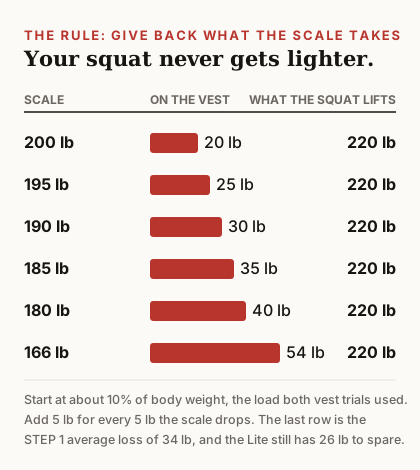
The rule that makes it work is the one nobody sells: for every 5 pounds the scale gives up, put 5 pounds on the vest. Start at about 10% of your body weight, 20 pounds on a 200-pound person, which is the load both vest trials used: Wake Forest capped its vests at 10% of starting weight, and the Swedish gravitostat trial used 11%. From there the plates go on as the pounds come off. Your squat never gets lighter. Your push-up never gets lighter. The muscle keeps getting asked.
Two things I would tell a friend before they order. The Lite has no padding and closes with Velcro, and past 40 pounds you feel the straps on your shoulders, which is what the Pro's extra $80 of padding and lining is for. And the threaded posts on a new one can be sharp. One four-star reviewer on kensui.com said it flatly:
"Well thought out and generally well made. Threads on the chest/back plates cut my fingers and drew blood as were not de-burred so needed to do this myself. Otherwise excellent product."Rob J., verified buyer, four stars
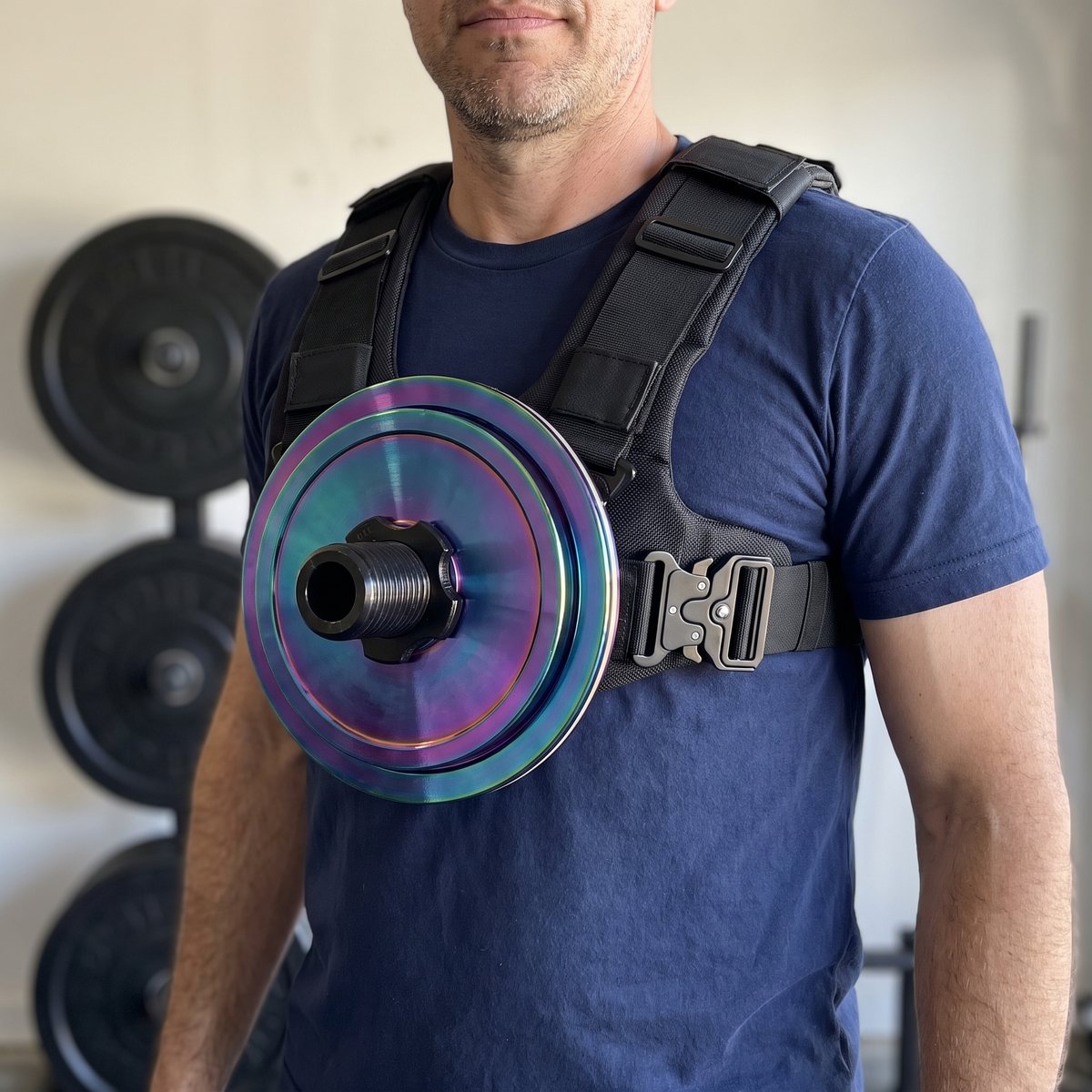
The thing the reviews keep coming back to is the one that matters most for this job, changing the weight without taking the vest off:
"I have had weighted vests before, but this is by far the most comfortable and the easiest to change the weight. I love that I can put the vest on and add weight easily once wearing it. My old 80 pound vest really cut into my skin and was a nightmare on my shoulders to take on and off."Mark K., verified buyer, five stars
Everything I priced, side by side:
| What you get | Kensui EZ-VEST V2 Lite | Kensui EZ-VEST V2 Pro | Hyperwear Hyper Vest FIT | 5.11 TacTec Trainer | Bowflex SelectTech 552 | Planet Fitness Classic |
|---|---|---|---|---|---|---|
| Price | $99 | $179 | $114.99 | $140, plates extra | $399 sale, $479 list | $229 a year |
| Most weight it carries | 80 lb | 150 lb | 10 lb | Two plates | 52.5 lb a hand | The whole gym |
| Smallest step up | 2.5 lb | 2.5 lb | None, fixed | One plate | 2.5 lb to 25, then 5 lb | Varies |
| Hands free, legs and trunk loaded | Yes | Yes | Yes | Yes | No | Machines only |
| Loads push-ups and pull-ups | Yes | Yes | Yes, to 10 lb | Yes | No | With a dip belt |
| Grows as the scale drops | Yes, to 80 lb | Yes, to 150 lb | No | Two plates, then stop | Yes, to 52.5 lb a hand | Yes |
| Padding | None | 6 mm, mesh lining | Thin neoprene | Mesh pads | n/a | n/a |
| Learn More | Learn More |
Every one of those wins something, and I said what above. None of the others gets lifted in 2.5-pound steps on a body losing 2.5 pounds a week, and that is the whole job.
Before You Order
- Do I need to own plates?
- Yes, any plate with a 2-inch hole. Two 10s and two 2.5s cover the first two months. Kensui sells the vest, not the iron.
- Is the Lite enough, or should I buy the Pro?
- The Lite carries 80 pounds, double the average loss in STEP 1. Buy the Pro if you also want it on long walks. The padding and the mesh lining are the extra $80.
- Can I just walk in it?
- Walk in it all you like. Count the sessions, not the hours. Wake Forest's vest group wore theirs seven hours a day and kept less thigh muscle than the group that lifted three times a week.
The shot is $349 a month. The vest is $99 once, the plates are yours for life, and Kensui gives you 100 days to send it back if the scan was wrong about you.
Get the EZ-VESTLite $99 · Pro $179 · Loads 2-inch Olympic plates · 100-day money-back guarantee
