Golf • 9 min read
Here's How A $75 Mace Doubled My Swing Speed In 90 Days
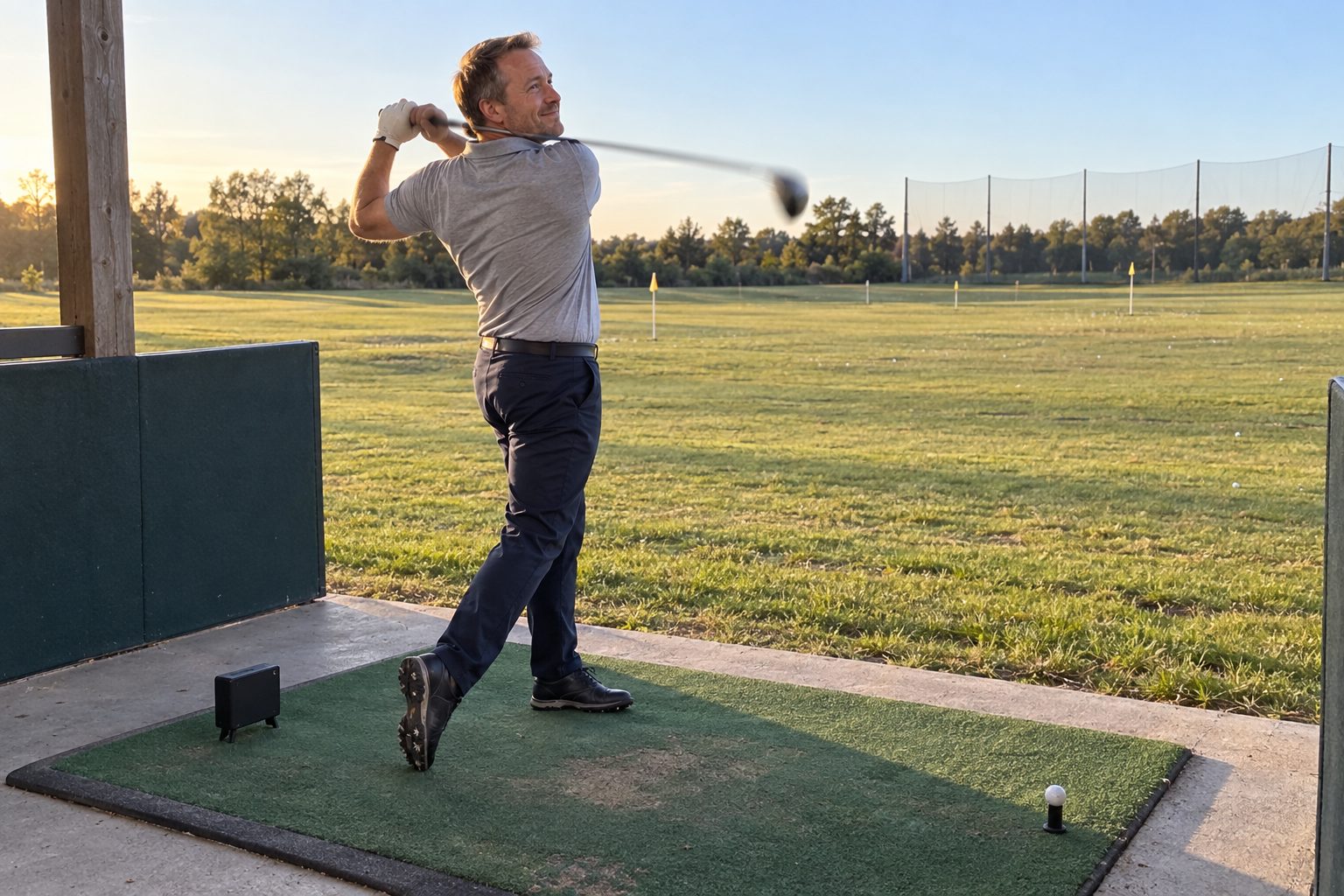
For five seasons my driver sat at 92 miles an hour, right around where the average golfer swings. Six lessons, a $199.99 set of speed sticks and a year of stretching moved it 2.5 mph. Then I read a review of 20 studies on what fast swingers have in common, and it was not what I had been paying for. Here is the receipt, the research, and the $75 tool that added 5.1 mph in 90 days, double everything before it.

Five Seasons At 92 Miles An Hour
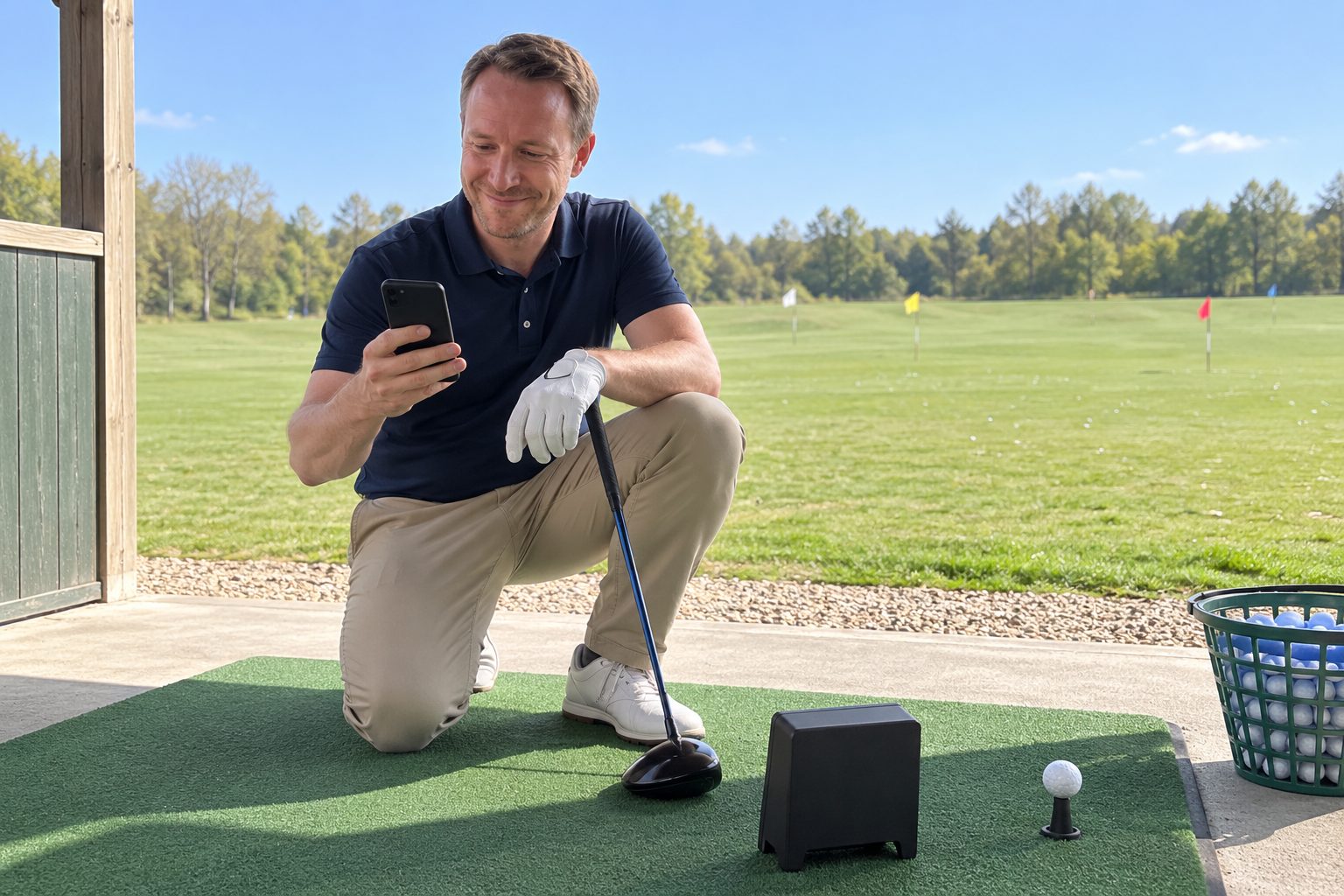
I play on Saturday mornings with the same three guys, and for five seasons I was the one hitting second off the tee. Not short. Just never long. When I finally paid for an hour in a simulator bay and watched the readout, it made sense. My driver clubhead speed was 92 miles an hour.
That is an ordinary number. TrackMan, the launch monitor company, puts the average male golfer, a 14.5 handicap, at 94 mph and a bogey golfer at 92. What bugged me was that I lift three or four days a week. A guy who squats and benches should not swing a club like everybody else.
So I did what golfers do. I spent money on it.
What I paid to swing faster
- Six 45 minute lessons, one package$399.99
- SuperSpeed Speed Sticks PRO, three sticks$199.99
- Four simulator bay hours to measure it allabout $220
- A year of stretching, most nights$0
Spentabout $820
Clubhead speed gained2.5 mph
Every Fix Changed Something Except The Number
The lessons came first, a package of six at the PGA TOUR Superstore for $399.99 (a single lesson is $79.99). They were worth it, just not for this. My instructor fixed a grip that had been aiming the face right for years and got my path back to square. The slice I had carried since college mostly went away. My speed after lesson six was 92.0. Before lesson one it had been 92.1.
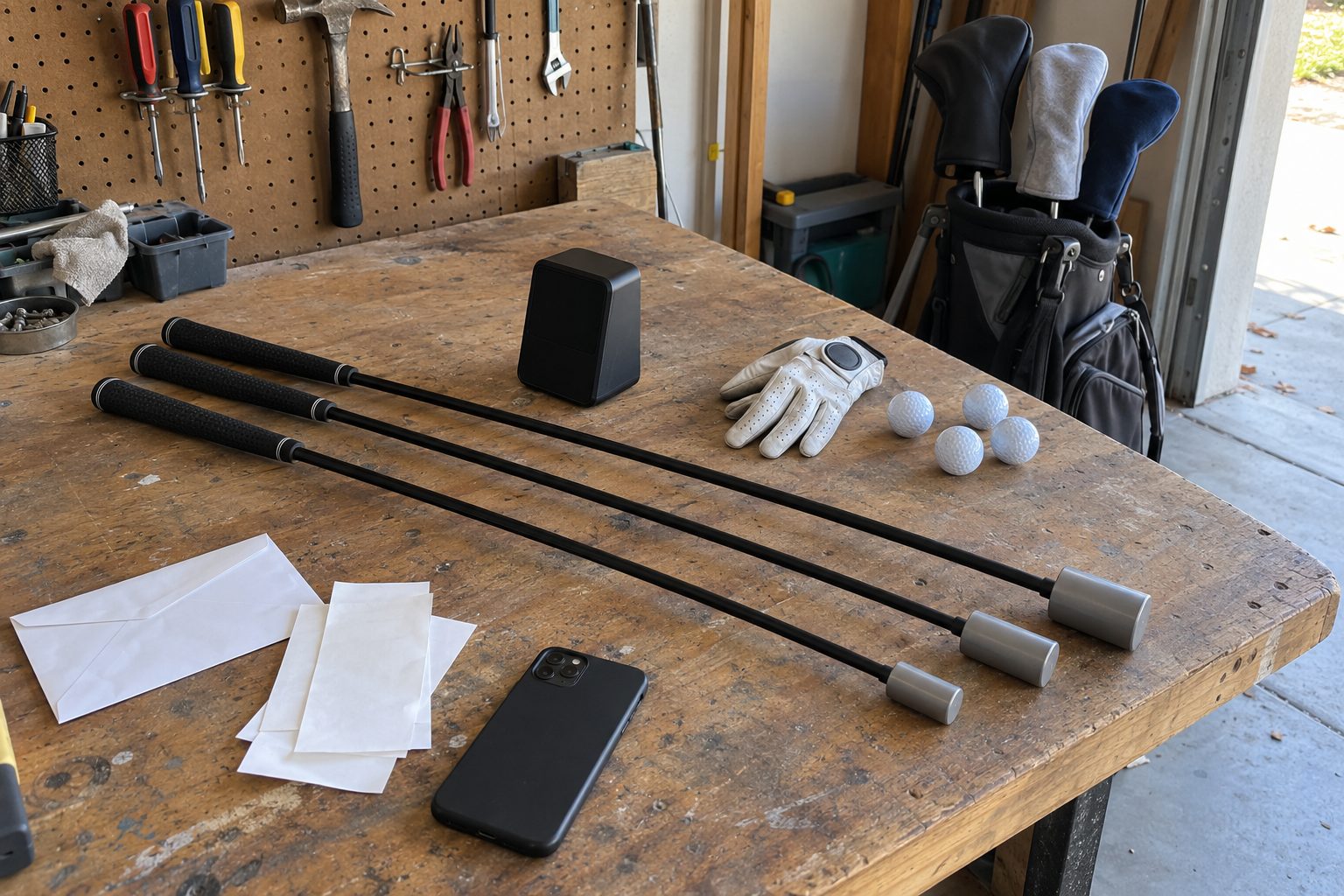
Next came the speed sticks. SuperSpeed sells its PRO set of three weighted sticks for $199.99, and the routine has you swing each one as hard as you can, both ways, three days a week. It worked, a little. Six weeks in, the bay read 94.6. Eight weeks after that, it still read 94.6.
SuperSpeed says its users gain 11.1 mph on average, a figure from its own app. The only outside report I could find came from Par4Success, a golf fitness clinic, which ran a six week trial that never went through a journal and saw 1.8 mph. My 2.5 landed between those two, and then it stopped.
Along the way I priced the other fixes. TheStack, a speed system with an app and add on weights, is $299. An Orange Whip trainer is $119.99. A Garmin Approach R10 launch monitor, so I could measure at home, is $499.99. I kept renting the bay instead, at the $40 to $65 an hour that two X-Golf locations list.
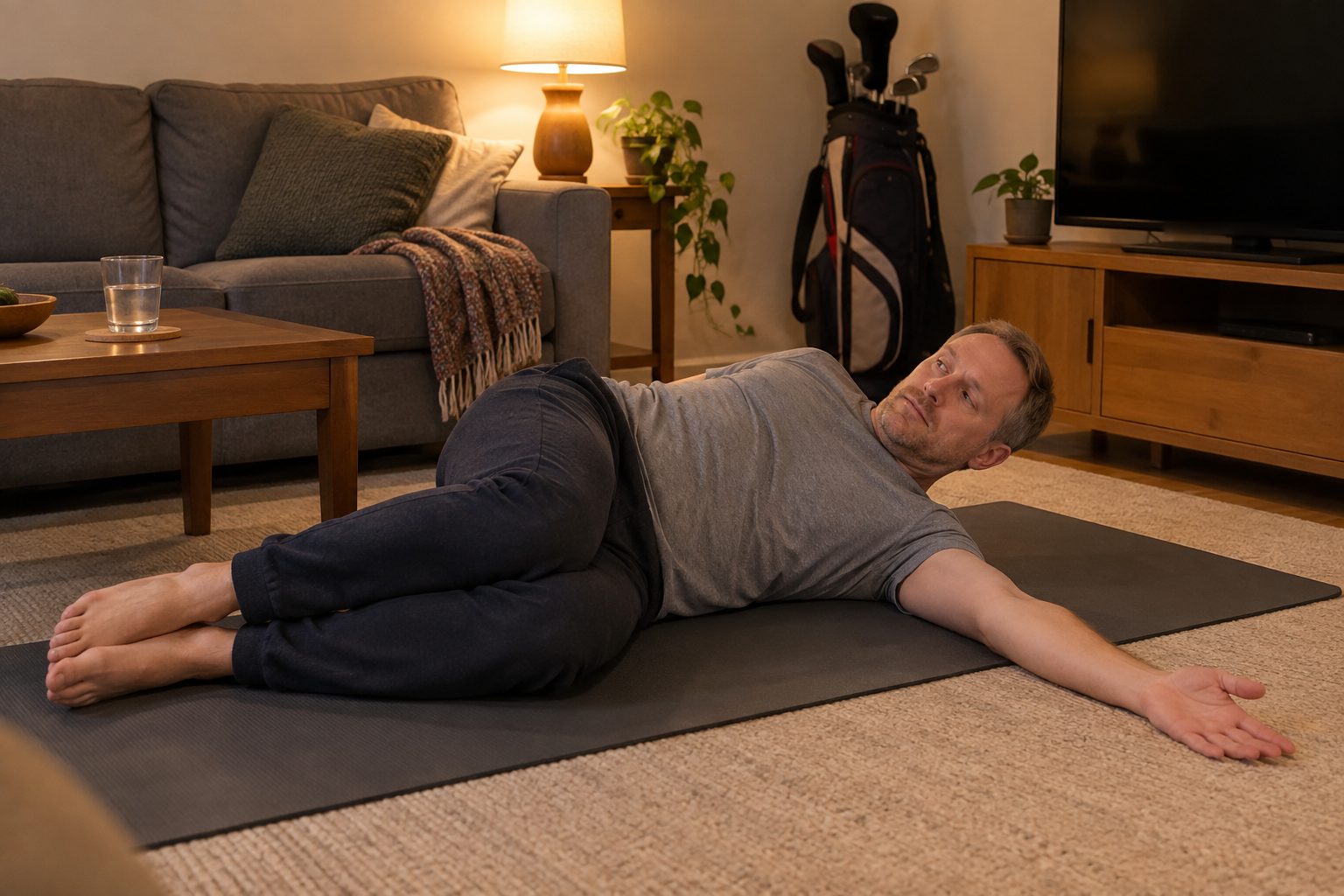
The cheapest fix was the one every golf video sells. Turn more, hit it farther. For a year I stretched most nights, hips and upper back, 15 minutes on the living room floor. My shoulder turn got bigger. My clubhead speed did not move at all.
Twenty Studies Said I Had It Backwards
This spring I found the paper that explained my numbers. In 2024, Brennan and colleagues pooled 20 studies that measured golfers' bodies and their clubhead speed, and asked which traits went with a faster swing. It ran in Sports Medicine.
Their yardstick is a correlation, written r. Zero means two things have nothing to do with each other, and one means they move together perfectly. Here is what they found.
- Jump impulse, how hard the legs drive the groundr 0.68
- Upper body explosive strengthr 0.58
- Maximal strength, upper and lower bodyr 0.44 to 0.45
- Flexibilityr minus 0.04
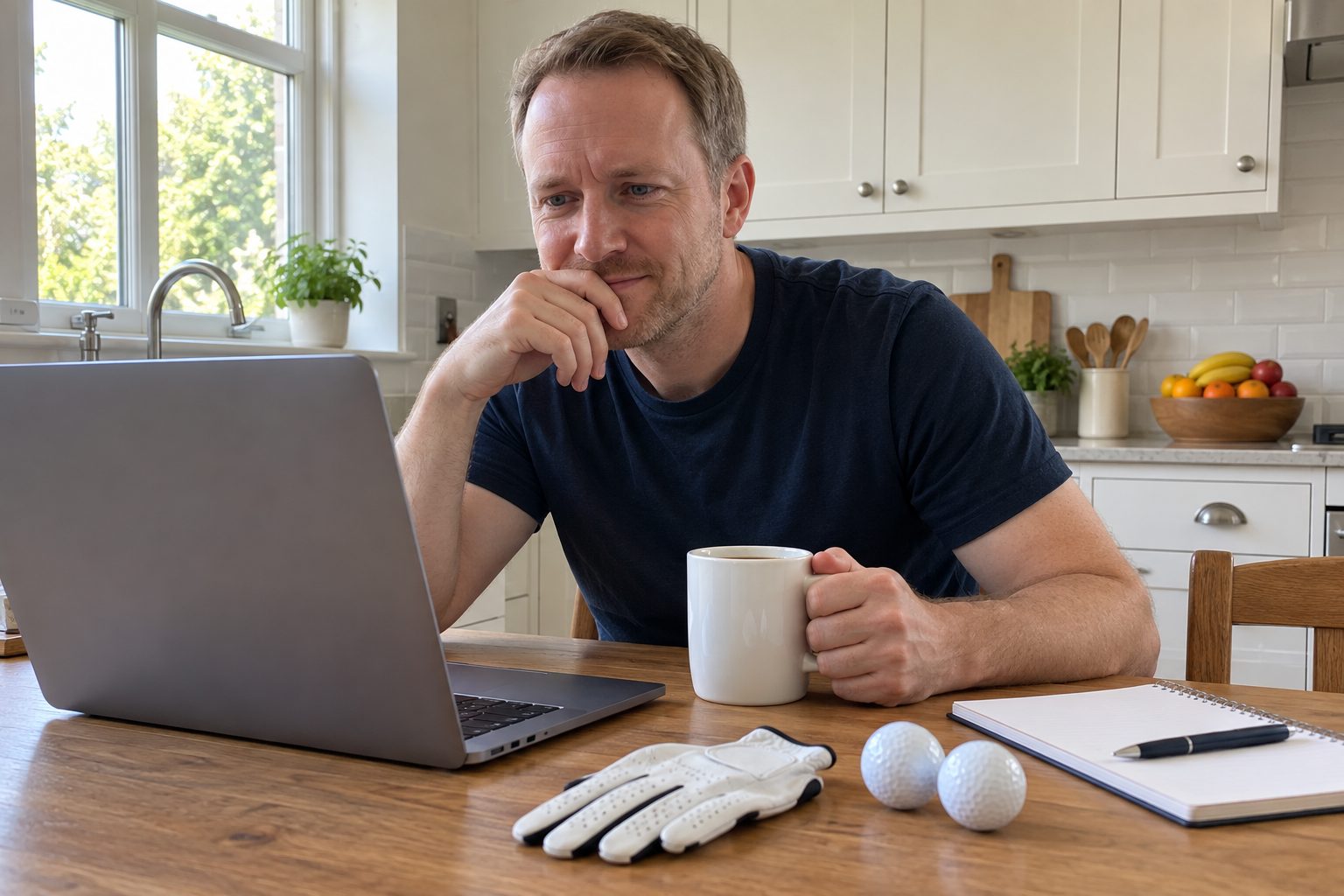
Minus 0.04 is no link at all. My year on the floor had gone into the one trait in the review that did not track with speed, while the strongest links were power and strength.
A correlation is not proof. Strong golfers might swing fast for other reasons, and this review cannot say that getting stronger makes anyone faster. Training studies get closer. A 2026 meta analysis of 33 of them, 798 golfers in all, found strength and power programs added about 2.3 mph on average, with low certainty. The best result I found in middle aged golfers was 5.1 mph in eight weeks, in 15 men averaging 47, in a study with no control group.
So the honest prize was a few miles an hour, not twenty. That was still more than my lessons, sticks and stretching had found.
What A Swing Speed Tool Has To Do
Before I bought anything else, I wrote down what it had to do. The review pointed at strength and power. My garage and my Saturday rounds added the rest.
- The weight sits far from my hands. A club pulls hardest out at the end of a long shaft. The tool should make my trunk and arms control a load at the end of a lever, not one held in my fist.
- It turns both ways. A swing is a rotation. I wanted to train it left and right, not only up and down like a press.
- It starts light. Light enough to learn the movement for a week or two before I put any load on it.
- It loads in small steps, with plates I own. So it keeps getting harder for months without a shelf of fixed weights.
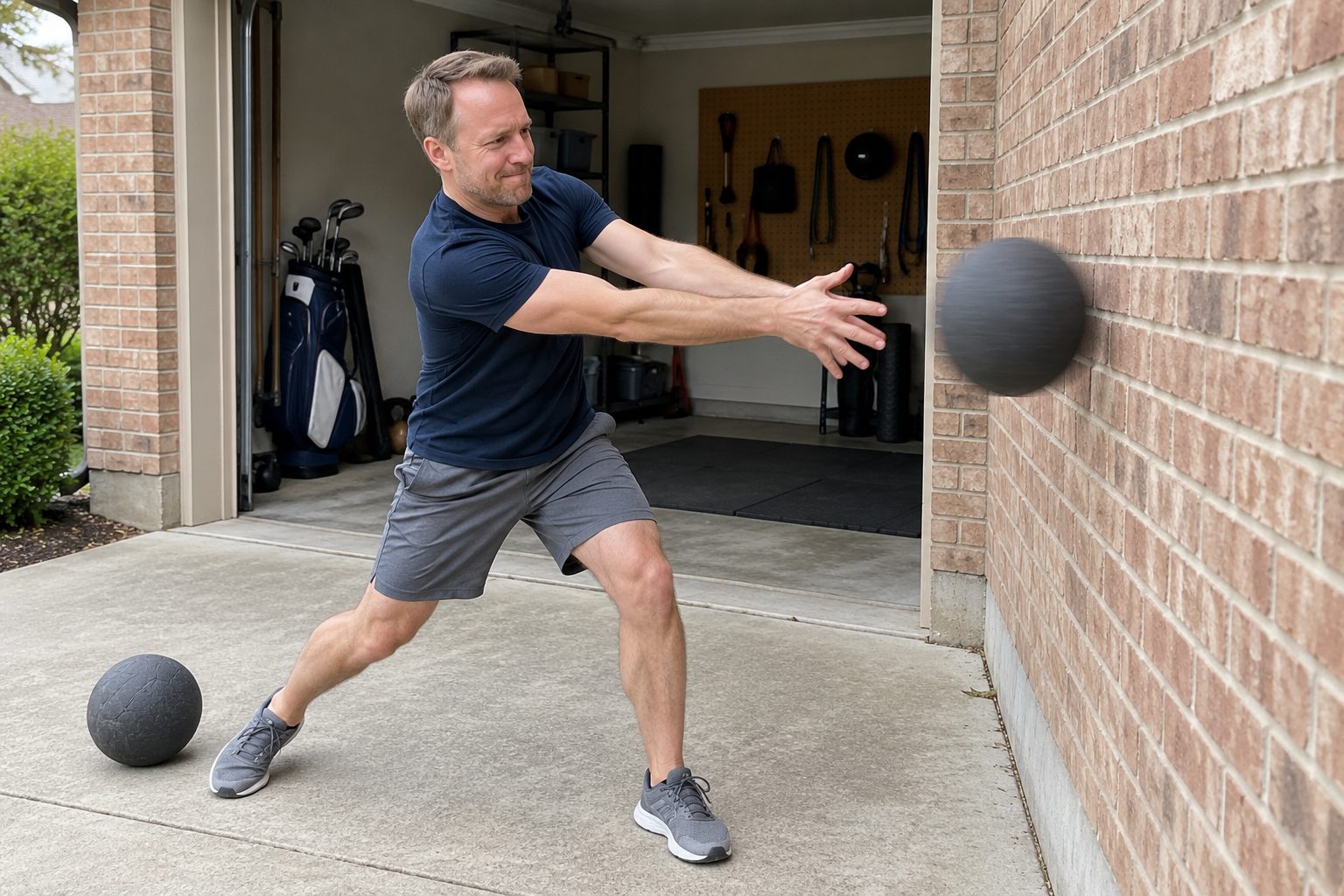
Dumbbells and kettlebells fail the first test, because the weight is in my hand. Cable woodchops pass the first two and need a gym. Medicine ball throws win outright on explosive power, the exact thing the review measured, but they need a solid wall and a lot of room. Speed sticks are light and fast, which is their job, and they barely load anything at all.
The $75 Mace That Passed All Four
What passed is the oldest tool on this page. A mace is a weight on the end of a long handle, swung around the body, and wrestlers in Iran and India have trained with one for centuries (the long version of that history is here).
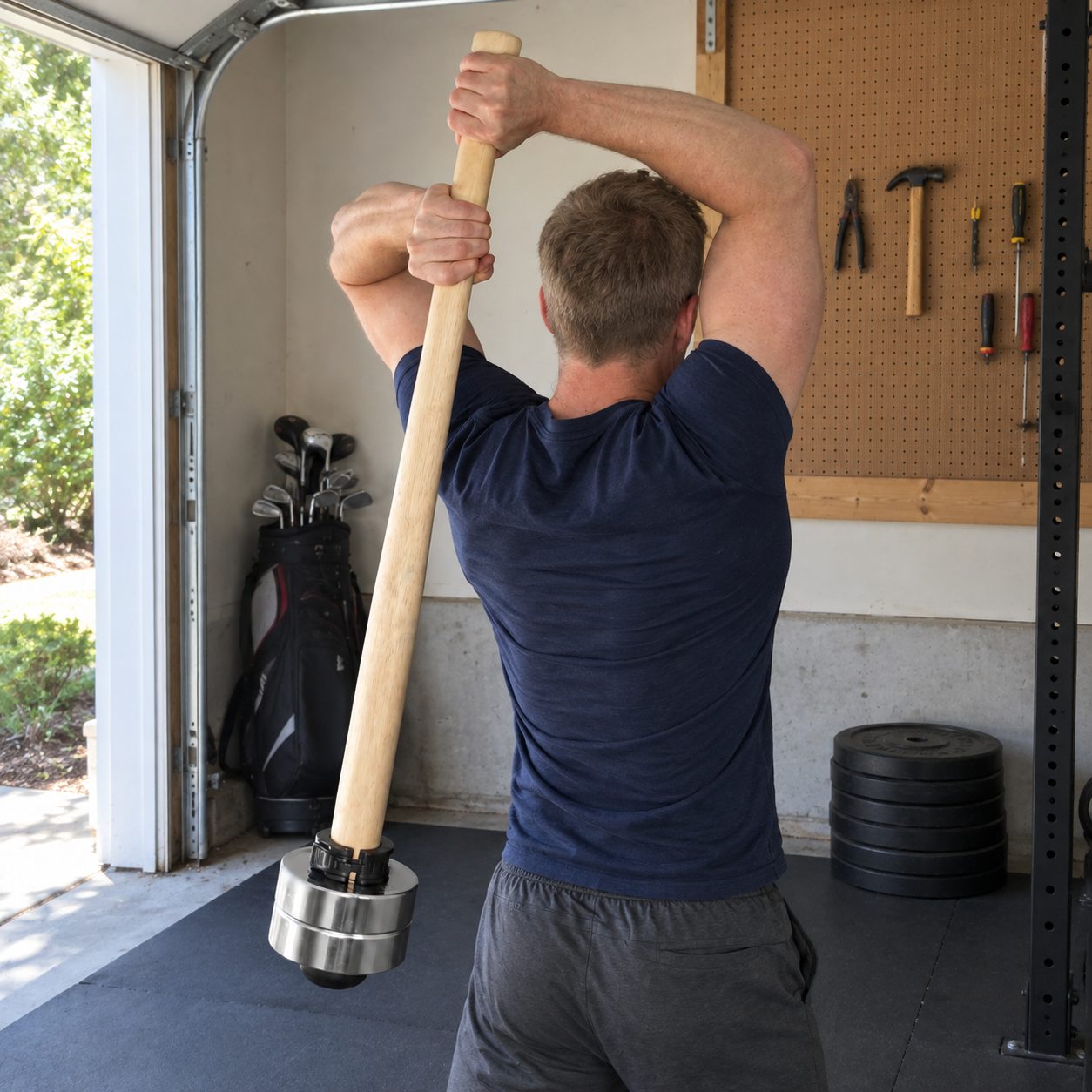
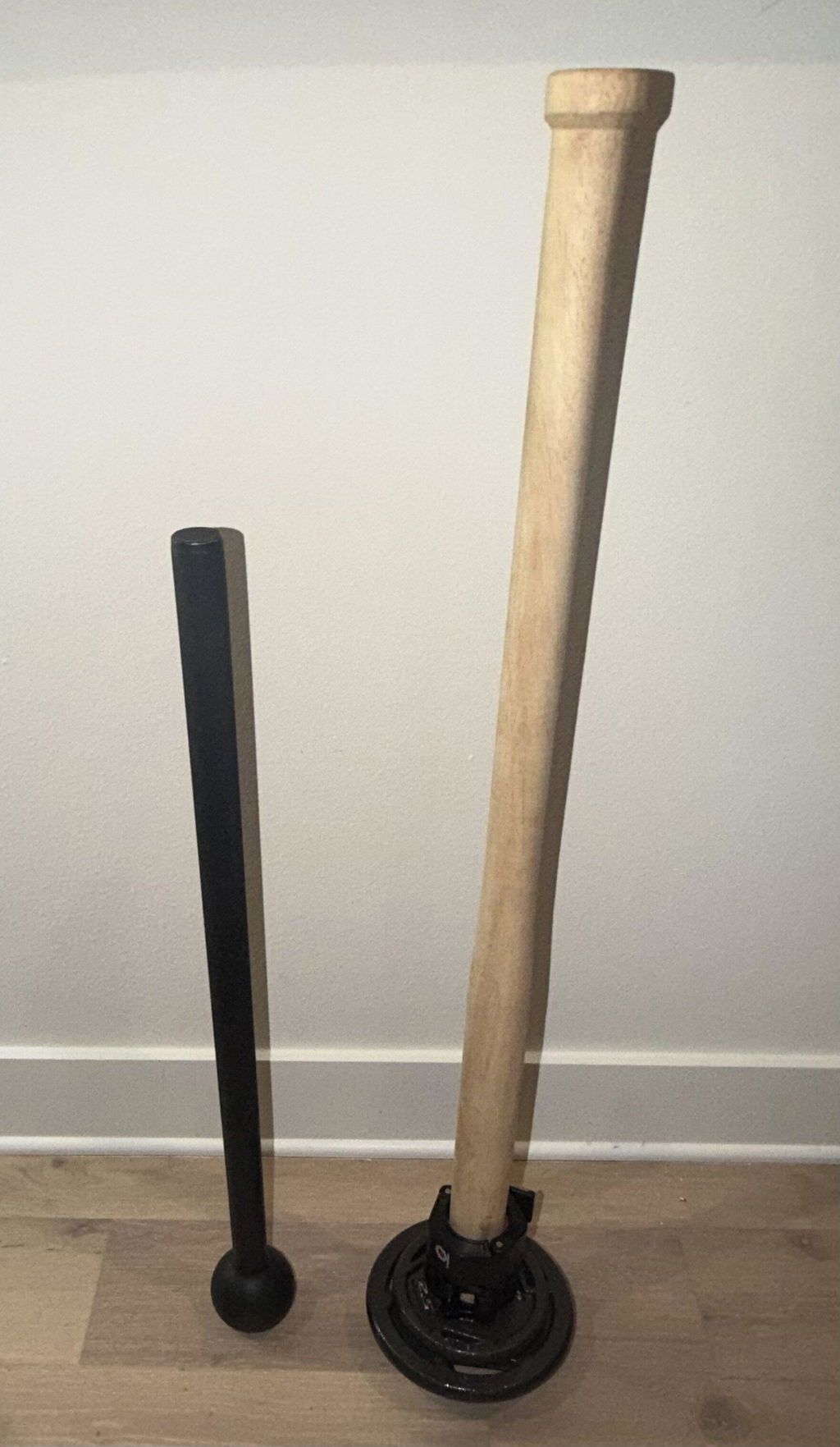
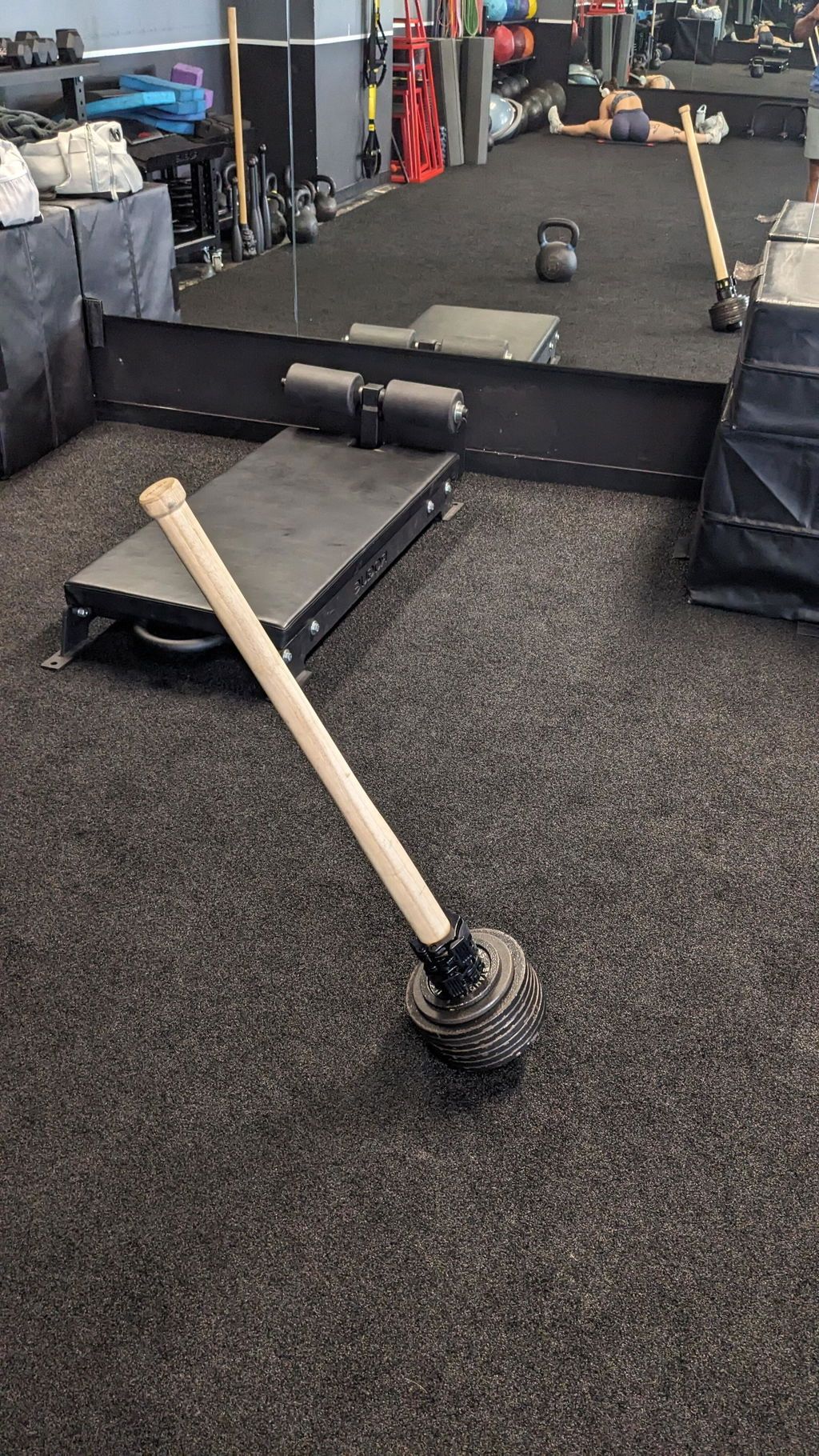
Mine is the Kensui EZ-MACE V2 PRO. It is a 40 inch wooden handle that weighs 2 pounds bare, with a short sleeve at one end for standard two inch Olympic plates and a black collar that locks them on. Kensui rates it to 60 pounds.
It clears the first test by design. Kensui's own product page warns that a mace loaded to 50 pounds feels far heavier than a traditional 50 pound mace, because the plates sit at the very end of the lever. It swings both ways. It starts at 2 pounds. And it takes the same plates as my barbell, in 2.5 pound jumps.
I ordered it at the end of June. In July I wrote about what the first month did for my shoulders, because that showed up first. The swing number took longer.
The Verdict
Kensui EZ-MACE V2 PRO
- A 40 inch lever with the load at the far end, so the trunk and arms control it on every swing. Test one.
- Swings both ways, and it starts at 2 pounds bare, so the first week is all technique. Tests two and three.
- Two inch Olympic plates in 2.5 pound steps, up to a rated 60 pounds. Test four.
My 90 Days, Measured
I copied the only controlled mace trial I could find. In 2026, Akaras and colleagues put 13 elite wrestlers on a mace three times a week for 15 minutes, for 12 weeks, and compared them with 14 who trained without one. The mace group came out with a stronger grip, more shoulder flexibility on the dominant side and steadier shoulders. They were wrestlers, not golfers, so nothing in it says a mace makes anyone swing faster. It gave me a dose.
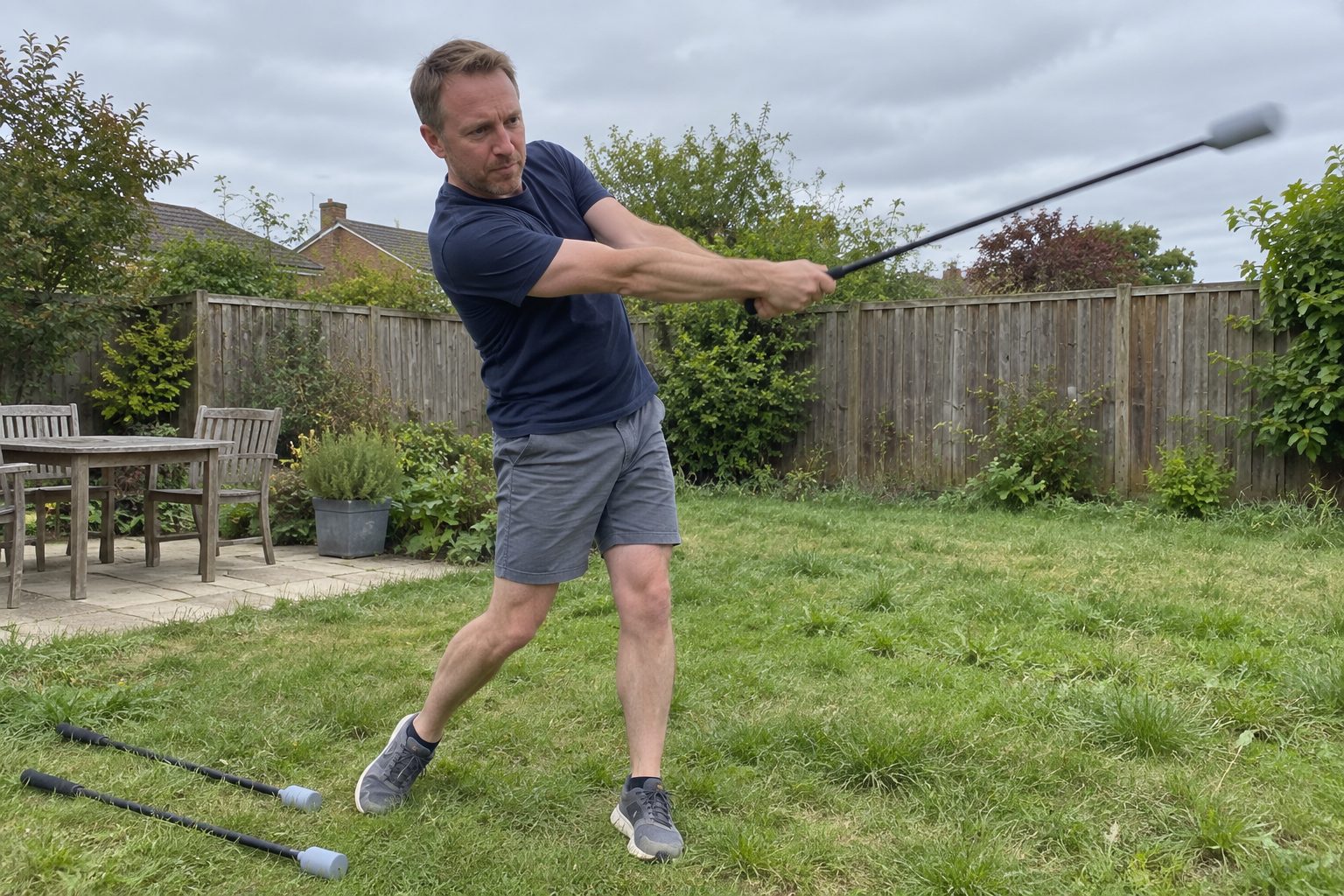
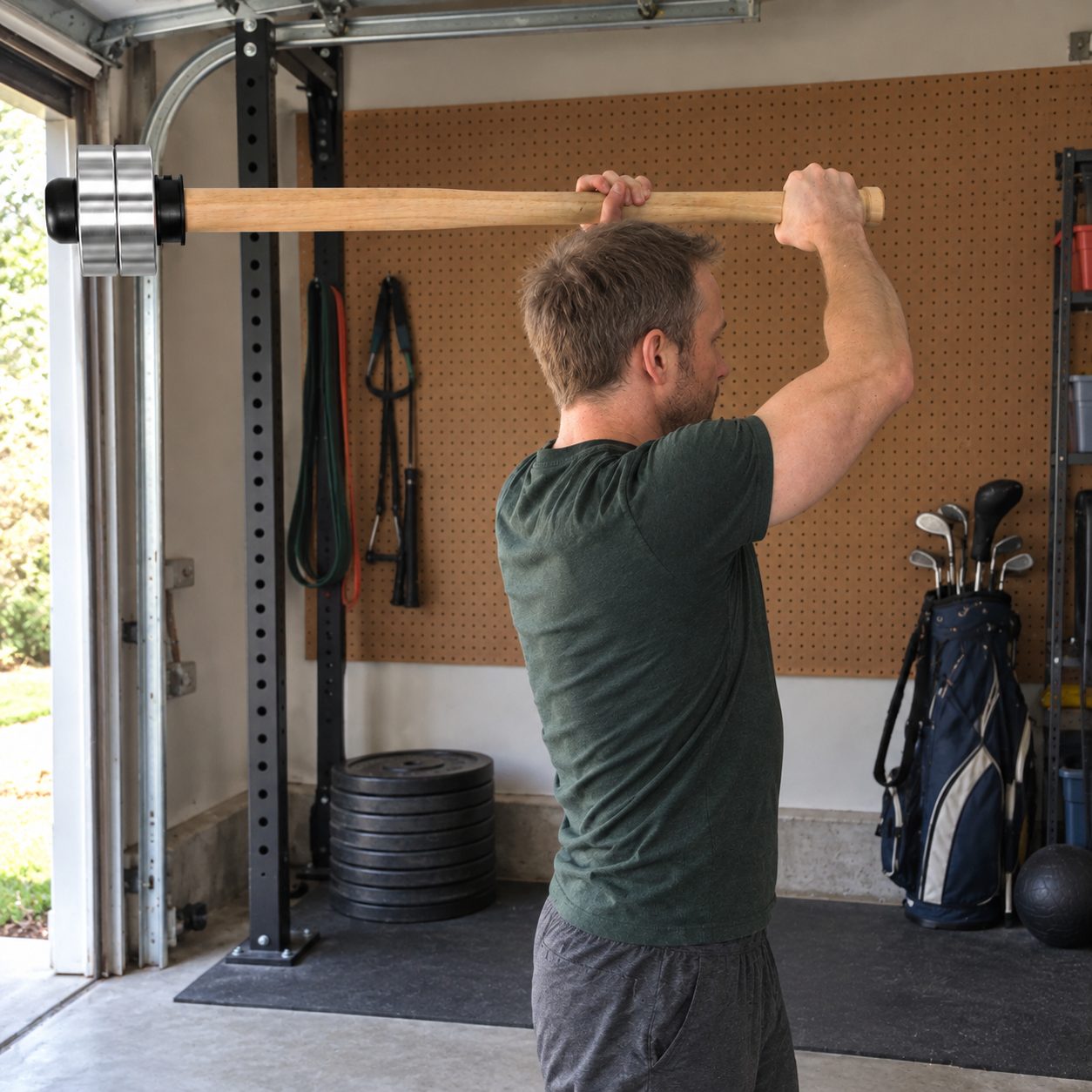
Three sessions a week, 15 minutes, after lifting. Two way 360s over the head, then 10 to 2 swings in front, then a slow turn from one hip to the opposite shoulder in my golf posture, ten each side. Weeks one to four went from the bare handle to 10 pounds, the same climb I described in July. By week eight there were 15 pounds on it. By week twelve, 20 pounds on the slow work and 10 on the fast. I kept lifting, kept playing on Saturdays, and put the speed sticks in the closet.
Driver clubhead speed, average of ten swings, same bay, same driver
- Before lesson one92.1 mph
- After six lessons92.0 mph
- After six weeks of speed sticks94.6 mph
- Eight weeks later, day 0 with the mace94.6 mph
- Day 4597.2 mph
- Day 90, late September99.7 mph
- Carry on the bay's own estimate226 to 238 yd
So here is what the headline means, measured. Everything I paid for before added 2.5 mph, and all of it came from the sticks. The mace added 5.1, double that, in 90 days. My driver went from 94.6 to 99.7, not from 92 to 184.
That is one golfer, one launch monitor and no control group, and I was lifting and playing the whole time. I cannot tell you how much of it the mace did on its own. What I can tell you is that it was the first thing to move the number after eight flat weeks, and 5.1 mph sits at the top of what the training studies report, not past it.
A mace builds the strength side of a swing. It does not teach one. My lessons are why the ball goes straight, and the sticks still train something the mace cannot, which is swinging something lighter than a driver faster than a driver. If I were starting over, I would keep both.
The weak spot is the collar. Once I passed 15 pounds, I started checking it every set, because fast swings can walk the plates toward the end. One owner fixed his with a hose clamp from the hardware store under the collar, and Kensui itself recommends two collars past 60 pounds.
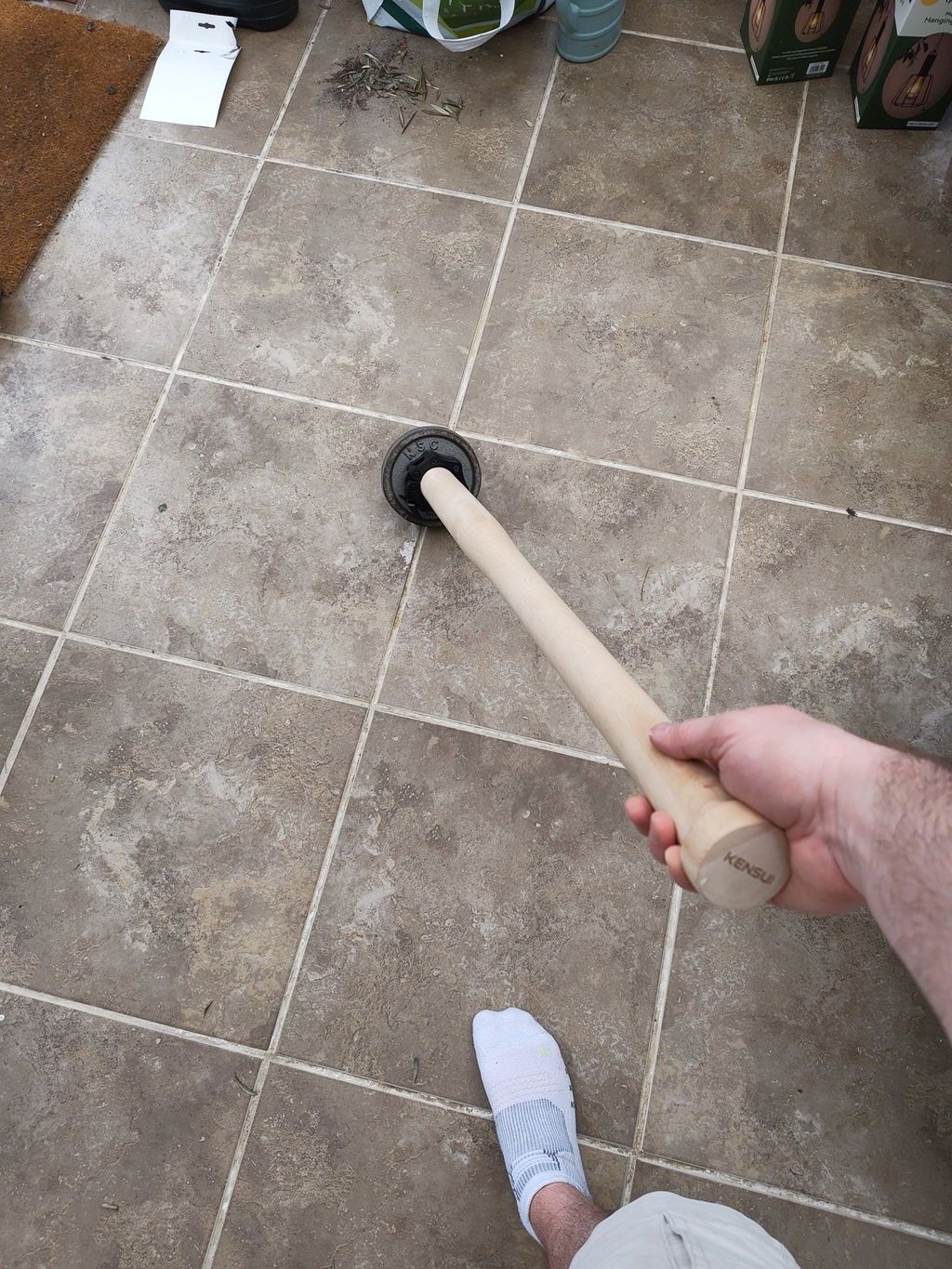
"Love my EZ-Mace. Handle longer and diameter larger than I realized, both positives… Love the feel of wood versus steel."
stewart w., verified EZ-MACE PRO owner, five stars"Very high quality product and a great tool to add to any strength training program! Can't beat the rotational swings for shoulder health."
Nick B., verified EZ-MACE PRO owner, five stars$75 for the PRO (wood) · in stock, ships in 24 hours · 100 day money back guarantee
| Kensui EZ-MACE V2 PRO | Kensui EZ-CLUB PRO | SuperSpeed Speed Sticks PRO | Six lessons | A year of stretching | |
|---|---|---|---|---|---|
| Price | $75 | $49 single | $199.99 | $399.99 | $0 |
| What it trains | Strength through a full turn, load at the end of a 40 inch lever | Lighter, faster swings on a shorter wooden club | Swinging faster than a driver | Grip, path and face | Range of motion |
| My speed change | Plus 5.1 mph in 90 days | Not tested by me | Plus 2.5 mph, then flat | None | None |
| Wins on | Load that keeps climbing with plates you own | The cheapest way in | Pure speed work, no strength needed | Hitting it straight | Costs nothing |
| Learn More | Learn More |
If a 40 inch lever sounds like more than you want, the honest cheaper pick is also Kensui's. The EZ-CLUB PRO is a shorter wooden club for $49 a single, which Kensui pitches for lighter, faster work. It takes the same plates, with the load closer to your hands. For more load later, the steel EZ-MACE V2 MAX is $149.
Three Questions From My Saturday Group
Will it take my plates? Only Olympic plates with a two inch hole. Standard one inch plates will not go on.
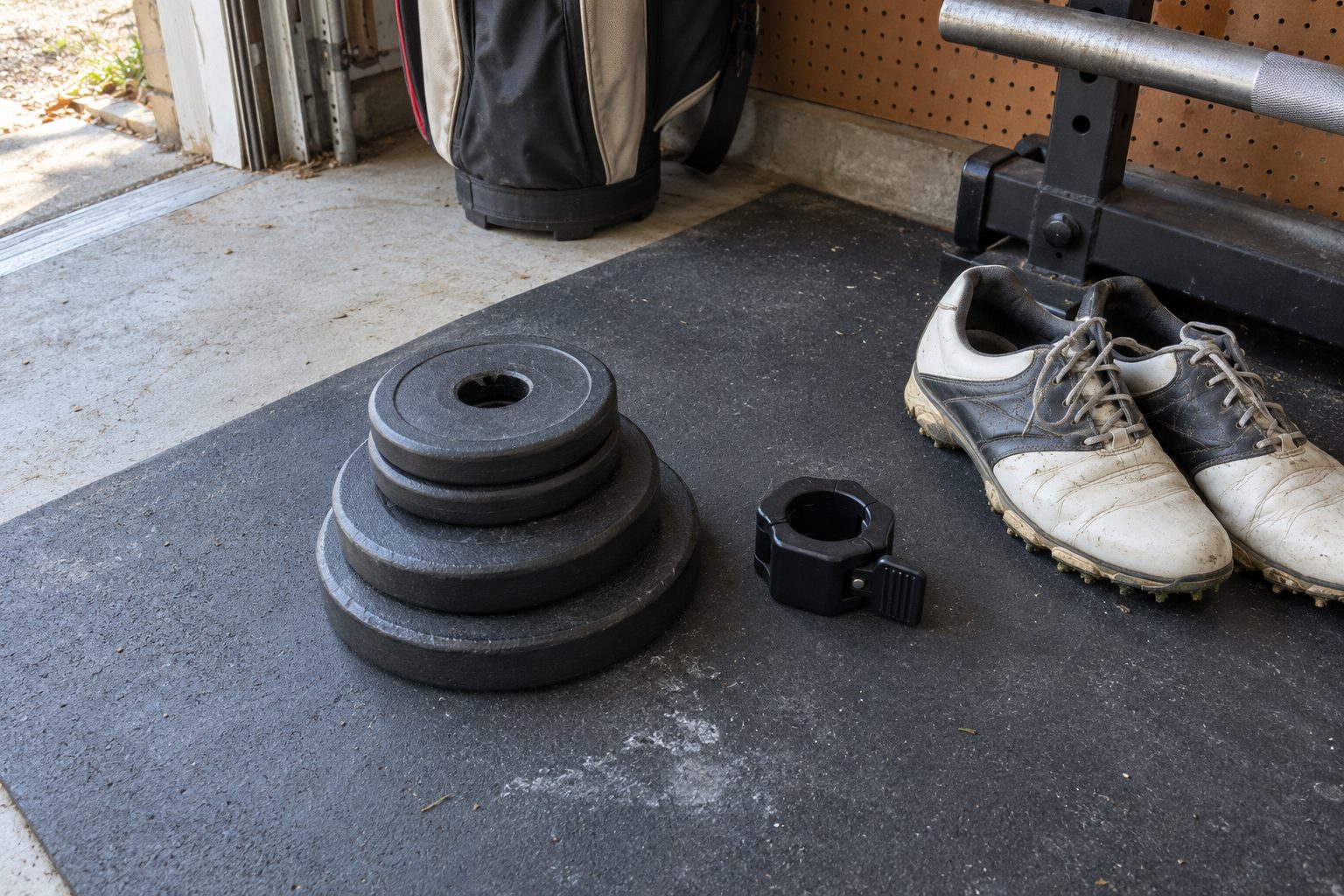
How much room does it need? A 40 inch handle going over your head needs a high ceiling or the driveway. I swing mine with the garage door up.
Does it replace lessons? No. It made me stronger in the direction I swing. Lessons made the ball go where I aim it.
100 Days To Check The Number
Kensui backs the EZ-MACE with a 100 day money back guarantee, and it ships within a day. That is enough time to run the same 90 days, rent one more bay hour, and send it back if the number did not move.
Five Miles An Hour For $75
Six lessons straightened my drive. A $199.99 set of sticks bought 2.5 mph and stopped. Ninety days with a 2 pound wooden handle and the plates I already owned bought 5.1 more.
Get the EZ-MACE