Science · 6 min read
You Can't Spot-Reduce Fat. You Can Spot-Build Muscle. Here's the Proof, and the Catch.
Thirty years of MRI scans agree that a muscle grows where an exercise makes it work, not evenly from end to end, and that switching the exercise moves the growth. The open question is the biceps: the trials that tested it have not found the effect yet.

The Claim
You have probably tried the fat half of this already. A few hundred crunches a week for the belly. The inner-thigh machine at the end of every leg day. It did nothing, and by now most people know why. Fat comes off the whole body, in an order your genes decide.
The muscle half is the newer idea, and it is the reel's point. A muscle does not grow evenly from end to end. Change the angle or the position of an exercise and you change where it grows most. So if the top of your biceps or the outer sweep of your thigh lags, the fix is not more sets of the same movement. It is a different movement.
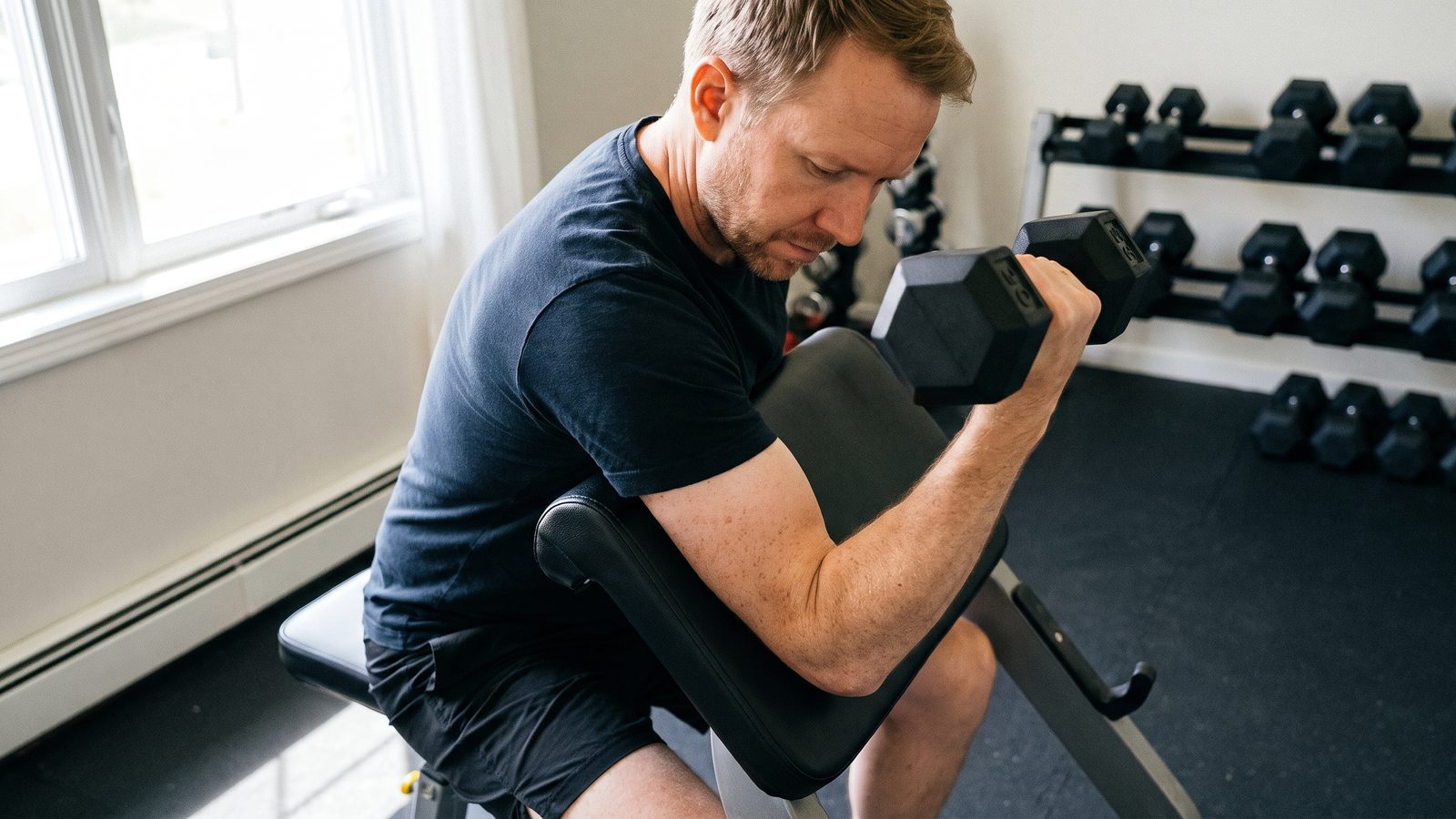
The classic example is the biceps. An incline curl for the upper part near the shoulder, the idea goes, and a preacher curl for the lower part near the elbow.
One of those two ideas is settled science. The other is not, and it is the one with the biceps in it. Take them in order.
What the Research Actually Found
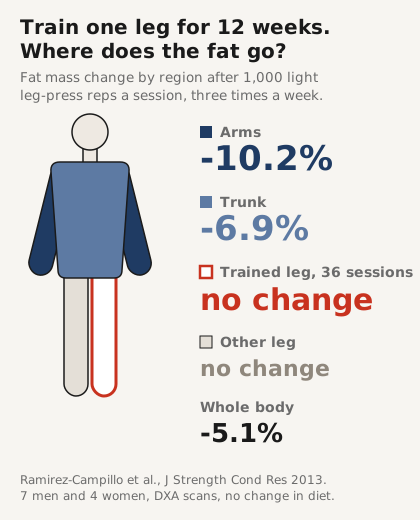
Spot reduction has been tested hard, and it fails every time it is measured properly. In a 2013 trial, 11 adults trained one leg for 12 weeks, three times a week, with 960 to 1,200 leg-press reps a session at a light load. Their body fat fell 5 percent. It came off the arms, down 10.2 percent, and the trunk, down 6.9 percent. The trained leg lost no more fat than the untrained one.[1] A larger study had 104 people train one arm for 12 weeks. On MRI, the trained arm shed no more fat than the other one.[2]
Muscle behaves differently, and the evidence is old. In 1992, MRI scans of 13 men after eight weeks of training showed growth that differed from muscle to muscle and from one level of a muscle to the next.[3] In 1996, seven men trained leg extensions for six months. Their quads grew about 19 percent at the top and bottom of the thigh, but only 13 percent in the middle.[4] A muscle does not inflate like a balloon. It grows in patches.
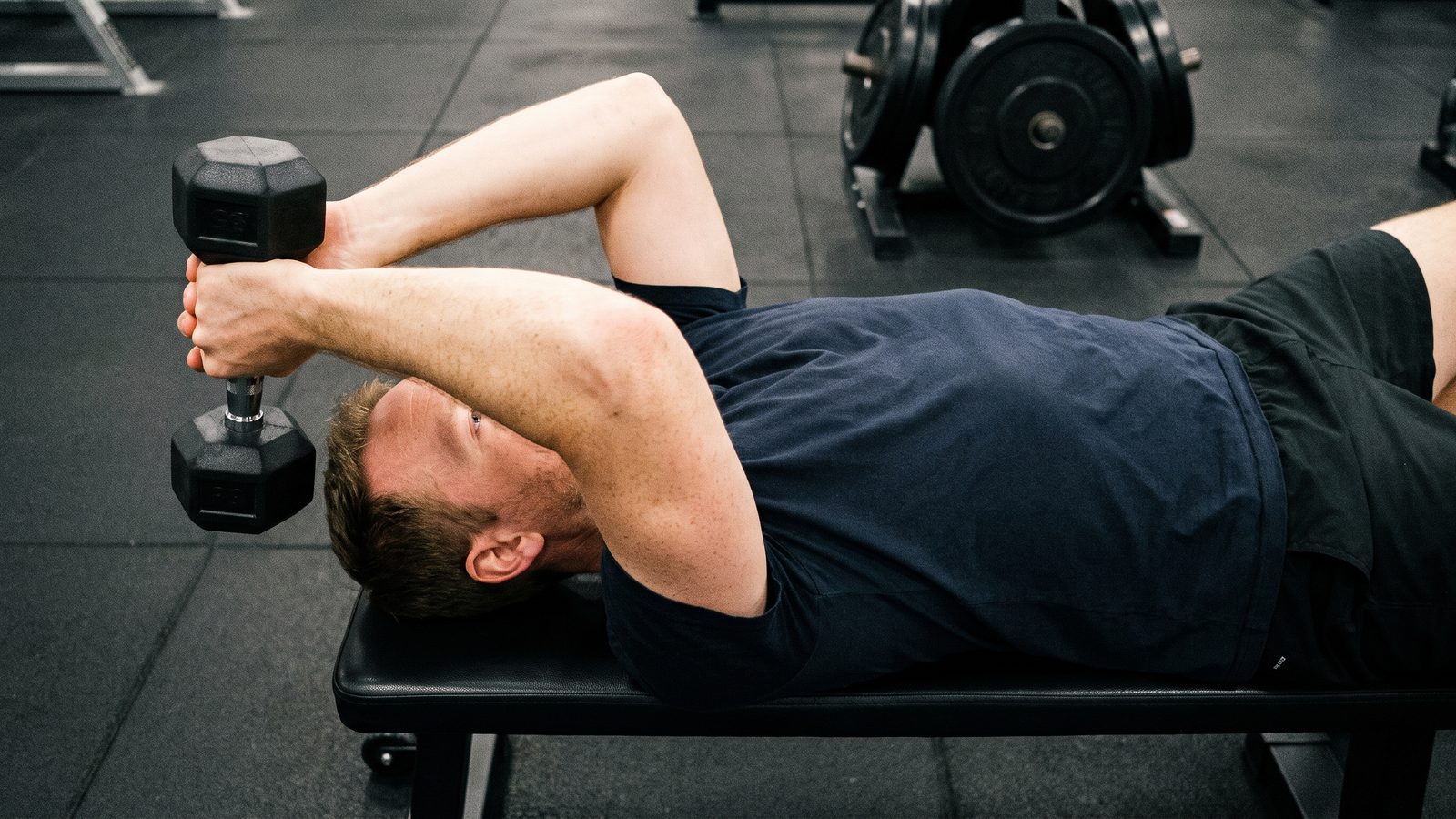
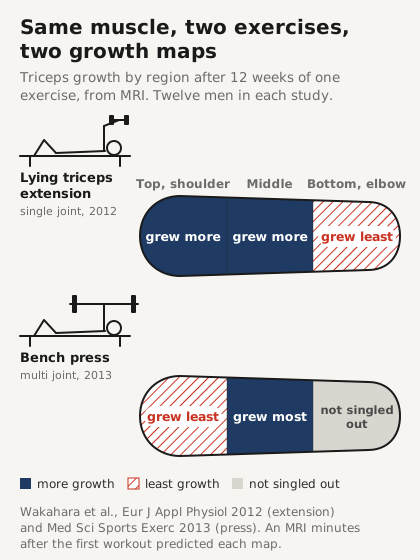
The real question was whether you can steer the patches. A lab at Waseda University in Tokyo answered it in two studies that are the backbone of this article. In the first, 12 men did one session of lying triceps extensions: five sets of eight with a dumbbell at 80 percent of their max. An MRI taken minutes later showed which parts of the triceps had just worked. Another 12 men then trained the same exercise three times a week for 12 weeks. The region that lit up least after the single session, the part near the elbow, was also the region that grew least over 12 weeks.[5] In the second study, 12 men trained a bench press for 12 weeks. This time the middle of the triceps lit up more and grew more, and the top of the muscle near the shoulder lagged.[6] Same muscle, two exercises, two growth maps, and each map was visible after one workout.
The same lab repeated the trick on the thigh in 2017. The part of the rectus femoris that activated most in the first knee-extension session was the part that grew most over 12 weeks.[7]
Exercise choice can even change a muscle's shape. In 2023, 12 people trained one leg with single-leg knee extensions and the other with single-leg squats for eight weeks. Total quad growth was the same on both legs. On the knee-extension leg, though, the muscle's center of mass moved 2.4 centimeters, almost an inch, toward the knee. On the squat leg it stayed put.[8] Another trial, with volume and intensity matched, found that leg extensions grew all three regions of the rectus femoris while Smith-machine squats grew only the middle of the vastus lateralis.[9]
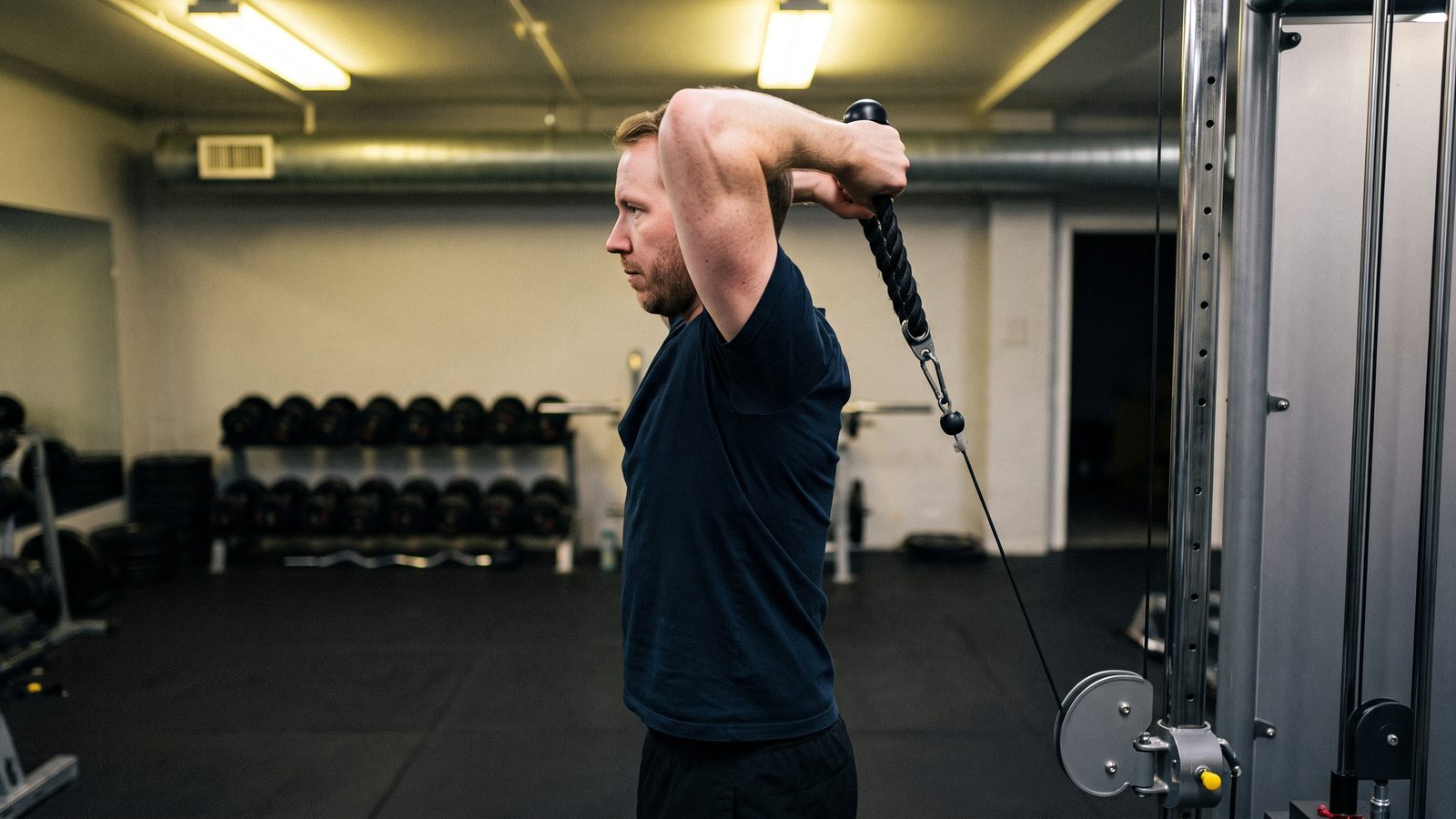
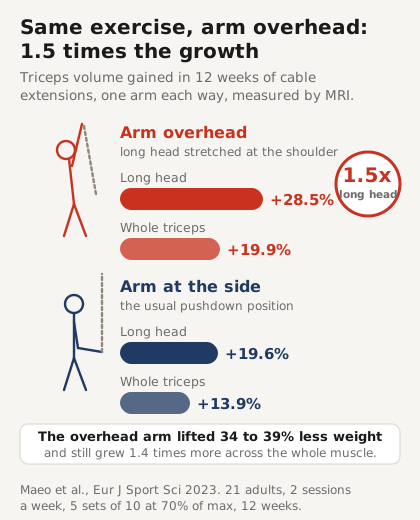
Arm position matters most for a muscle that crosses two joints. In 2023, 21 adults trained cable triceps extensions for 12 weeks, one arm overhead and the other at the side. The overhead arm lifted 34 to 39 percent less weight and grew more anyway. Its long head, the one that crosses the shoulder, gained 28.5 percent in volume against 19.6 percent, 1.5 times as much. The whole triceps gained 19.9 percent against 13.9.[10]
So the core of the reel is right. A muscle grows where an exercise makes it work. That place moves when the exercise changes. And you can see it on a scan.
What It Looks Like in Practice
Three rules fall out of those studies.
- If a region lags, change the exercise, not the weight. One session's activation map predicted 12 weeks of growth. If you have done the same press for two years and the top of your triceps has not moved, more weight on that press is unlikely to fix it. A different movement might.
- Train the stretched position when you can. Overhead extensions beat the same movement at the side by half again, with less weight.[10] On the biceps, preacher curls done in the stretched half of the movement grew the lower biceps more than the top half did,[11] and five weeks of curls in the extended range grew the elbow flexors 8.9 percent against 3.4 percent for the flexed range.[12]
- Pick two exercises per muscle that load it differently, not five that load it the same. A single-joint extension and a press for the triceps. A stretched curl and a squeeze curl for the biceps. A squat and a leg extension for the quads. That covers the regions the scans found.