Engineering • 6 Min Read
An MIT Grad Patented a Fix for the Worst Part of Pull-Ups
Whoever bolted your bar to the ceiling decided how your hands would sit on it, and then walked away. A US patent granted this June says that decision was never permanent.

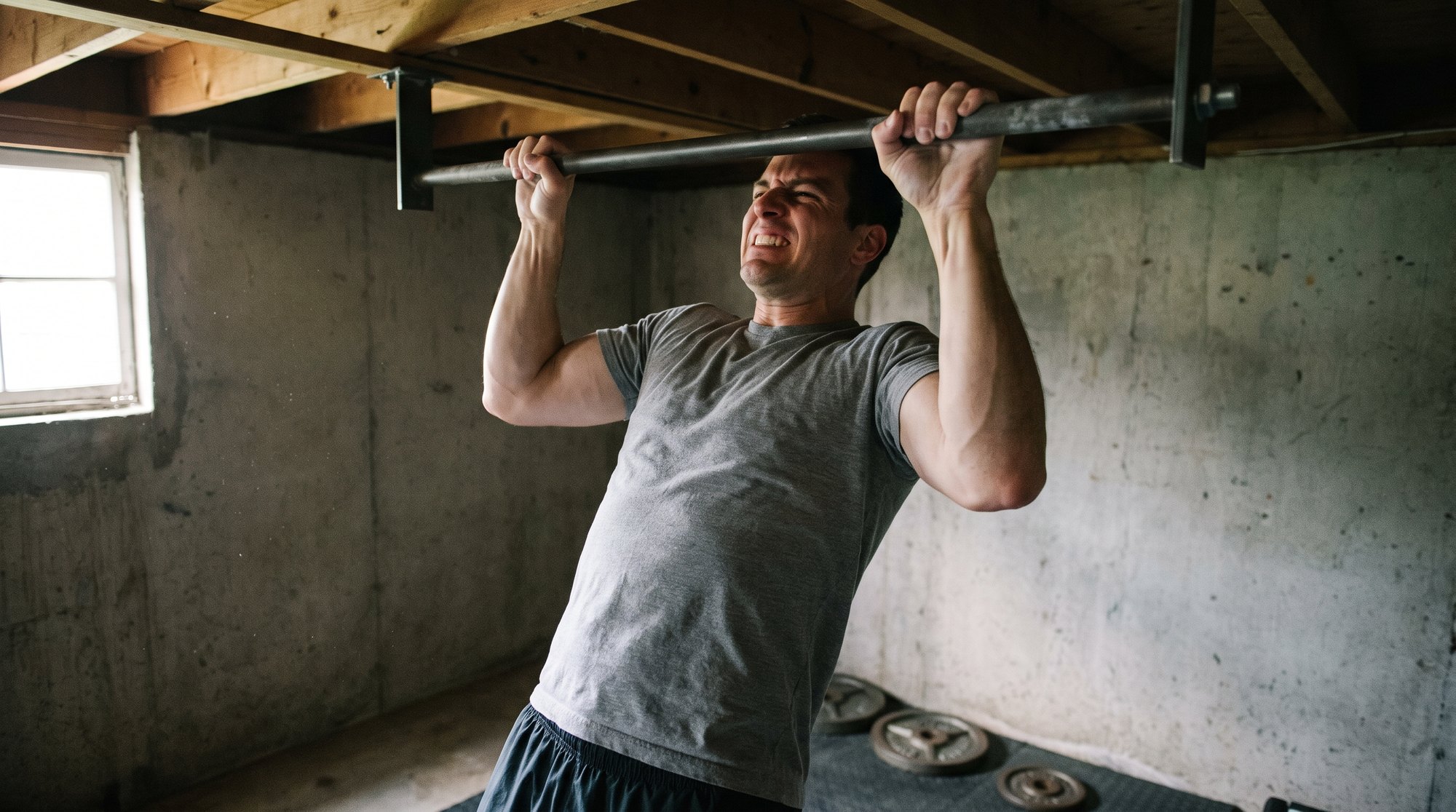
Ask a room of lifters what the worst part of a pull-up is and most of them will say the last rep.
They are wrong, and they usually find out by the next morning. The last rep is the part you came for. What actually drives people off pull-ups is a dull ache on the inside of the elbow that shows up a day later, settles in for the week, and is still sitting there when you reach up for the bar again.
That ache is not the bar's fault, exactly. It is the bar's shape.
The Bar Made One Decision, And It Made It Once
A pull-up bar is a straight tube. There is nothing else to it. No setting, no adjustment, no moving part. Whoever mounted it chose two things on your behalf and then left.
First, how far apart your hands can go. In a doorway you get the width of the doorway. On a wall mount you get whatever the brackets left you.
Second, and this is the one that matters, your palms have to face away from you. A hand cannot wrap a horizontal tube overhead any other way. Anatomy has a name for that position, pronation, and it means the two bones of your forearm are crossed over each other and stay crossed for as long as you hang there.
Do a set of eight and you have held a crossed forearm under your whole bodyweight for something like forty seconds. Three sessions a week for a year makes that a hundred and fifty times over.
A bar is a single machined tube, so every one of these follows from its shape rather than from a design choice anyone revisited. That is why they have all been the same since bars were first bolted to gym walls.
A straight bar
Your hands can only line up with the tube, so both palms end up facing behind you. There is no second option to pick.
A bar with a hook on it
Turn the handle across the tube and your palms face each other. Nothing about the bar changes, only what you are holding.
The Fix Is On File At The Patent Office
On 30 June 2026 the US Patent and Trademark Office granted patent number 12,667,751 to Kensui LLC, a small fitness company registered in Sheridan, Wyoming. The title is Hook-and-Handle Device. It runs to 18 claims across 18 sheets of drawings, and it had been queued at the office since March 2023.
Kensui was founded by Remy Mock, who holds two engineering degrees from MIT and started the company after a run of travelling with a dip belt and a set of rings because nothing portable did the job properly. He has since put five inventions on file, including the plate-loaded vest the company is best known for.
A patent has a section most people never read. In the background, the applicant has to state the problem they are solving, in plain language, on the record, where an examiner and every competitor can see it. This one says:
“Most pull-up bars are straight and cannot be gripped by a user via a neutral grip. Neutral grip is considered the safest and strongest grip and is the preferred method for many people with wrist and shoulder issues.”
US Patent 12,667,751, background sectionThe invention itself is almost annoying in how little there is to it. Claim 1 describes a hook that curves part way around a bar, a soft layer lining the inside of that hook so it holds without sliding or scratching, and a handle joined to the far end. Everything hangs on one measurement, the angle between the handle and the bar, which the drawings label with the Greek letter alpha.
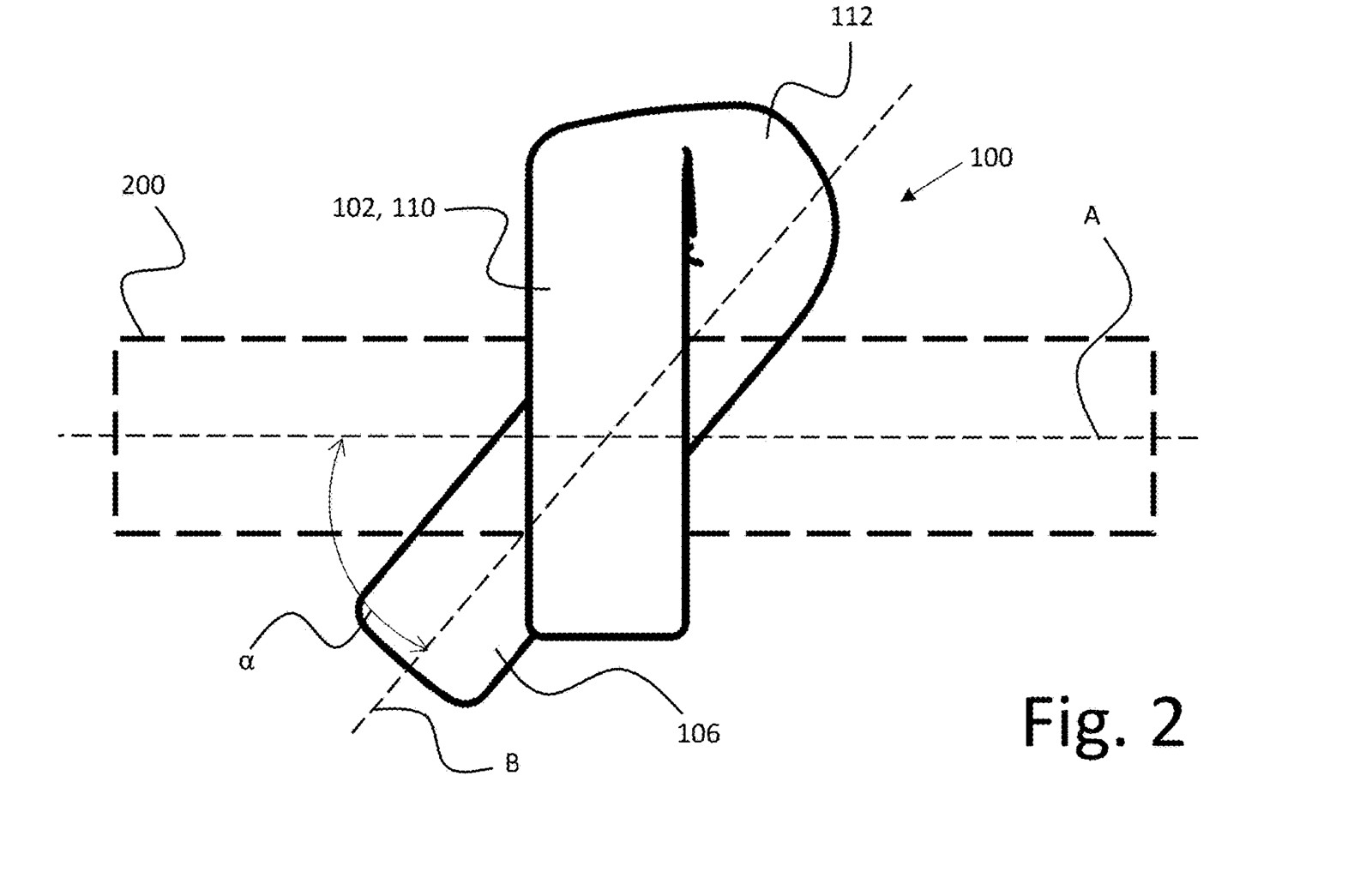
Claim 2 pins that angle down: larger than zero degrees, and no more than about ninety. A quarter turn. Hang the hook over your bar and the thing in your fist no longer runs along the bar, it runs across it, and your palms end up facing each other.
That is the fix. Not a new bar and not a new gym. Two hooks you drop over the bar you already own, which come off again in a second and weigh about as much as a paperback.

The Three Ways To Fix A Straight Bar
Kensui sells the object in those drawings as the Swissies V2. A pair of nylon fibreglass hooks with a knurled 32mm handle and a rubber lining inside the curve, sized for bars up to 50mm, which covers doorway bars, wall mounts, rack pull-up bars and Olympic barbells.
It is one of three ordinary ways to stop a straight bar grinding on your elbows. The other two are worth putting next to it.
| Swissies V2 | Gymnastic rings | Switching to chin-ups | |
|---|---|---|---|
| Cost | $39 a pair | $49 a pair | Nothing |
| Works on the bar you already own | Yes, hooks over it | No, needs its own anchor | Yes |
| Forearm position | Neutral, palms facing | Whatever your arm picks | Fully turned the other way |
| Grip width | Anywhere along the bar | Set by the strap spacing | Set by the bar |
| Holds still under load | Yes | No, they swing | Yes |
| Setup time once mounted | Seconds | Minutes, every session | None |
| Where to get it | Learn More | Sold by every gymnastics brand | Turn your hands around |
Swissies V2 and DUO-Rings prices checked on kensui.com on 31 August 2026. Two rows go against the hooks on purpose. Rings let the forearm rotate freely through a rep, which no fixed handle can copy, and a grip change that costs nothing is still the first thing worth trying.
Now The Part The Marketing Skips
A page like this one is where you would normally be told that a neutral grip builds more back. The research does not say that, and it is worth knowing before you spend anything.
In 2017 a group at Massey University in New Zealand put nineteen strength-trained men through supinated, pronated, neutral and rope pull-ups while recording eight muscles across the shoulder, arm and forearm. Their finding, in their own words, was that activation over a full repetition came out “similar despite varying hand orientations.”

Where the grips did separate, it went against the hooks. Middle trapezius peaked at 60.1 percent of maximum on the pronated grip against 37.1 percent on the neutral one. If upper back activation is the thing you are chasing, the plain bar wins that row outright.
Seven years earlier a Mayo Clinic team ran a commercial pull-up device with rotating handles against an ordinary bar and found no recruitment advantage at all. Handles that spin do not make the muscles work harder.
So the case for turning your grip is not a muscle case. It is a joint case, and it is narrower and more honest than the usual pitch: the same work, held in a forearm position you can go on repeating. That is worth $39 to some people and worth nothing to others, and which one you are depends entirely on whether your elbows are already talking to you.
What It Is Actually Made Of
The hook is nylon fibreglass, the same material the company uses in its vest and its loading boot. Inside the curve is the rubber layer that claim 1 calls a protective layer, which is what stops a hard hook sliding on a slick bar or chewing the knurling off a barbell.


The handle is knurled, which claim 10 also covers, and runs 32mm across. That is worth a note, because it is the same thickness as a standard pull-up bar. Nothing here is trying to be a thick-grip trainer. The only thing that changed is which way it points.
A pair weighs 1.3 lb and Kensui says it tests them to 800 lb, which is roughly four adults. There is also a carabiner hole through the body, so the same hooks clip onto a cable stack or a resistance band without an adapter.
What Owners Say, Including The Ones Who Grumbled
The product page carries 181 verified reviews averaging 4.88, with 166 of them at five stars. Read enough of them and the same sentence keeps coming back, from people who are older than the average lifter or already carrying something in a joint.
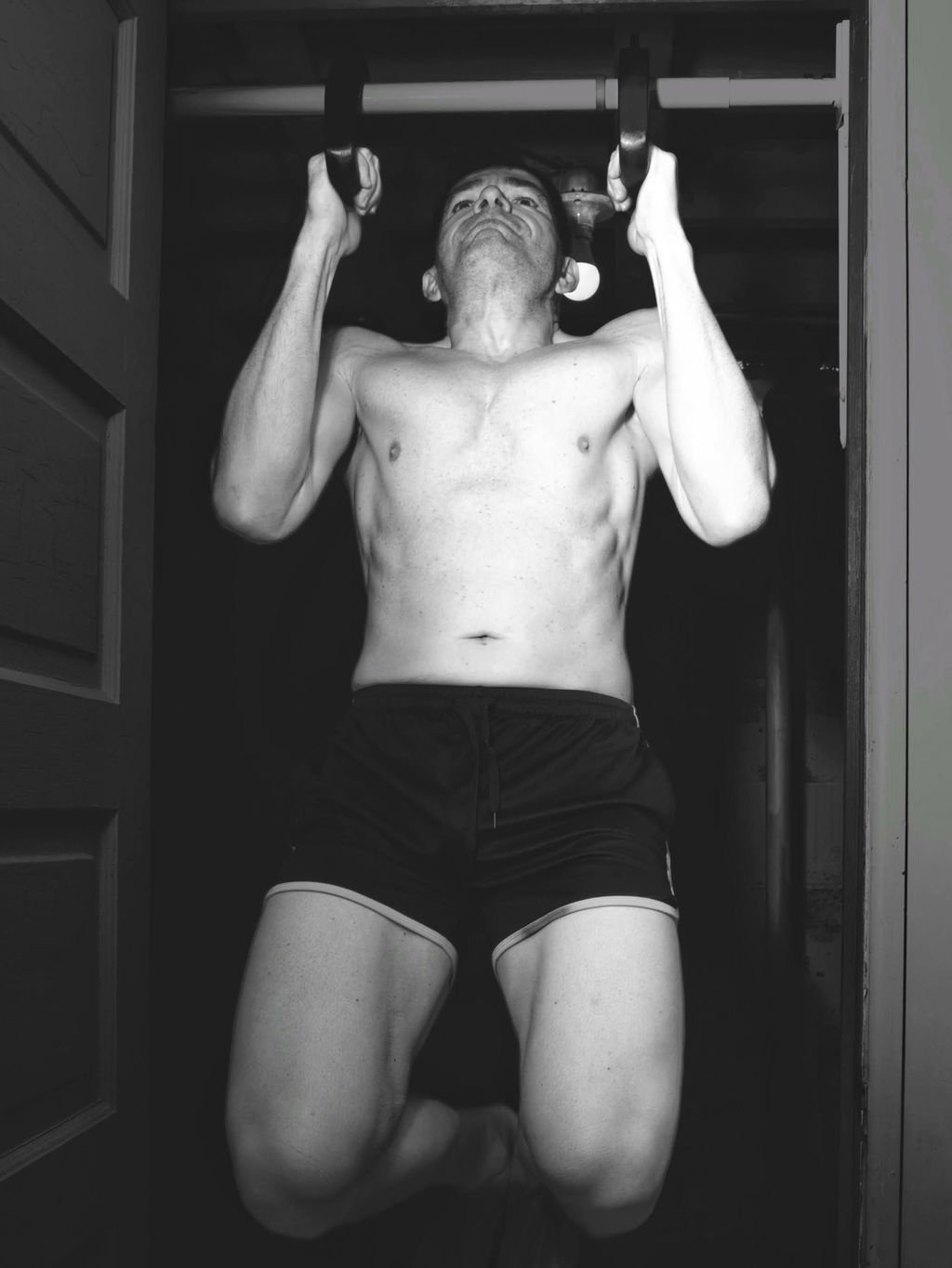
“As a 53-year-old calisthenics practitioner the Swissies V2 have been a real saver for my shoulder and elbow joints. I previously used rings, but setting them up was often time-consuming.”
“The Swissies allowed us to utilize our straight pull-up bar instead of us needing to purchase a different bar. They work great and do exactly as they are advertised.”
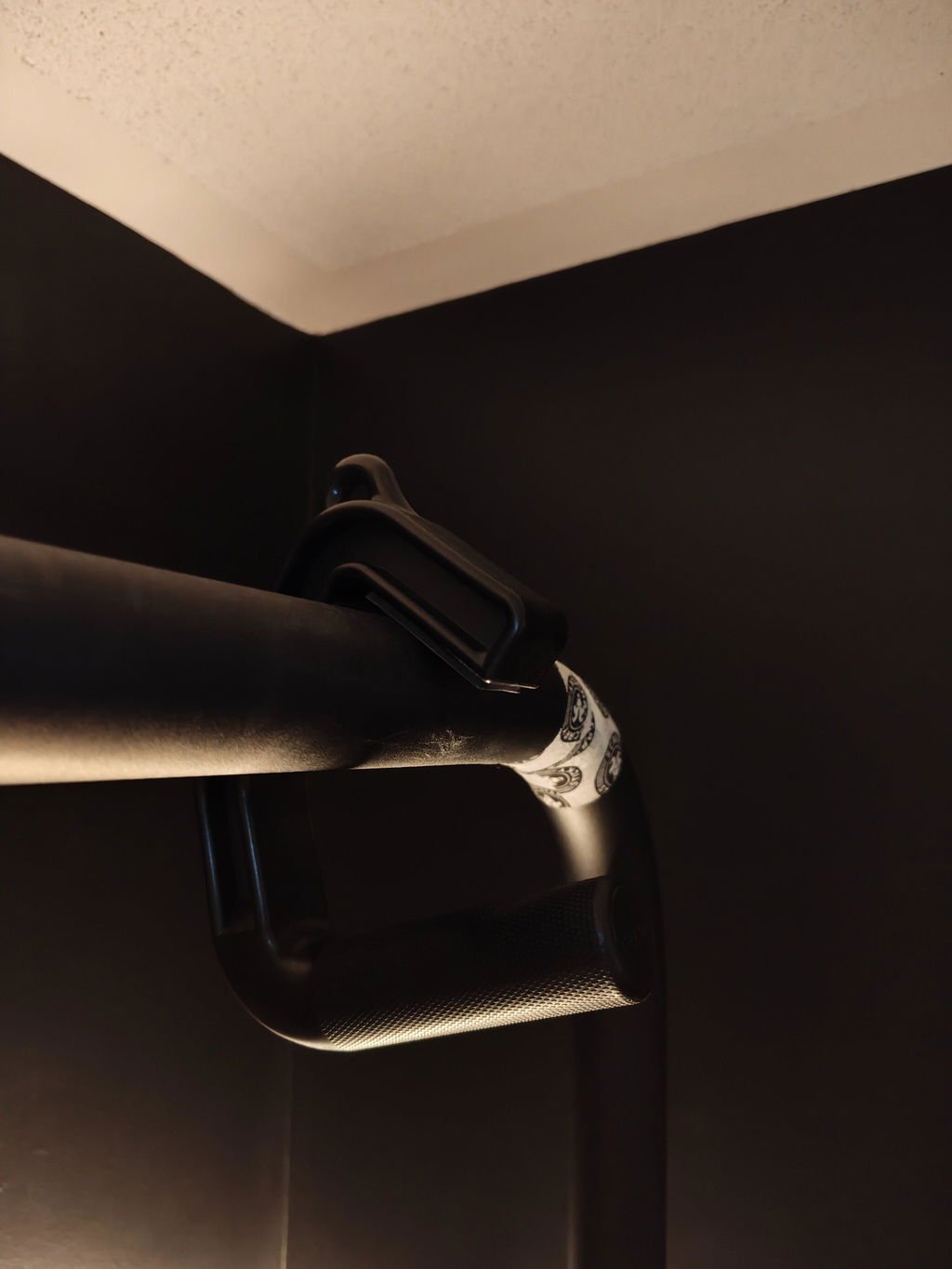
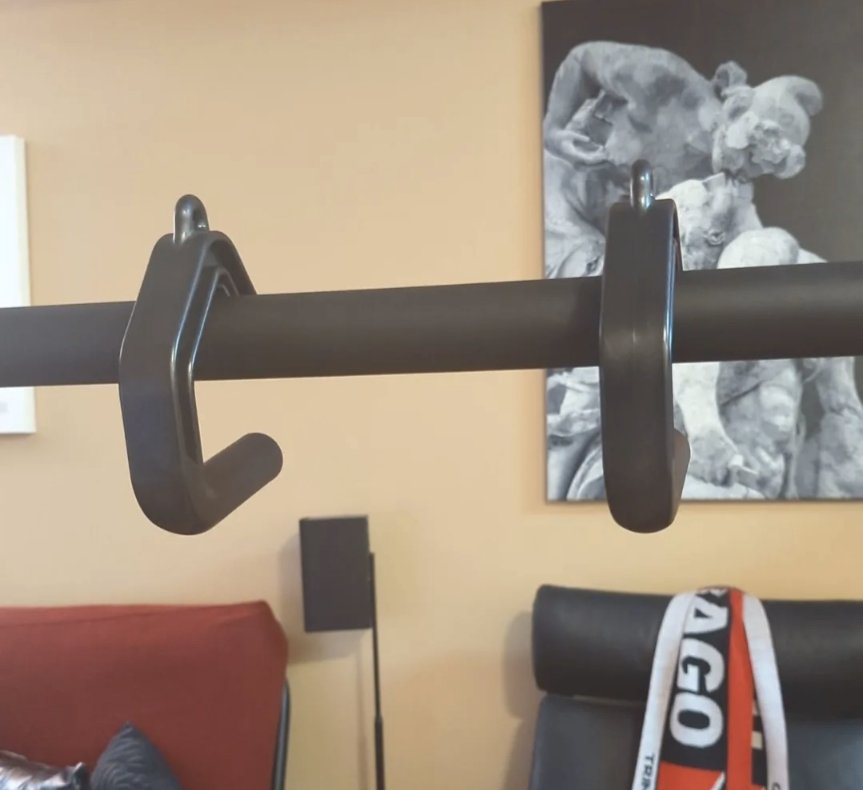
The complaints are worth as much as the praise. One four-star reviewer wanted padding on the handle and suggested selling it as a slide-on accessory. Another liked them and still thought they were priced high for what they are. A third had nothing bad to say about the hooks at all and only wanted the company to publish a maximum load, which it does list at 800 lb, though clearly not anywhere he went looking.
“I really enjoy these. I use it for neutral pull ups cause I only have a basic pull up bar. It is great for bent over rows. Just versatile. The grip is great. My only wish is that Kensui would put out the max weight I can use.”
It Is Not Only Pull-Ups, Which Is Half The Argument
The patent is written around a bar, not around a pull-up bar, and that turns out to matter. The same hooks go on an Olympic barbell, which gives a straight bar something close to a trap bar feel for rows and shrugs and deadlifts without owning a Swiss bar.


Swiss barbells exist and cost several hundred dollars, which the patent background points out itself before adding that they are too bulky to deadlift with. A pair of hooks in a gym bag solves a narrower version of that problem for a fortieth of the money.
Three Things A Quarter Turn Will Not Do
It will not make you stronger. Everything above says so plainly, and the one measurement that separated the grips favoured the bar you already have.
It will not fix a shoulder. Neutral grip is easier on a lot of people and the patent says so too, but that is a claim about comfort and position, not a treatment. Pain that has been there for months is a conversation with a physio, not a $39 purchase.
Last, it will not survive bad technique. Elbows that flare, a swinging kip, or eight sets when your week could carry four will keep hurting through any handle at any angle. Rule that out before you buy anything at all.
Who This Is Actually For
Somebody with one straight bar, no rack, and no realistic way to add a second station. The kind of person who noticed the ache first and the last rep second. Anybody who has already caught themselves reaching for chin-ups instead, not because they wanted to train biceps that day, but because the other way had started to cost something.
If none of that describes you, the bar you own is fine, and the patent is a good read anyway.
Sources and method
Patent details from the full text of US 12,667,751 B2, granted 30 June 2026 to Kensui LLC on application 18/180,537, filed 8 March 2023 and published as US 2023/0302323 A1. The drawing above is Figure 2 of that patent. Kensui's filings name the inventor as Remy Sasano, the legal name of the founder the company publishes as Remy Mock.
EMG figures from Dickie JA, Faulkner JA, Barnes MJ, Lark SD, Electromyographic analysis of muscle activation during pull-up variations, J Electromyogr Kinesiol 2017;32:30-36. The rotating-handle null result is Youdas JW et al., Surface electromyographic activation patterns and elbow joint motion during a pull-up, chin-up, or Perfect-Pullup rotational exercise, J Strength Cond Res 2010;24(12):3404-14.
Price, materials, dimensions, load rating, review count and rating checked on kensui.com on 31 August 2026. The 4.88 average is the figure the product page's own review widget reports and has not been rounded up. Remy Mock's background is from his interview with Calisthenics.com. Review quotes are reproduced as the product page displays them.
