SCIENCE · 6 MIN READ
Muscle Memory Is Real, But It's Not What You Think
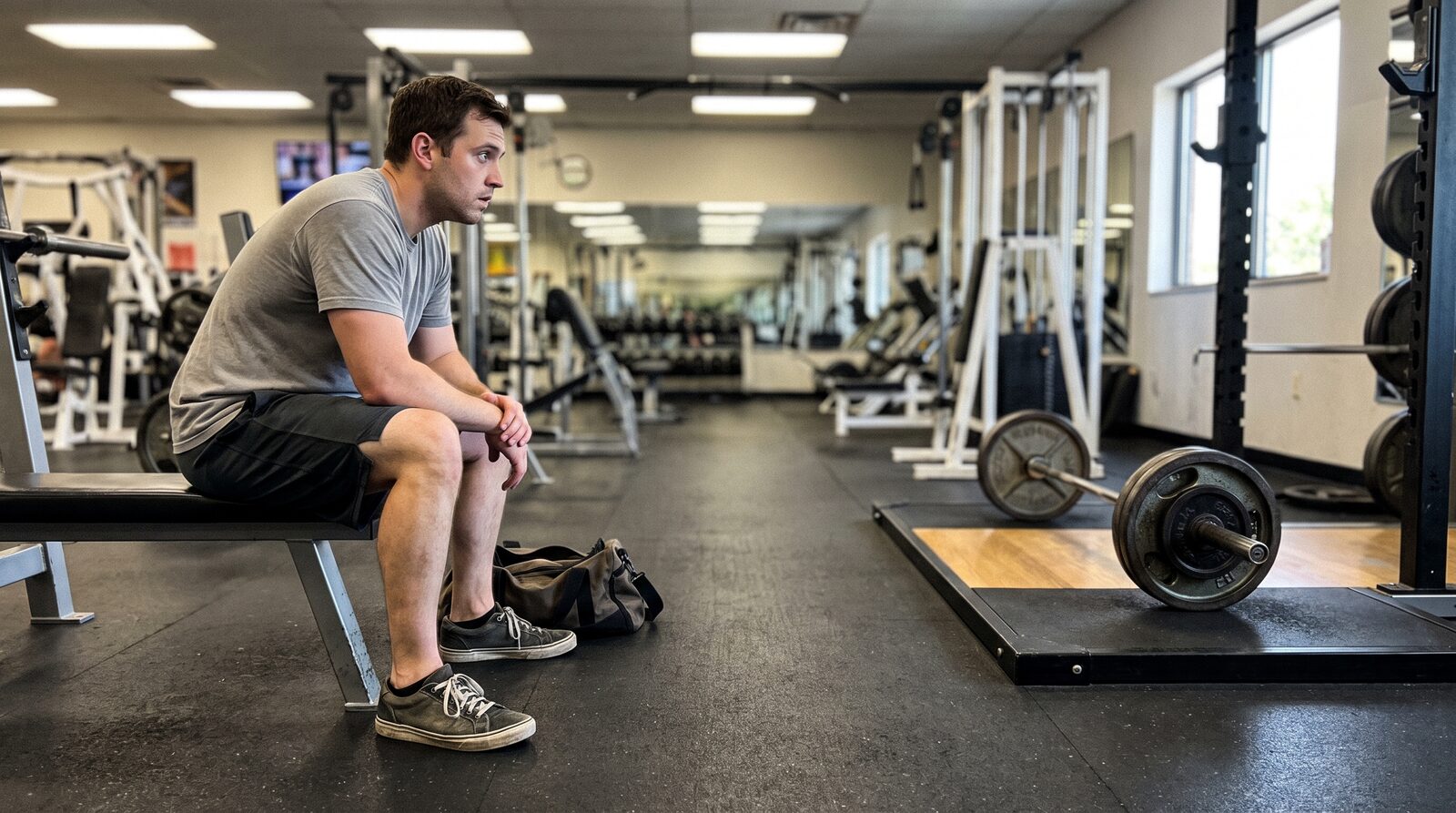
After 16 weeks off, trained lifters still carried about a third more nuclei in their muscle fibers than people who had never lifted. When they went back to training, they did not grow back any faster.

The Claim
You take a month off. Work gets busy, or your back goes, or the hotel gym turns out to be two treadmills and a broken cable stack. You come back and the weight you used to warm up with feels heavy.
Then something reassuring happens. Four weeks later you are close to where you were. Not all the way, but close enough that the panic looks silly in hindsight.
The internet has a tidy explanation ready. Your muscles built extra nuclei while you trained, those nuclei never left, and coming back just switches the factory on again. You never lost the gains. They were only ever unplugged.
It is a good story, and parts of it are true. The part everyone repeats is the part nobody has managed to show in a human being.
What the Research Actually Found
Muscle fibers are strange cells. They run long, and instead of one nucleus they hold hundreds. Each of those myonuclei runs the protein-making machinery for the stretch of fiber around it, so a fiber that gets bigger needs more of them.
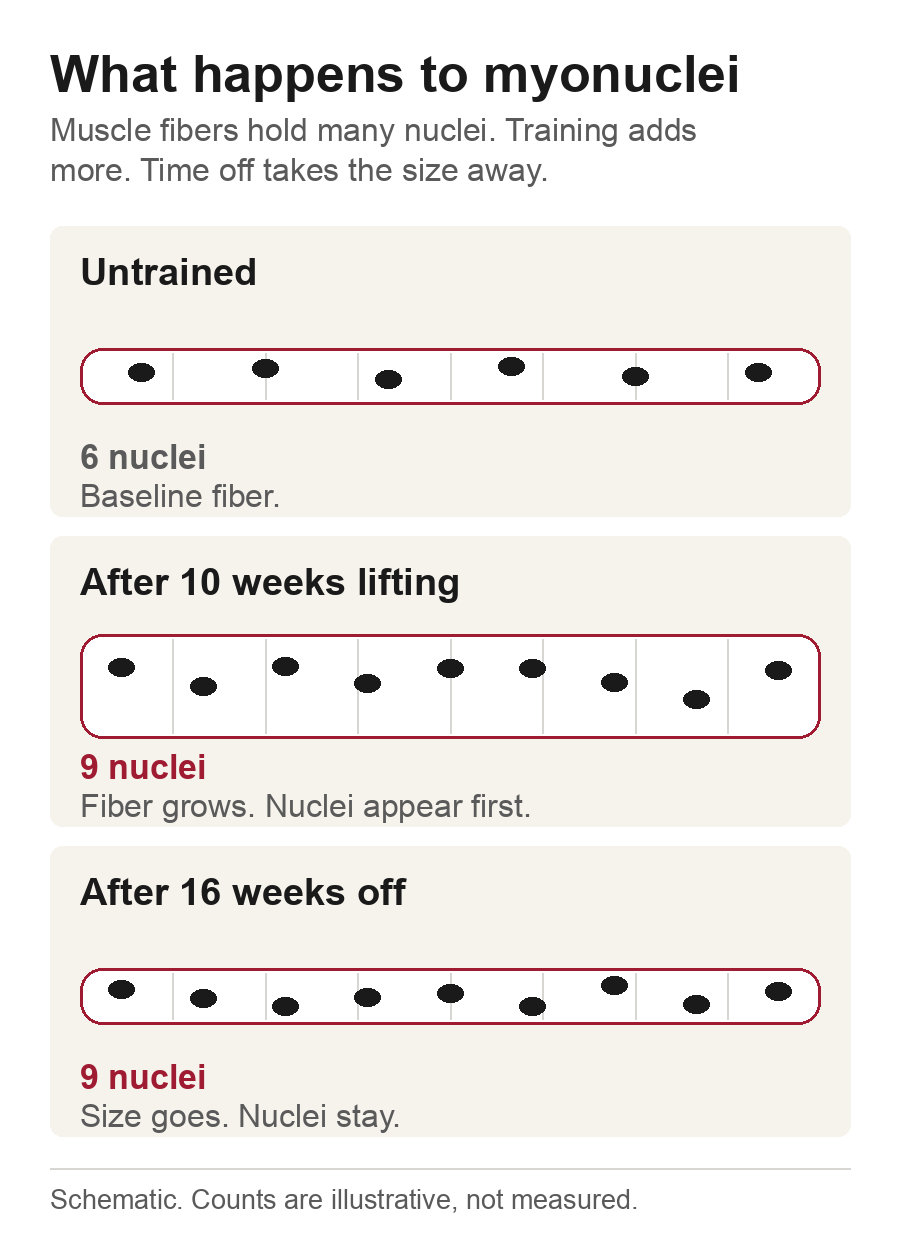
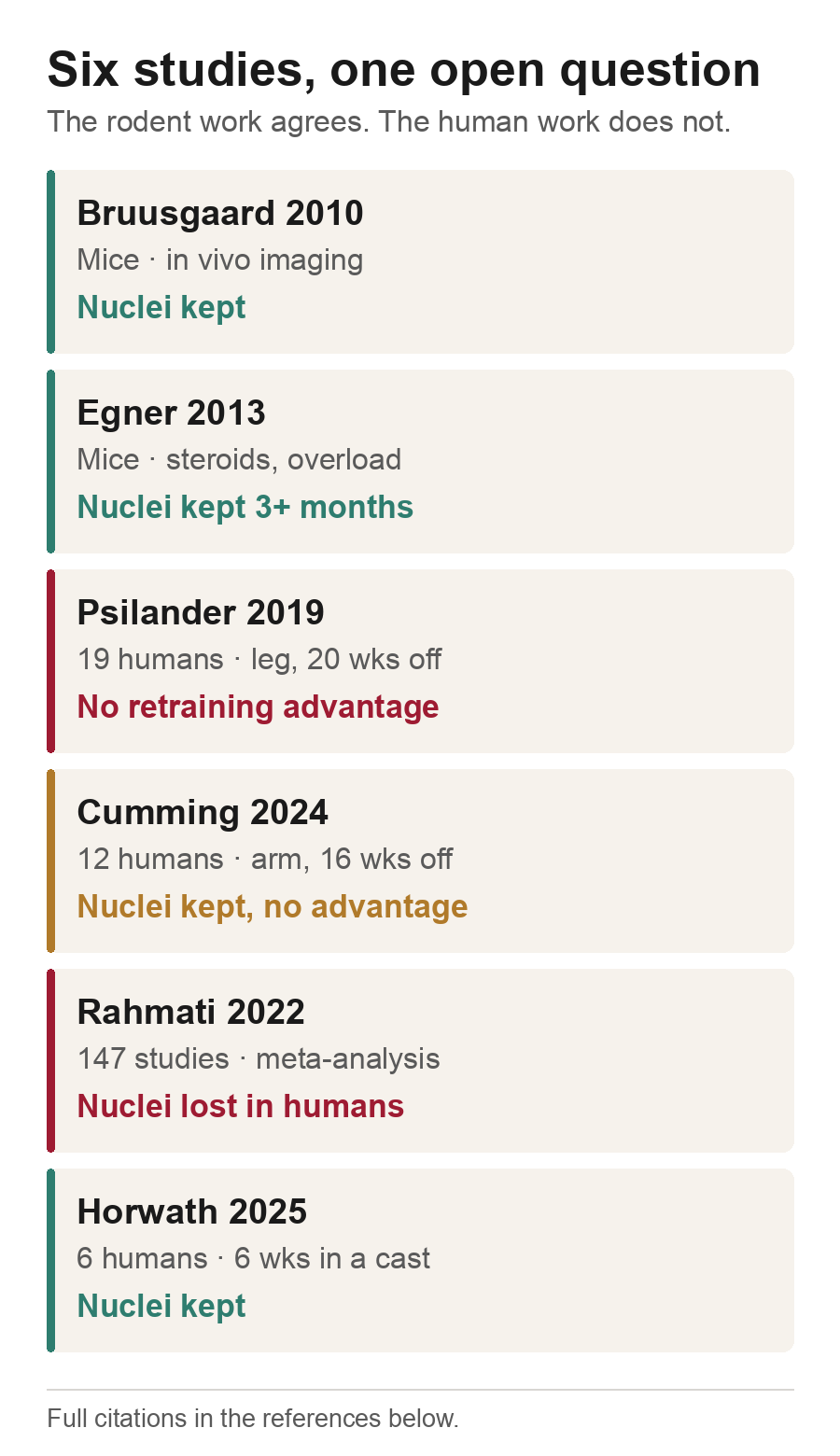
In 2010 a group at the University of Oslo watched that happen live. Using imaging that tracks individual nuclei inside a living muscle, they saw new myonuclei appear in overloaded fibers before the fibers got measurably bigger. Then they let the muscle waste away, and the nuclei stayed put.[1]
Three years later the same lab pushed the idea further. They gave mice testosterone for 14 days, which raised myonuclei by 66% and fiber size by 77%. Then they withdrew the drug and waited until the fibers had shrunk back to normal size. The extra nuclei were still there three months later, more than a tenth of the animal's lifetime. When those muscles were finally overloaded for six days, they grew 31%. The control muscles did not grow at all.[2]
That is a genuine result, and it is the engine under every muscle memory video you have ever seen.
Both of those studies were done in mice.
Then Somebody Tested People
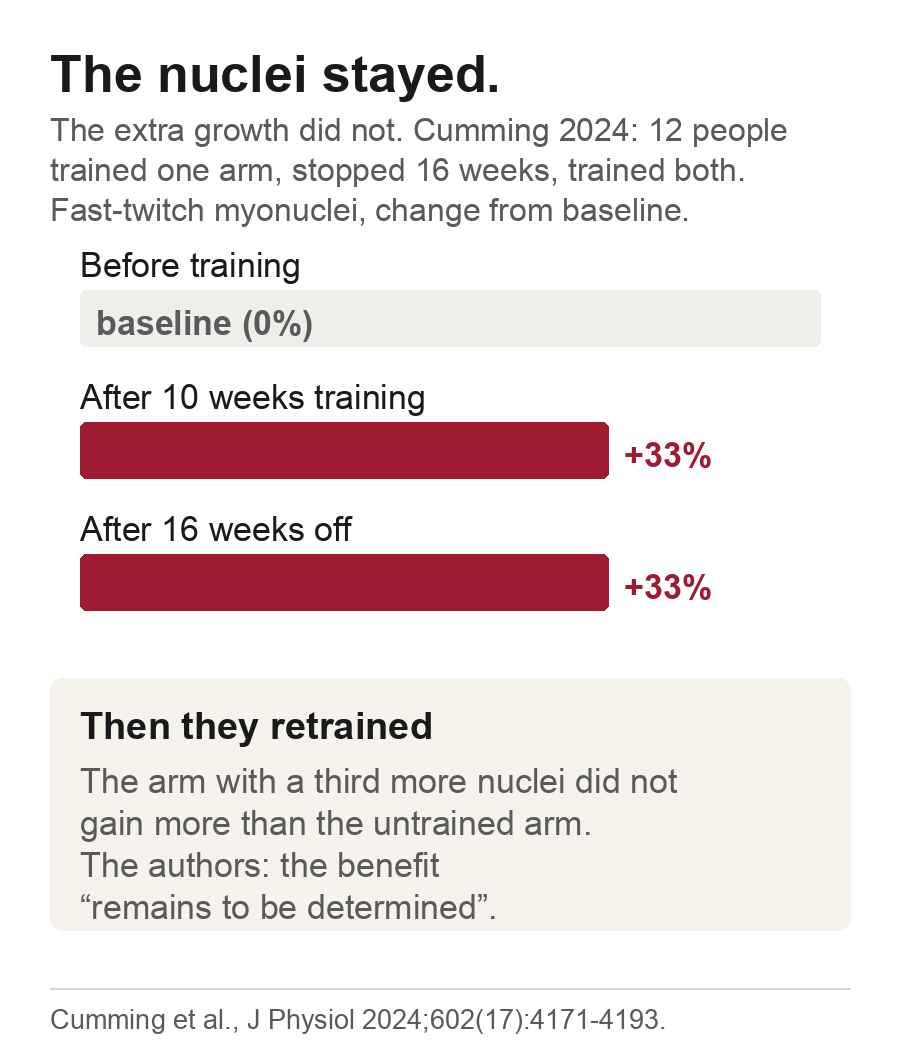
In 2024 a Norwegian and Swedish team ran the human version properly. Twelve untrained men and women trained one arm for 10 weeks, stopped for 16 weeks, then trained both arms for 10 weeks. The arm that had never been trained acted as the control, which is about as clean as an experiment on people gets.
The first half went exactly as predicted. Myonuclei rose 13% in slow-twitch fibers and 33% in fast-twitch. After 16 weeks of nothing, the fibers shrank and the nuclei did not. The trained arm still held roughly a third more nuclei in its fast-twitch fibers than the arm beside it.[3]
So far the story holds up.
Then both arms were retrained, and the arm with all the extra nuclei did not grow any better than the one without them. The machinery was there. It simply did not buy anything the researchers could measure. Their own summary says the benefit "remains to be determined".
An earlier trial had already found the same flat result in legs. Nine men and ten women trained one leg for 10 weeks, took 20 weeks off, then retrained both. The previously trained leg responded no better than the other one.[4]
Then in 2022 a meta-analysis pooled 147 studies. It found that the nuclei are held onto in rodents but lost in humans during atrophy and with age, and concluded that myonuclear permanence does not explain muscle memory. The authors suggested the real mechanism is more likely epigenetic, a set of chemical marks on DNA that change which genes are easy to switch on.[5]
What It Looks Like in Practice

All of that argument is about the mechanism. The comeback itself is not in doubt, and it is worth being clear about how fast it actually goes.
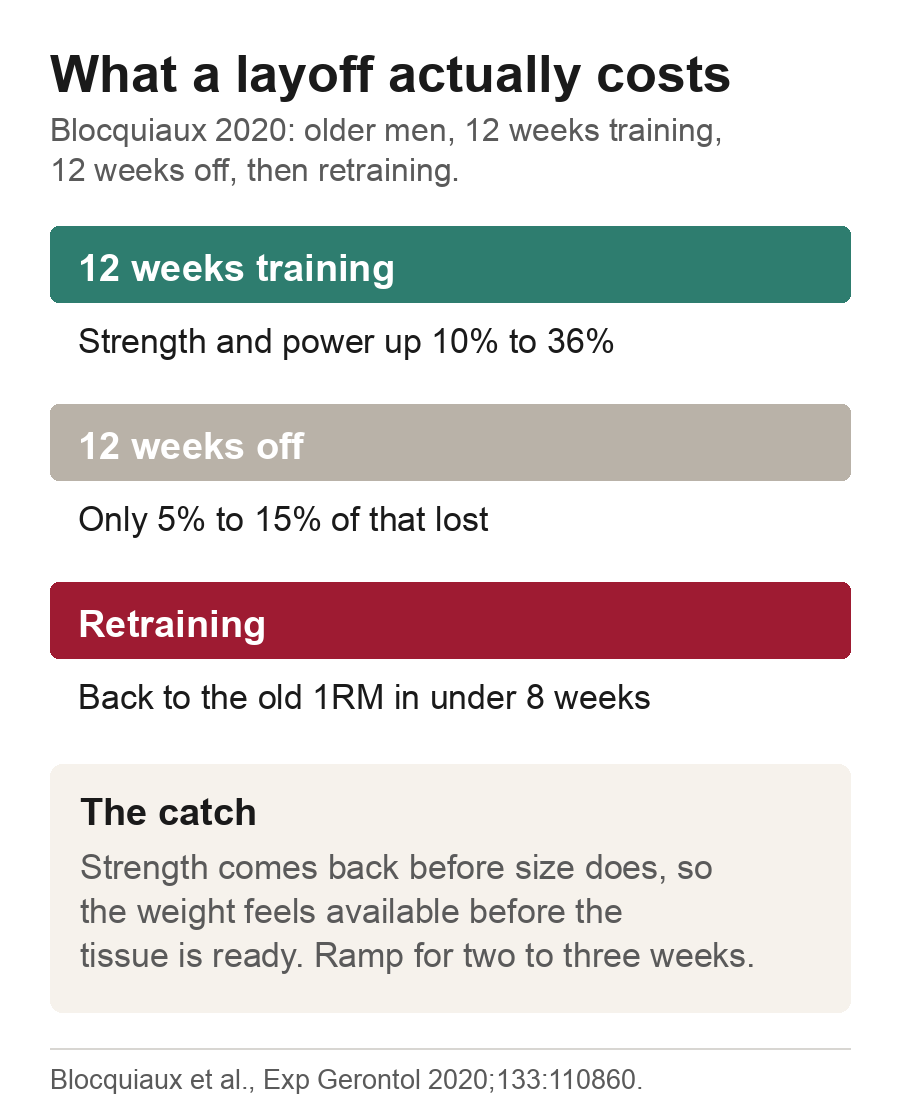
Older men in a Belgian trial trained for 12 weeks, stopped for 12 weeks, then started again. The layoff cost them between 5% and 15% of their strength and power. Getting back to their previous one-rep max took under eight weeks.[6]
A 1991 study followed women who trained for 20 weeks and then stopped for seven months. Their muscle fiber size had barely moved. Strength had dropped, but nowhere near back to where they started, and six weeks of retraining regrew the fast-twitch fibers.[7]
So take the trip. Have the surgery. Let the busy month be busy. The advice at the end of the reel is sound.
What you should not do is come back and pick up where you left off. In that leg trial, muscle size fell all the way to baseline while strength stayed around 60% above where it began, which the researchers put down to motor learning.[4] Your nervous system remembers the movement better than your muscle remembers its size, so a heavy weight will feel available before the tissue is ready for it. Two or three weeks at a lower load costs you almost nothing and buys back the margin.
References
- Bruusgaard JC, Johansen IB, Egner IM, Rana ZA, Gundersen K. Myonuclei acquired by overload exercise precede hypertrophy and are not lost on detraining. Proc Natl Acad Sci USA. 2010;107(34):15111-15116. doi:10.1073/pnas.0913935107
- Egner IM, Bruusgaard JC, Eftestol E, Gundersen K. A cellular memory mechanism aids overload hypertrophy in muscle long after an episodic exposure to anabolic steroids. J Physiol. 2013;591(24):6221-6230. doi:10.1113/jphysiol.2013.264457
- Cumming KT, Reitzner SM, Hanslien M, et al. Muscle memory in humans: evidence for myonuclear permanence and long-term transcriptional regulation after strength training. J Physiol. 2024;602(17):4171-4193. doi:10.1113/JP285675
- Psilander N, Eftestol E, Cumming KT, et al. Effects of training, detraining, and retraining on strength, hypertrophy, and myonuclear number in human skeletal muscle. J Appl Physiol. 2019;126(6):1636-1645. doi:10.1152/japplphysiol.00917.2018
- Rahmati M, McCarthy JJ, Malakoutinia F. Myonuclear permanence in skeletal muscle memory: a systematic review and meta-analysis of human and animal studies. J Cachexia Sarcopenia Muscle. 2022;13(5):2276-2297. doi:10.1002/jcsm.13043
- Blocquiaux S, Gorski T, Van Roie E, et al. The effect of resistance training, detraining and retraining on muscle strength and power, myofiber size, satellite cells and myonuclei in older men. Exp Gerontol. 2020;133:110860. doi:10.1016/j.exger.2020.110860
- Staron RS, Leonardi MJ, Karapondo DL, et al. Strength and skeletal muscle adaptations in heavy-resistance-trained women after detraining and retraining. J Appl Physiol. 1991;70(2):631-640. doi:10.1152/jappl.1991.70.2.631
- Horwath O, Cumming KT, Eftestol E, et al. No detectable loss of myonuclei from human muscle fibers after 6 wk of immobilization following an Achilles tendon rupture. Am J Physiol Cell Physiol. 2025;328(1):C20-C26. doi:10.1152/ajpcell.00692.2024