Bench Press vs. Weighted Push-Ups: Which Builds a Bigger Chest?
They train the same push in two different ways. The winner comes down to one thing most lifters ignore, and each has a tool that fixes its weak spot.


Ask ten lifters whether the bench press or the push-up builds a better chest, and you will start ten arguments. One camp calls push-ups a warm-up. The other calls the bench an ego lift that eats shoulders for breakfast. Both miss what is actually going on.
The bench press and the push-up are the same basic movement. You push a load away from your chest. What changes is how the load gets there, and how far your muscles travel to move it.
That difference decides which one grows your chest faster. It also explains why the smartest pressing programs run both, with a specific tool for each.
Same Push, Two Different Machines
On a bench, you lie back and your shoulder blades are pinned against the pad. Your body stays put while your arms move a bar that can hold almost unlimited weight. Trainers call this an open-chain press. The hands travel, the torso stays still.
A push-up flips that. Your hands are fixed on the floor and your whole body moves instead. Your shoulder blades slide and rotate the way they do in real life, and your core holds a plank the entire set. This is a closed-chain press, and the load is capped by your bodyweight until you add weight to your body.
Bench press
Open chain. Back braced, blades pinned, arms move the bar. Loads the heaviest weight of any chest exercise.
Weighted push-up
Closed chain. Hands fixed, body moves, blades free. Trains the core and shoulders the way they actually work.
Neither wins on paper. Each one trades an advantage for a cost, so the real question is what you want out of the movement.
Where the Bench Press Wins Raw size
The bench has one huge edge, and it comes down to a single word: load. You can stack 135, 225, even 315 pounds on a bar. That much external weight is the loudest signal you can send a muscle to grow. For pure size and pressing strength, nothing loads the chest like a barbell.
There is a catch that most benchers never fix. A straight bar stops when it touches your chest, and at that point your pecs are still about two inches short of a full stretch. The deep, loaded stretch at the bottom is where a lot of growth actually happens, and a straight bar caps your range right before you get there.
Research on stretch-mediated hypertrophy keeps landing on the same point. Training a muscle in its lengthened position, under load, tends to build as much size or more than stopping short. On a flat bench, skin contact is your hard limit.

A cambered bar rewrites that limit. Its middle bends down roughly 4 inches below the sleeves, so the handles sink past your chest at the bottom of every rep. The bar travels farther than a straight bar allows, and your pecs load in a deeper stretch on the exact rep that grows them most.
"Muscles worked in their stretched, lengthened position have grown as much or more than muscles trained through a shorter range."
Summary of stretch-mediated hypertrophy research, 2020 to 2024
Kensui Kobe Cambered Bar
The 4-inch camber lets the bar travel past chest level, so your pecs load in a deeper stretch than any straight bar reaches. Rotating sleeves, a 30mm knurled shaft, and a 600 lb capacity handle every heavy pressing set.
Where Weighted Push-Ups Win Healthy pressing
The push-up gives back everything the bench takes away. Your shoulder blades are free to glide and rotate, so the joint moves the way it was built to. That usually feels better on cranky shoulders, and it trains the serratus, the muscle that wraps your ribs and keeps your shoulder tracking cleanly.
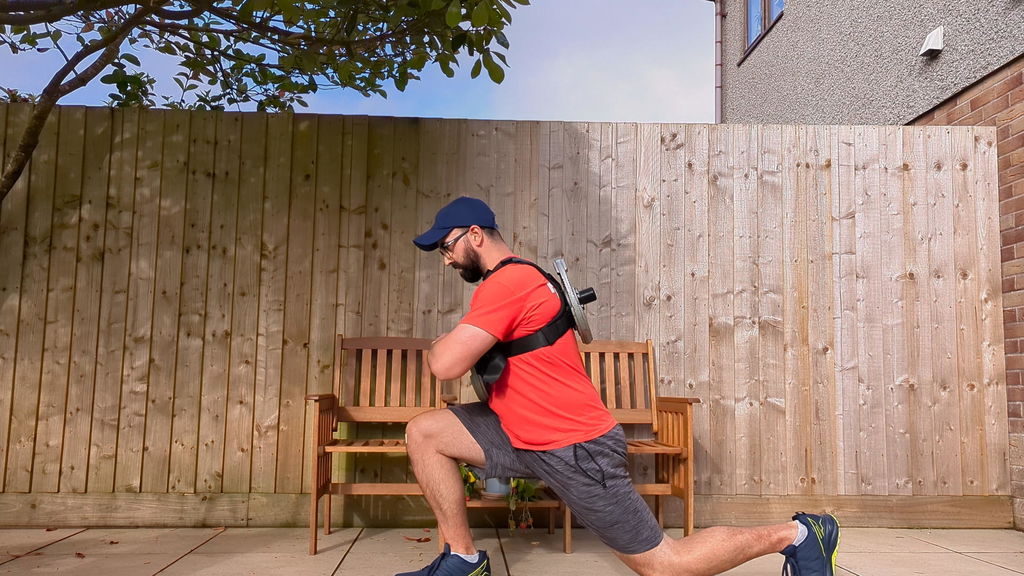
Push-ups also tax your core hard, because you hold a plank for every rep. Best of all, they go anywhere. No rack, no spotter, no bench, no excuses on the road.
The one honest knock on push-ups is load. Bodyweight only asks so much, and once you can grind out 25 clean reps you are building endurance, not size. More reps is not the answer. More weight is.
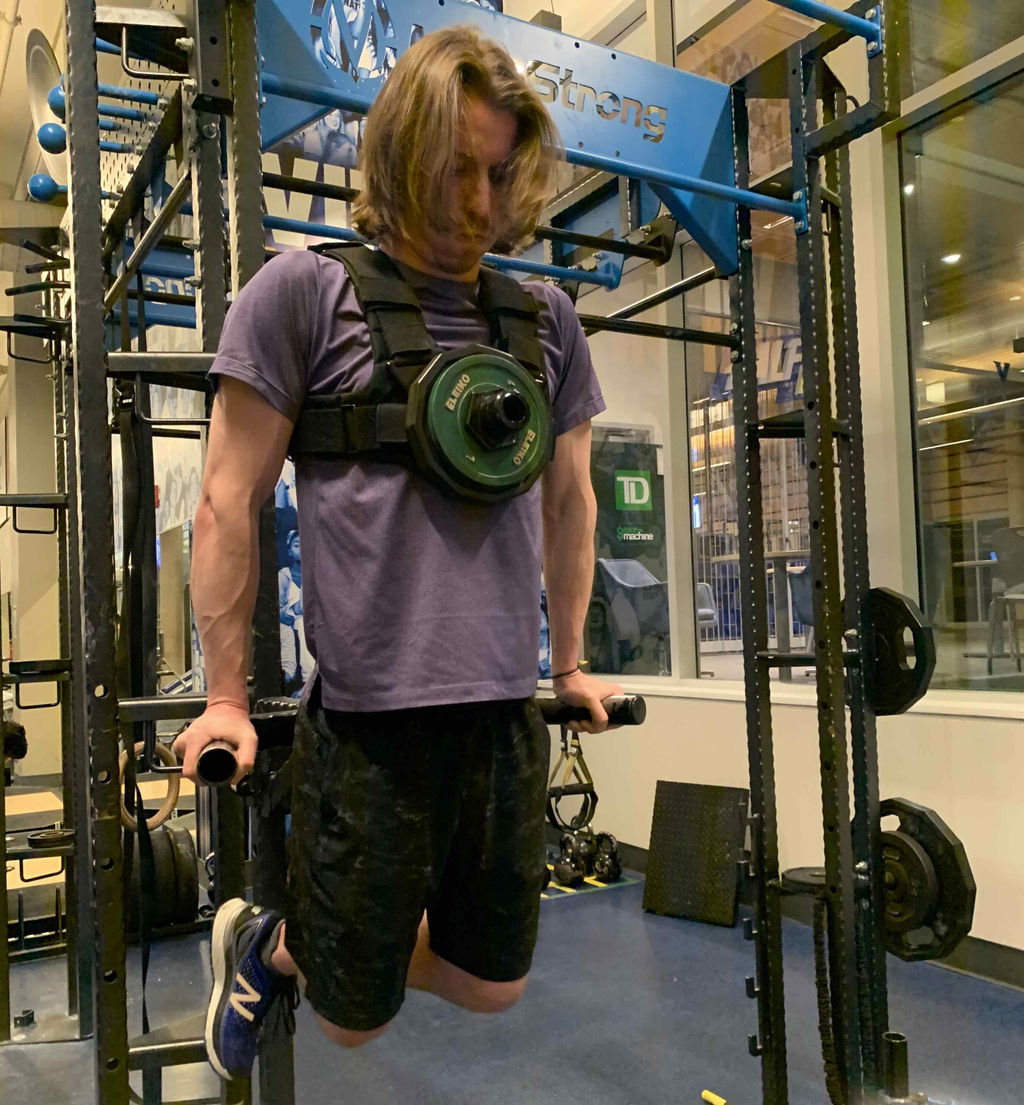
A plate-loaded vest turns a bodyweight move into a heavy pressing exercise. Here is the science that matters: when the load is matched, studies have found push-ups and the bench press produce nearly the same activity in the chest and triceps (Calatayud et al., 2015). Add real plates to your back and the push-up stops being a warm-up.


Kensui EZ-VEST V2
Loads the same Olympic plates already in your gym, with a patented lock that stays quiet through every rep. The aircraft-grade Max frame carries up to 300 pounds, so your push-ups scale as far as your bench does. Featured in Men's Health, GQ, and BarBend.
Bench Press vs. Weighted Push-Ups, Head to Head
Line the two up across the things that decide chest growth and joint health, and the trade-off gets clear fast.
| What matters | Bench (cambered bar) | Weighted push-ups (vest) |
|---|---|---|
| Load ceiling | Up to 600 lbs on the bar | Up to 300 lbs added to you |
| Range of motion | Deepest, bar sinks past the chest | Full, limited by the floor |
| Shoulder blades | Pinned to the bench | Free to move naturally |
| Joint feel | Can bother shoulders when heavy | Usually shoulder-friendly |
| Core demand | Low, your back is supported | High, a full plank every rep |
| What you need | Rack, bench, and a spotter | A vest and any floor |
| Best for | Maximum size and strength | Shoulders, core, training anywhere |
The takeaway: this was never an either-or. The bench builds the most raw size because it loads the heaviest weight. Weighted push-ups keep your shoulders healthy and travel anywhere you go. Use the bench to grow, and use loaded push-ups to stay durable and to press on the days a rack is not an option.
The Verdict
Bench press versus weighted push-ups is the wrong question. The better one is what each does best, because they solve different problems.
For the most chest size and pressing strength, bench heavy. A cambered bar makes every rep count for more by letting the bar sink past your chest into a deeper stretch, the position where muscle grows fastest.
For shoulder health, a rock-solid core, and a press you can do in a hotel room, load your push-ups. A plate-loaded vest takes them from filler to a real chest builder, all the way up to 300 pounds.
Serious lifters do not pick one. They bench to grow and press push-ups to stay durable. Two tools, one much stronger chest.
Build a Bigger Chest From Both Ends
The cambered bar for your heaviest, deepest bench. The plate-loaded vest for push-ups that finally build size.
Both ship with a 100-day risk-free trial and free shipping.