ANATOMY · 6 MIN READ
One In Three People Can Get An 8-Pack. Here's How To Know If You're One Of Them
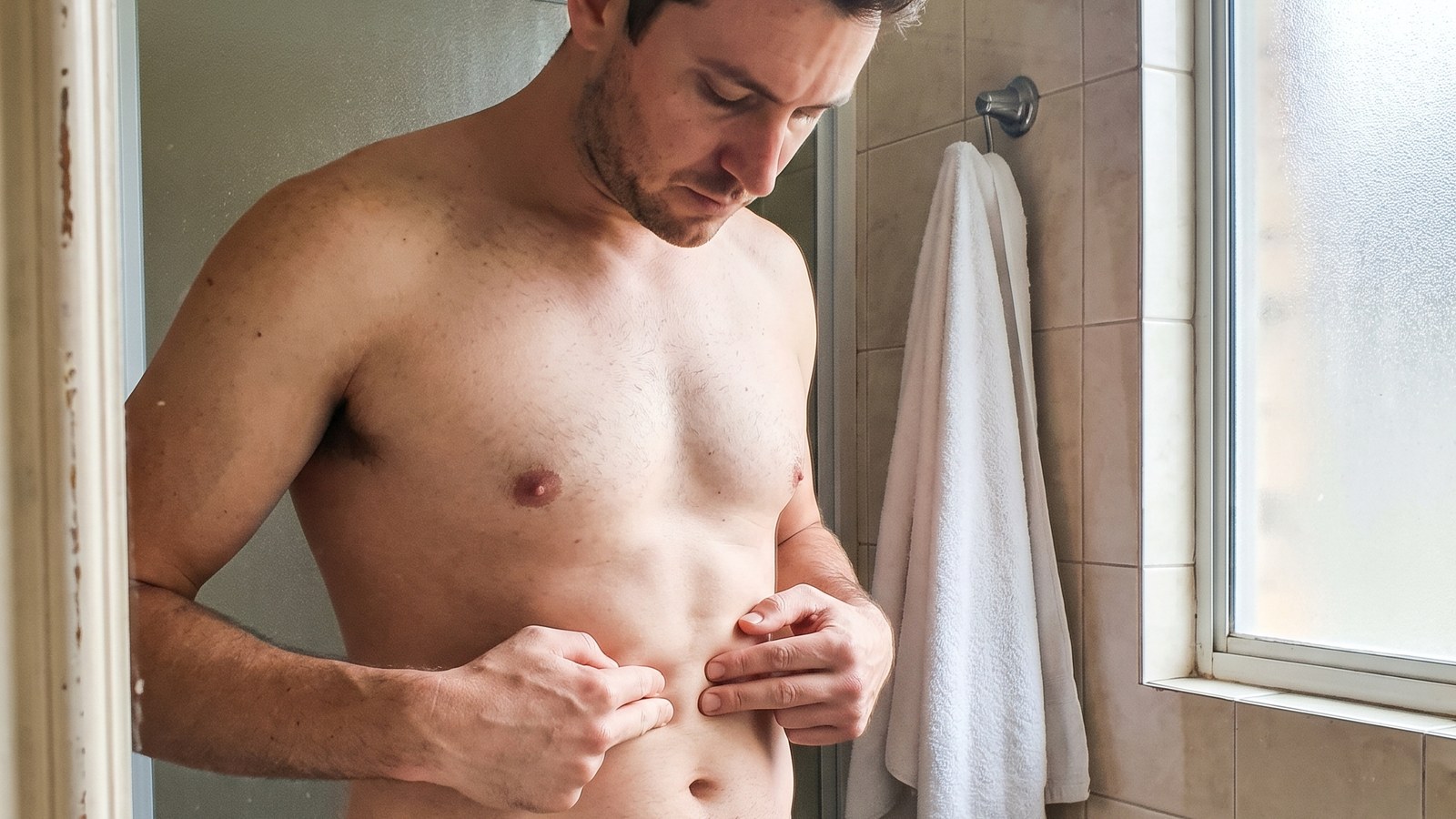
The number of blocks in your stomach is set by bands of connective tissue that finish forming months before you are born. In the largest count anatomists have published, 35.2% of muscles carried enough of them for an eight-pack.

The Claim
Arnold Schwarzenegger built one of the most photographed bodies in history. In his competition photographs he has four blocks, not six and not eight. He trained harder and got leaner than almost anyone alive at the time, and the extra rows never turned up.
That is the part most people have backwards. You can grow the muscle. You can lose the fat sitting on top of it. What you cannot do is add a row. The blocks are not small separate muscles that switch on one at a time as you lean out. They are one long sheet, cut into rows by bands of tough tissue, and the number of bands was decided before you did a single sit-up.
So the useful question is not how to build an eight-pack. It is whether you were built with the parts for one. That takes about thirty seconds to answer, and you can do it on your living room floor.
What the Research Actually Found
The muscle is the rectus abdominis. It runs from your pubic bone up to the cartilage of the fifth to seventh ribs and the base of your breastbone.[1] There is one on each side of the midline, and each is a single long sheet rather than a stack of small muscles. Crossing them are bands of connective tissue called tendinous intersections. Those bands fuse to the front of the sheath that wraps the muscle, which is why they show on the surface at all.[1]
The bands are the grooves. The muscle between them is the block.
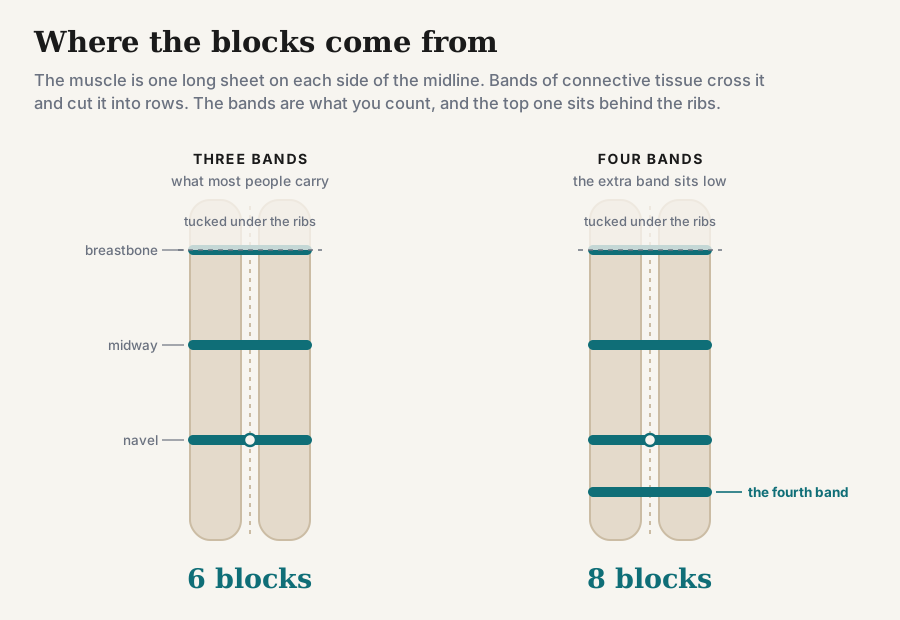
They sit at fairly predictable heights. One at the base of the breastbone, one level with the navel, one midway between those two, and sometimes a fourth below the navel.[1] The top band hides behind the ribs, which is the reason three bands read as six blocks and four bands read as eight.
Then there is the counting. In the largest published series, Anson and McVay dissected 162 abdominal muscles from 81 bodies. Three bands turned up in 58.0% of them. Four turned up in 35.2%. Only 1.2% had a single band and 5.9% had two, and nothing in the series carried more than four.[2] A later count of 82 muscles from 41 bodies found three bands in 61.0% and four in 22.0%.[3]
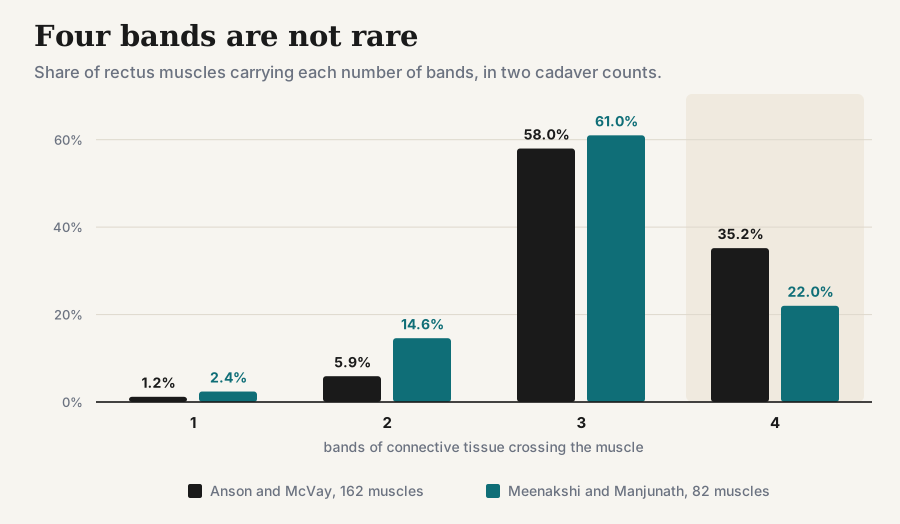
Those numbers are not the ones the internet repeats. Somewhere between one in five and one in three of the muscles anatomists have opened up carried the fourth band. An eight-pack is not a rare ticket. The rare part is having that anatomy and also being lean enough and muscular enough for anyone to see it.
The bands finish early, too. A 2024 study at Kyoto University scanned fifteen human fetuses with diffusion tensor imaging and picked up the first bands at around eleven weeks, with the pattern still filling in through week seventeen.[4] Average count across both sides was 3.1, and the range ran from two to four, the same range found in adults.
How To Count Your Own
No scan needed. The bands attach to the front face of the muscle, and the muscle is measurably thinner at a band than it is in the belly of a block.[5] That leaves a firm ridge your fingers can find, even through a layer of fat that would hide it from a mirror.
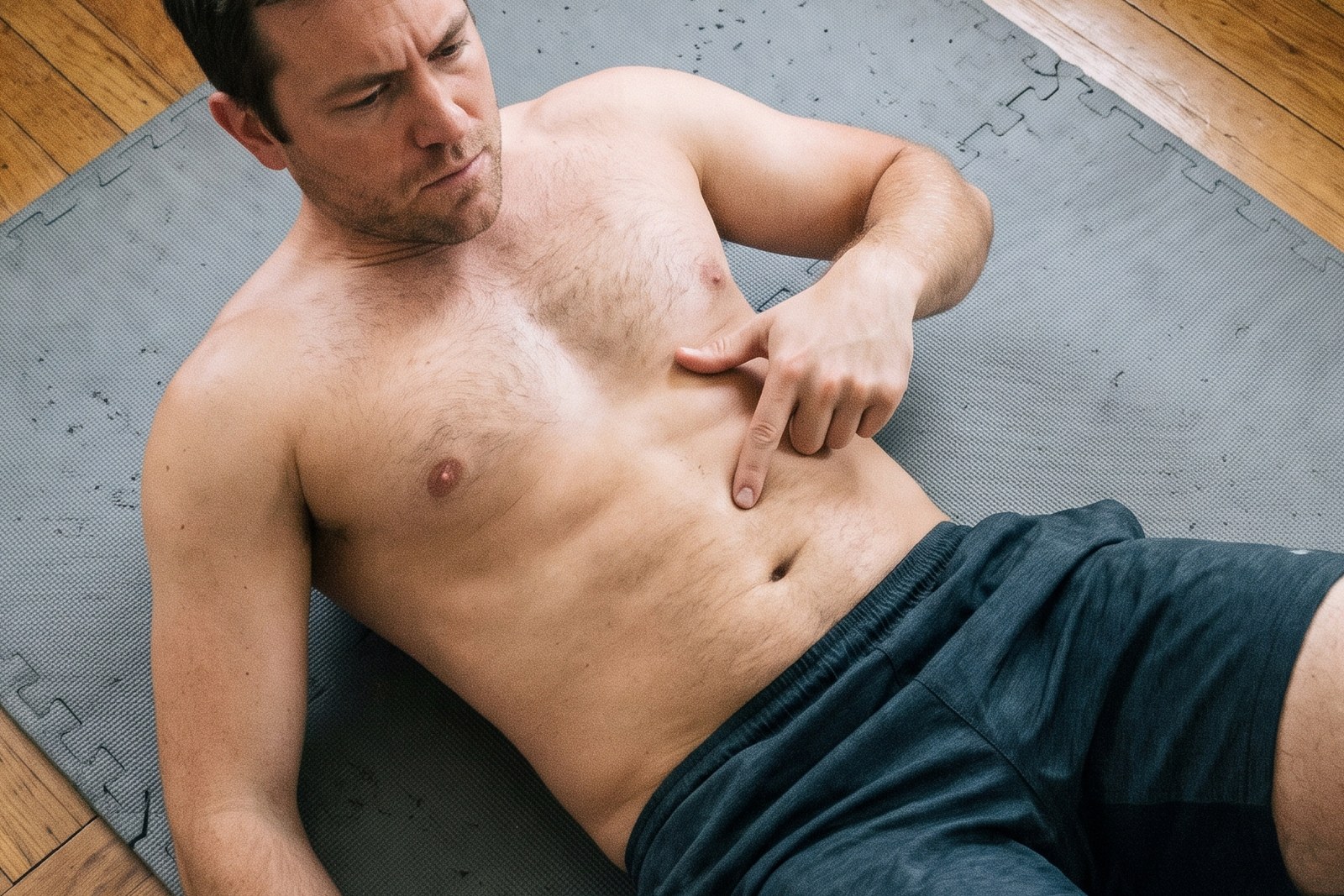
- Lie on your back with your knees bent and your feet flat.
- Lift your head and shoulders an inch off the floor. That tightens the muscle under your hand and makes the ridges stand out.
- Put the flat of your fingertips just under your breastbone, about an inch to one side of the middle line.
- Drag them slowly down toward your pubic bone. You are feeling for firm ridges running across, with softer muscle between them.
- Count the ridges, then repeat on the other side.
Three ridges, ending at the navel with nothing underneath, means six blocks is your ceiling. A fourth ridge between the navel and the pubic bone is the eight-pack band. Two ridges means four blocks, which is the pattern Arnold has.
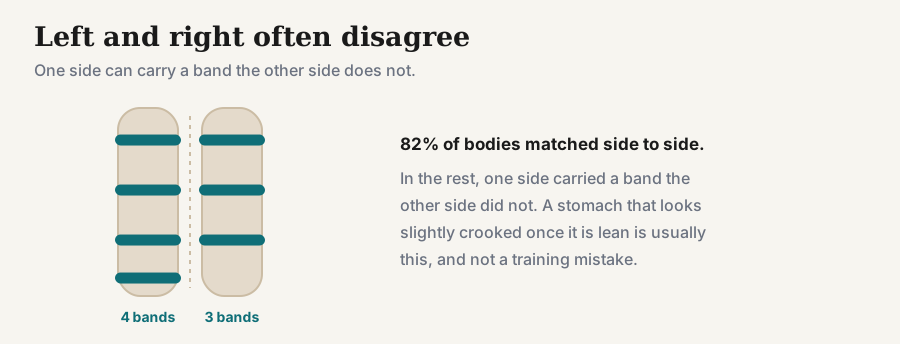
Check both sides, because they often disagree. In the Anson and McVay count, 82% of bodies carried the same number left and right.[2] The rest did not. A stomach that looks slightly crooked once it gets lean is common, and it is not a sign you trained one side badly.
What You Actually Control
Two things decide whether anybody ever sees the blocks, and the band count is neither of them.
The first is how big the muscle between the bands gets. Blocks are muscle. Muscle grows when you load it, and a thicker block sitting between two fixed bands pushes further forward and throws a sharper shadow. That progress is available to everyone, whatever they were dealt.
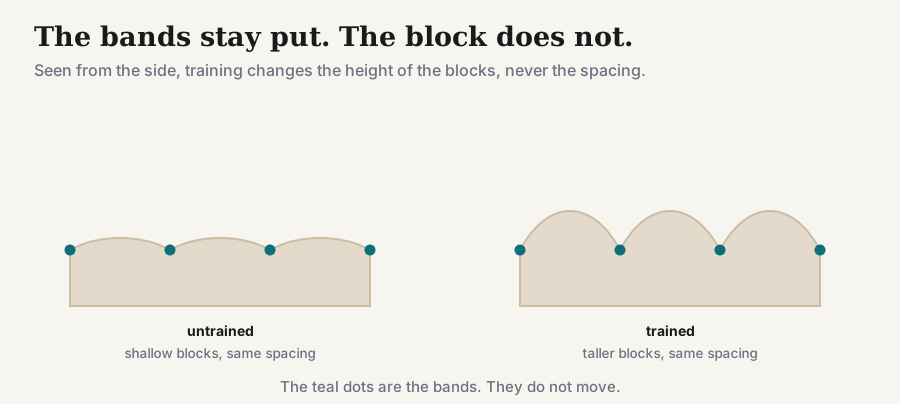
The second is the fat over the top. A ridge you can feel with your fingers is still invisible under a layer you cannot see through, which is why abs get discussed as a kitchen problem more often than a gym one.
What is not available is a bottom row that was never built. No exercise adds a band, and the move sold as the lower ab exercise does not do what the label promises. Researchers at Laurentian University watched all four segments of the muscle on ultrasound while fifteen people performed crunches, sit-ups and leg raises. Segment and exercise did interact, so the moves were not identical. But the leg raise produced the smallest response of the three, and the crunch beat it on mean thickness change by 36.4%.[6] Recruitment followed the load, not the marketing.
The fetal scans point the same way. Below the navel was by far the likeliest place for a band to be missing altogether.[4] If your lower abs never seem to arrive, there is a fair chance nothing is down there to bring out.
References
- Rai R, Azih LC, Iwanaga J, Loukas M, Mortazavi M, Oskouian RJ, Tubbs RS. Tendinous Inscriptions of the Rectus Abdominis: A Comprehensive Review. Cureus. 2018;10(8):e3100. doi:10.7759/cureus.3100
- Anson BJ, McVay CB. Abdominal Wall. In: Surgical Anatomy, Vol 1. Philadelphia: WB Saunders; 1971. Counts as reported in Rai et al. 2018.
- Meenakshi S, Manjunath KY. The tendinous intersections of rectus abdominis muscle. Journal of MGIMS. 2008;13:34-39. Durham Research Online
- Iwasa Y, Kanahashi T, Matsubayashi J, Imai H, Otani H, Yamada S, Takakuwa T. Formation of tendinous intersections in the human fetal rectus abdominis. Journal of Anatomy. 2024;245(3):365-376. doi:10.1111/joa.14064
- Broyles JM, Schuenke MD, Patel SR, Vail CM, Broyles HV, Dellon AL. Defining the Anatomy of the Tendinous Intersections of the Rectus Abdominis Muscle and Their Clinical Implications in Functional Muscle Neurotization. Annals of Plastic Surgery. 2018;80(1):50-53. doi:10.1097/SAP.0000000000001193
- Gomirato AP, Grenier SG. Diagnostic Ultrasound Shows Preferential Activation of Rectus Abdominis Segments with Exercises Targeting Upper Versus Lower Segments. International Journal of Exercise Science. 2023;16(1):1077-1086. PMID 38288259
- Anita, Haque M, Gupta A, Nasar A. Variation in Tendinous Intersections of Rectus Abdominis Muscle in North Indian Population with Clinical Implications. Journal of Clinical and Diagnostic Research. 2015;9(6):AC10-12. doi:10.7860/JCDR/2015/14027.6028