The Case for Plate-Loaded Over Fixed Weight Gear
Why the smartest home gym owners are building around a single set of plates instead of buying more dumbbells.
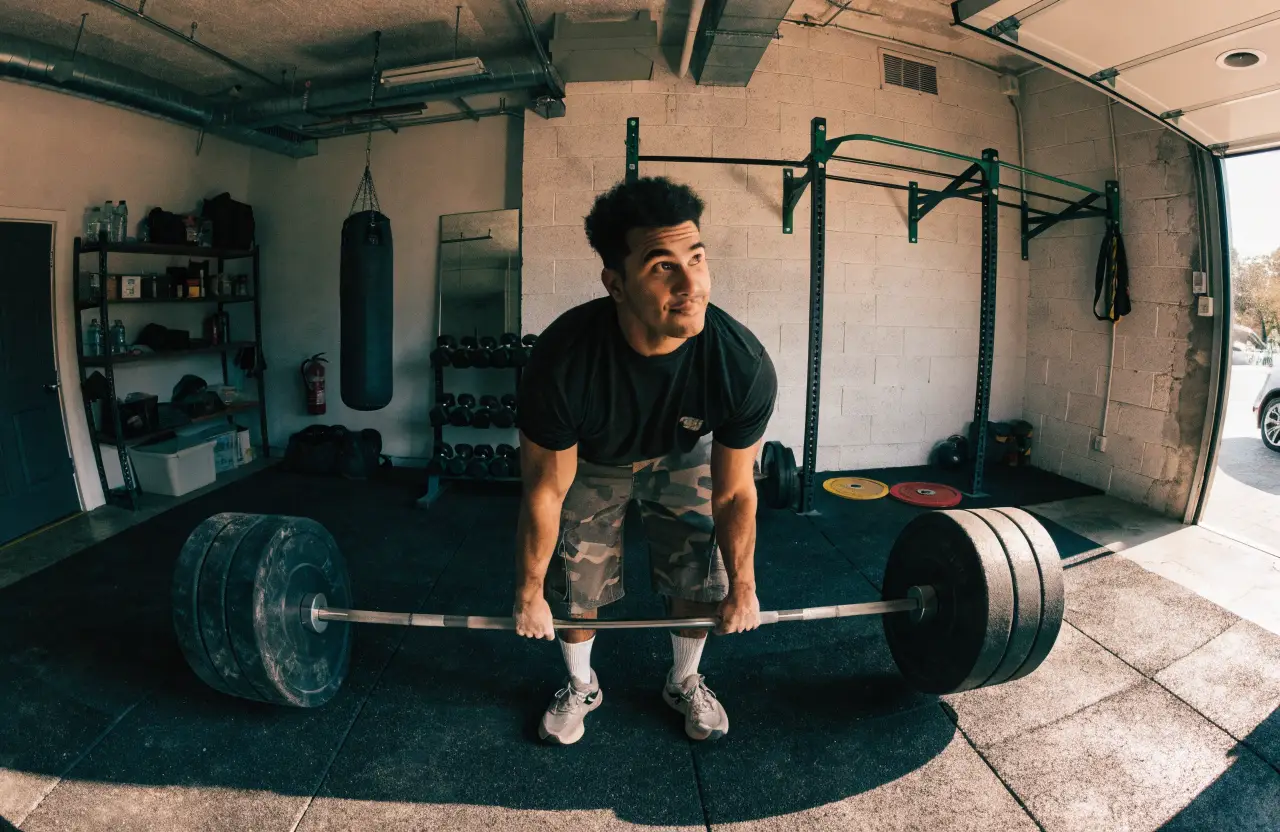
Every home gym starts the same way. You buy a pair of 25-pound dumbbells. Then 30s. Then 35s. Before long, you've spent $1,200 on a dumbbell set that takes up half your garage and still doesn't go heavy enough for your deadlifts.
There's a reason commercial gyms don't stock 40 pairs of fixed dumbbells anymore. The economics and the physics don't make sense once you get past the beginner stage.
Plate-loaded equipment solves this problem in a way that most home gym owners haven't considered. And the math is more dramatic than you'd think.
The Fixed Weight Trap
Fixed weight dumbbells are the default starting point for home gyms. They're simple. Pick one up, use it, put it back. No assembly, no plate changes.
That simplicity has a steep price.
A rubber hex dumbbell set from 5 to 50 pounds (10 pairs) runs $800 to $1,200 depending on the brand. Need heavier? Add 55 to 80 pound pairs and you're looking at $1,500 to $2,000+ total. And that covers exactly one type of exercise: dumbbell work.
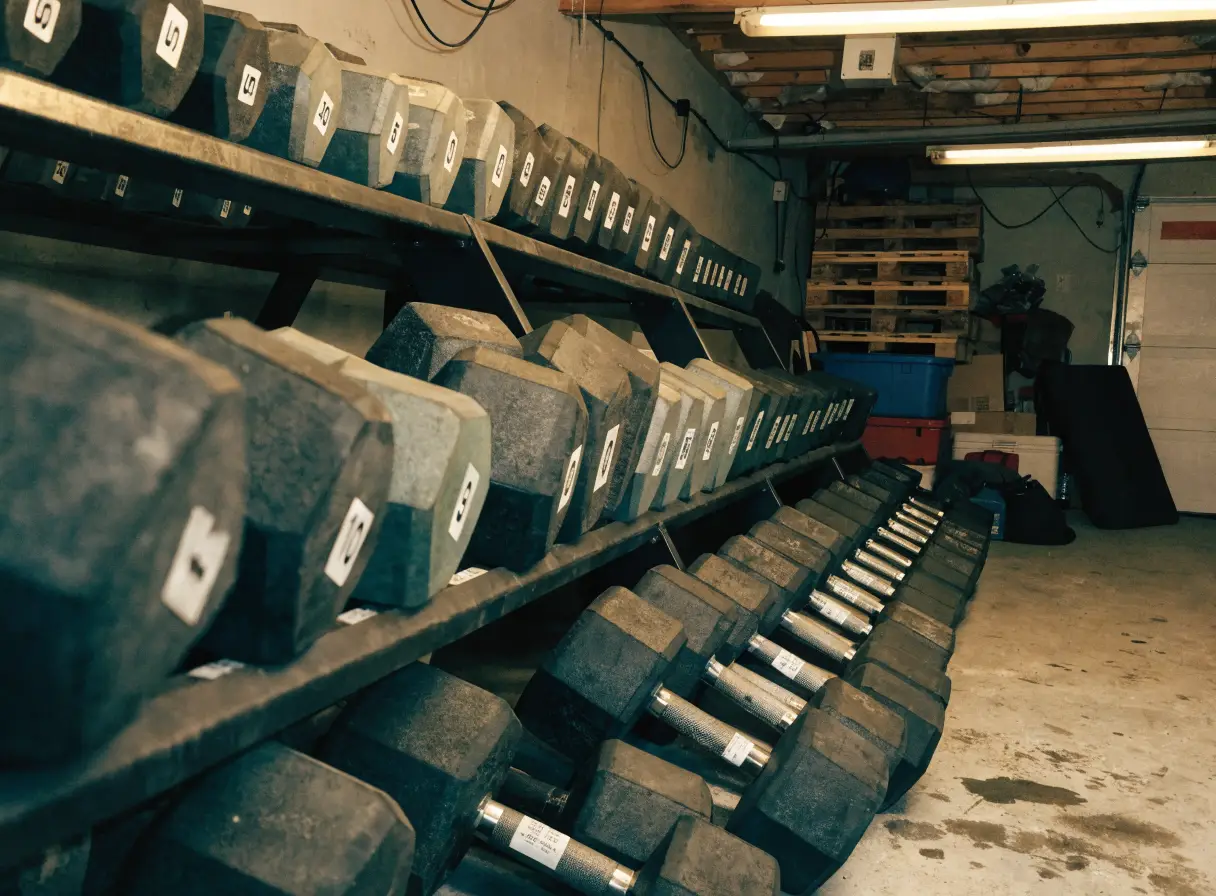
Then there's the space problem. A 10-pair dumbbell rack is roughly 5 feet wide and 2 feet deep. That's 10 square feet of floor space dedicated to one piece of equipment. In a one-car garage gym, that's 10% of your entire training area gone.
The worst part? You'll outgrow them. Progressive overload is the foundation of strength training. If your heaviest dumbbells are 50 pounds, you've put a ceiling on your progress. And buying heavier fixed dumbbells gets exponentially more expensive per pound.
What "Plate-Loaded" Actually Means
Plate-loaded equipment uses removable weight plates (standard or Olympic) attached to a handle, frame, or harness. The same plates you use on your barbell can slide onto a dumbbell handle, a weight vest, a mace, or a dozen other tools.
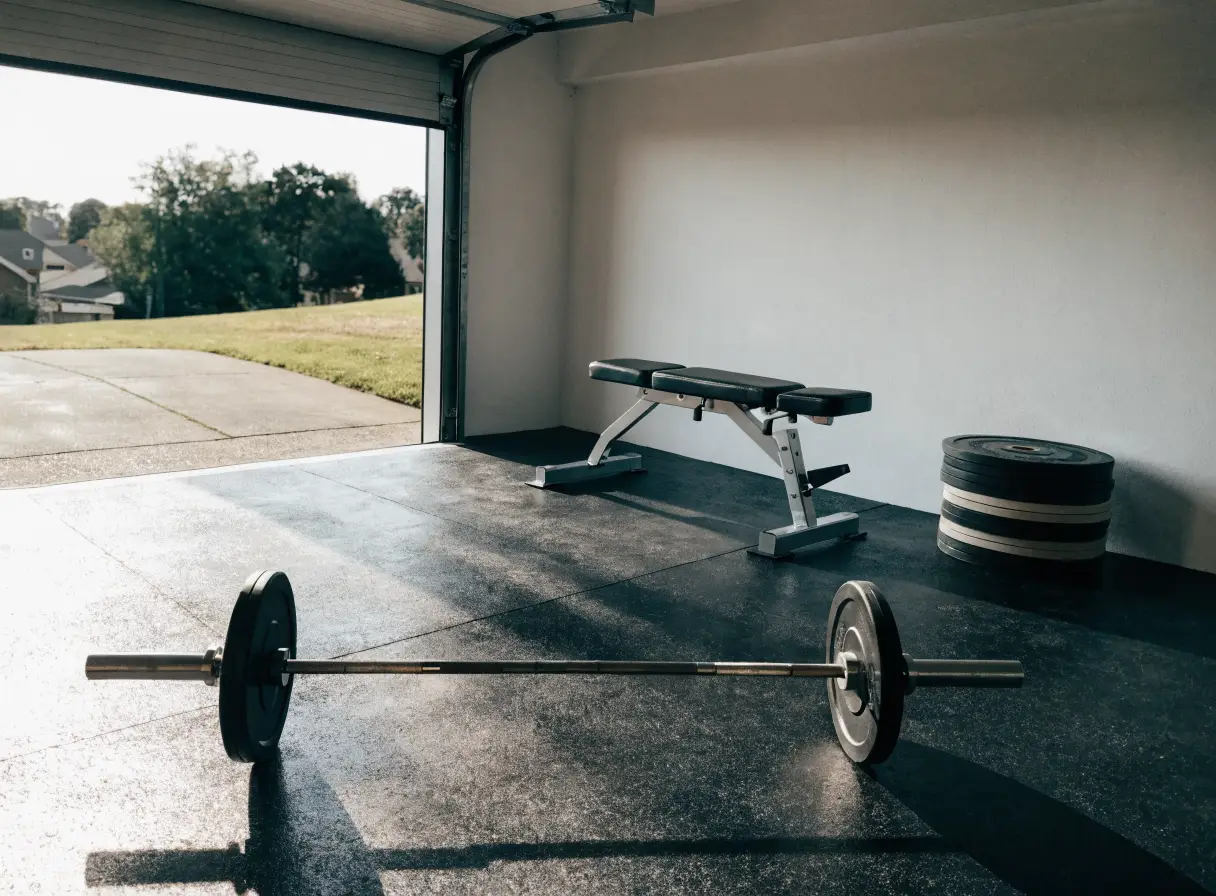
The concept is simple: buy the weight once, then buy the tools that use it.
A set of Olympic plates from 2.5 to 45 pounds (about 300 total pounds) costs $250 to $400. Those plates become the engine for every piece of equipment in your gym. Add a new tool for $50 to $150, and you've added an entirely new training modality without buying a single extra pound of weight.
The Math: Fixed vs. Plate-Loaded
Here's what a typical home gym setup costs under each approach, assuming you want enough variety to train your full body with real progressive overload.
| Equipment | Fixed weight | Plate-loaded |
|---|---|---|
| Dumbbells (5-50 lbs) | $1,000 | $49-149 (handles) |
| Weight vest | $120-200 (fixed, max 40 lbs) | $99-149 (up to 300 lbs) |
| Barbell + plates | $300-500 | $300-500 (plates shared) |
| Additional plates | N/A (can't share) | $0 (already own them) |
| Space needed | Large rack + shelf | Plate tree + small shelf |
| Total estimate | $1,500 - $2,200+ | $500 - $900 |
Key insight: The plate-loaded approach costs 50-60% less upfront. But the real savings come later. Every new tool you add costs $50-150 instead of $300+ because the weight is already in your garage.
Five Reasons Plate-Loaded Wins
-
Buy the weight once
A $300 set of Olympic plates powers your barbell, dumbbells, vest, and every future tool you add. Fixed weight gear forces you to pay for the metal again every time.
-
Precision progressive overload
With 2.5-pound fractional plates, you can increase weight by 5 pounds total. Fixed dumbbells jump in 5-pound increments (10 lbs total per pair). That's the difference between steady progress and hitting a wall.
-
No ceiling on your strength
Most plate-loaded handles support 100+ pounds per hand. Some go to 300. Good luck finding a fixed dumbbell over 120 pounds that doesn't cost $400 by itself.
-
Floor space you can train in
A plate tree holds 300+ pounds of plates in 2 square feet. A dumbbell rack needs 10 square feet for the same weight range. That's 8 extra square feet for burpees, stretching, or just breathing.
-
The ecosystem grows with you
Buy a plate-loaded mace: $0 in new plates. Buy a plate-loaded neck trainer: $0 in new plates. Every new tool plugs into the same weight system. Your gym expands without your plate collection needing to.
What the Research Shows
The argument for plate-loaded isn't just financial. It's physiological.
A 2019 meta-analysis published in the Journal of Strength and Conditioning Research found that progressive overload through small, consistent load increases produced significantly greater strength gains than training with fixed loads over 12-week periods.
The problem with fixed weight dumbbells is the jump size. Going from 25 to 30 pounds is a 20% increase. For a bench press, that's a massive leap. Most trainees can't make that jump cleanly, so they either stall at the lighter weight or cheat their form at the heavier one.
"The ability to micro-load in 2.5-pound increments allows for a more gradual strength curve, reducing injury risk and improving long-term hypertrophy outcomes."
Schoenfeld et al., Journal of Strength and Conditioning Research, 2019Plate-loaded equipment lets you go from 25 to 27.5 pounds. That's a 10% increase. Manageable. Sustainable. And over time, those small jumps add up to significantly more total strength gained.
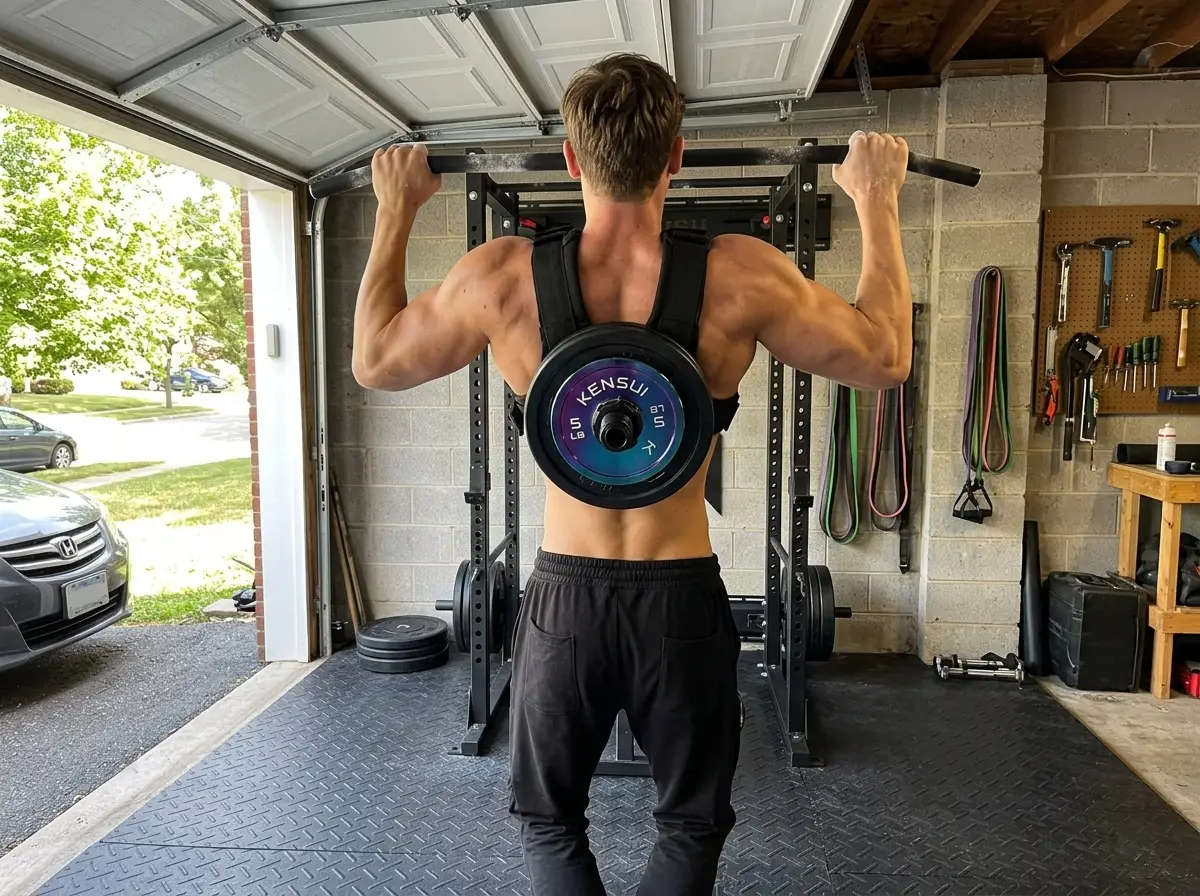
Plate-Loaded Gear Worth Testing
If you already own Olympic plates (or plan to buy a barbell set), these are the plate-loaded tools that impressed us most in testing.

Kensui EZ-VEST V2
Uses standard Olympic plates. Patent-pending plate-lock system means no rattling during pull-ups or running. Aircraft-grade aluminum frame. This is the vest that made us rethink what "weighted training" can be.
See the EZ-VEST V2
Kensui AdaptaBELL
Adjustable dumbbell handles that work with both standard and Olympic plates. The flat-end design means they don't roll. The PRO model starts at $49 for a pair. Compare that to $1,000+ for a fixed dumbbell set.
See the AdaptaBELL
When Fixed Weight Makes More Sense
Plate-loaded isn't for everyone. Here's when fixed weight gear is the better call.
Speed-focused training. If you're doing circuit work or HIIT where you need to grab and go with zero setup, fixed dumbbells win on convenience. Changing plates between supersets adds 15-30 seconds per swap.
Commercial gym settings. Gyms need durability across thousands of users. Plate-loaded equipment requires more user knowledge and creates more wear on threads. Fixed dumbbells are simpler to maintain at scale.
Very light work only. If your training maxes out at 25-pound dumbbells and you don't plan to go heavier, a pair of adjustable handles is overkill. Grab a few fixed pairs and call it done.
For everyone else, especially home gym owners who train seriously and plan to progress, plate-loaded is the smarter long-term investment.
The Bottom Line
Fixed weight dumbbells are comfortable and familiar. They're also expensive, space-hungry, and built around the assumption that your strength won't change.
Plate-loaded equipment starts with a different assumption: you're going to get stronger. It costs less, takes up less space, grows with your training, and connects every tool in your gym to a single set of weight plates.
If you own plates or plan to, there's no reason to keep buying weight you already have.
Want More Honest Gear Breakdowns?
We test equipment for months before writing a single word. Check out our latest reviews.
Browse all reviews